
Cabinet painting
Painter in Toronto — Cabinet Painting Done in a Booth, Not a Kitchen
A kitchen door is looked at from a foot away, in daylight, several times a day. No brush survives that distance, which is why ours never touches one.
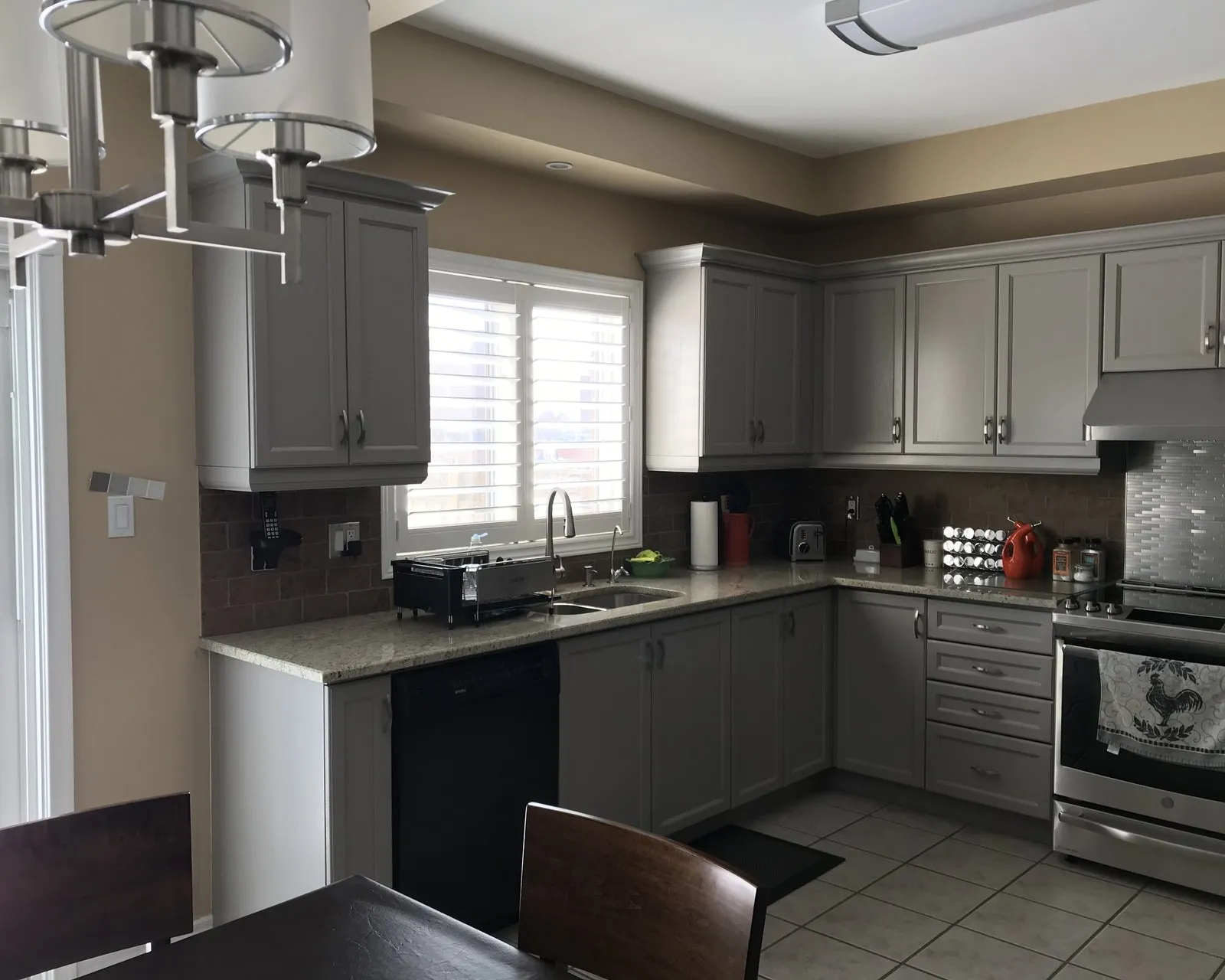
2–3 weeks
Most of it with a working kitchen
2K
Catalysed, not water-based
5 years
On the finish and the workmanship
5.0
Rated on Google
What a booth is, and why it is not in your kitchen
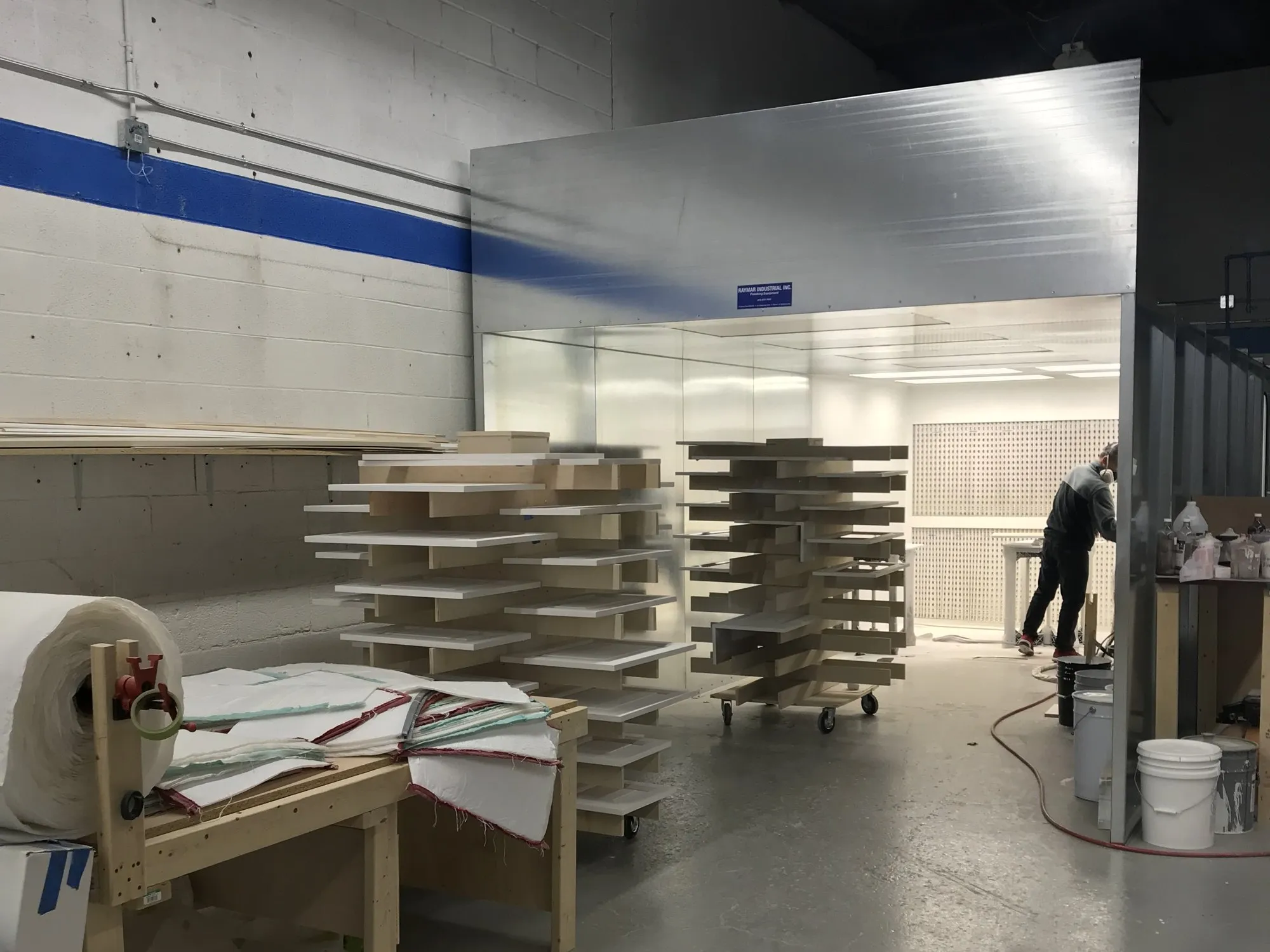
Cabinet painting done properly happens in two places and only one of them is your house. A spray booth is a room built to do one thing — hold still, clean air at a known temperature and humidity while a coating flows out and cures.
Air comes in through filters, passes over the work in one direction, and leaves through extraction. Nothing recirculates. Nothing settles. The lighting is placed so a sprayer can see a wet edge on a white panel, which sounds trivial and is the difference between a flat face and a face with a dry line across it.
Your kitchen has none of that and cannot be given it. Air moves in three directions because there are doors and a furnace. Dust is present because a house is a place people live. Humidity is whatever August is doing. Every one of those affects how a film levels and how hard it ends up.
So the work splits. Everything that can come off the wall comes to the booth on Barmac Drive. Everything fixed to the wall — the frames, the exposed ends — gets sprayed in place behind containment, in the same product from the same batch, and that half is the compromise the trade makes because face frames cannot be unscrewed from a house.
Why 2K, and what the alternative actually does
Catalysed two-component polyurethane. Two parts mixed at spraying, cross-linking chemically rather than drying by evaporation.
That distinction is the whole thing. A water-based enamel dries — the water leaves and the film hardens gradually, and it keeps hardening for weeks. It never gets past a certain point. Push a fingernail into a cabinet door finished that way eighteen months later and it will mark, which is why so many painted kitchens have a dent by the handle and a shiny patch beside the kettle.
2K cures. The chemistry finishes, the film reaches its final hardness in days, and that hardness is closer to a factory finish on furniture than to anything a decorator carries. It resists the degreasers people actually use on a kitchen, and it does not yellow, which matters on every white and off-white kitchen anyone has ever asked for.
It is also solvent-based, which is the cost. It cannot be sprayed in an occupied house without containment and it is the reason we ask people out for two or three nights. A finish that could be applied around you would not be this finish.
Grease is the reason painted kitchens fail
If there is one thing on this page worth carrying away, it is that almost every failed cabinet painting job failed before any paint was opened.
A kitchen cabinet accumulates two things over decades. Airborne cooking grease, which lands on every surface within about eight feet of a hob and builds up as a film nobody can see. And furniture polish, which people apply to timber doors for years and which is largely wax and silicone.
Neither comes off with a water-based cleaner. TSP and a sponge move the visible dirt and leave the wax exactly where it is. Prime over that and the primer bonds beautifully — to the wax. The wax is bonded to nothing. Six months later the film is lifting in sheets at the doors nearest the stove, and everyone blames the paint.
We degrease with a solvent formula that dissolves the wax rather than washing around it, then abrade, then prime. That sequence takes hours and it is the part of a quote nobody compares and everybody should.
What this trade does outside a kitchen
Not everything that comes through the booth is a cabinet, and quite a lot of our work is the rest of a house.
Interior doors and front doors, sprayed flat off their hinges. Banisters and newel posts, which take more abuse than any other painted surface in a house and show it. Mantels, built-in bookcases and window seats — the joinery in Toronto's older semis, much of which has been painted six or seven times and needs the build-up dealing with before anything else. Radiator covers. Occasionally a piece of furniture somebody does not want to part with.
Some of that is sprayed and some of it is brushed, and we are straightforward about which. Trim fixed to a wall in an occupied house is usually brushed in a waterborne alkyd, because masking an entire room to spray a skirting board costs more than the improvement is worth. The finish should suit the object rather than the equipment we happen to own.
Recent work
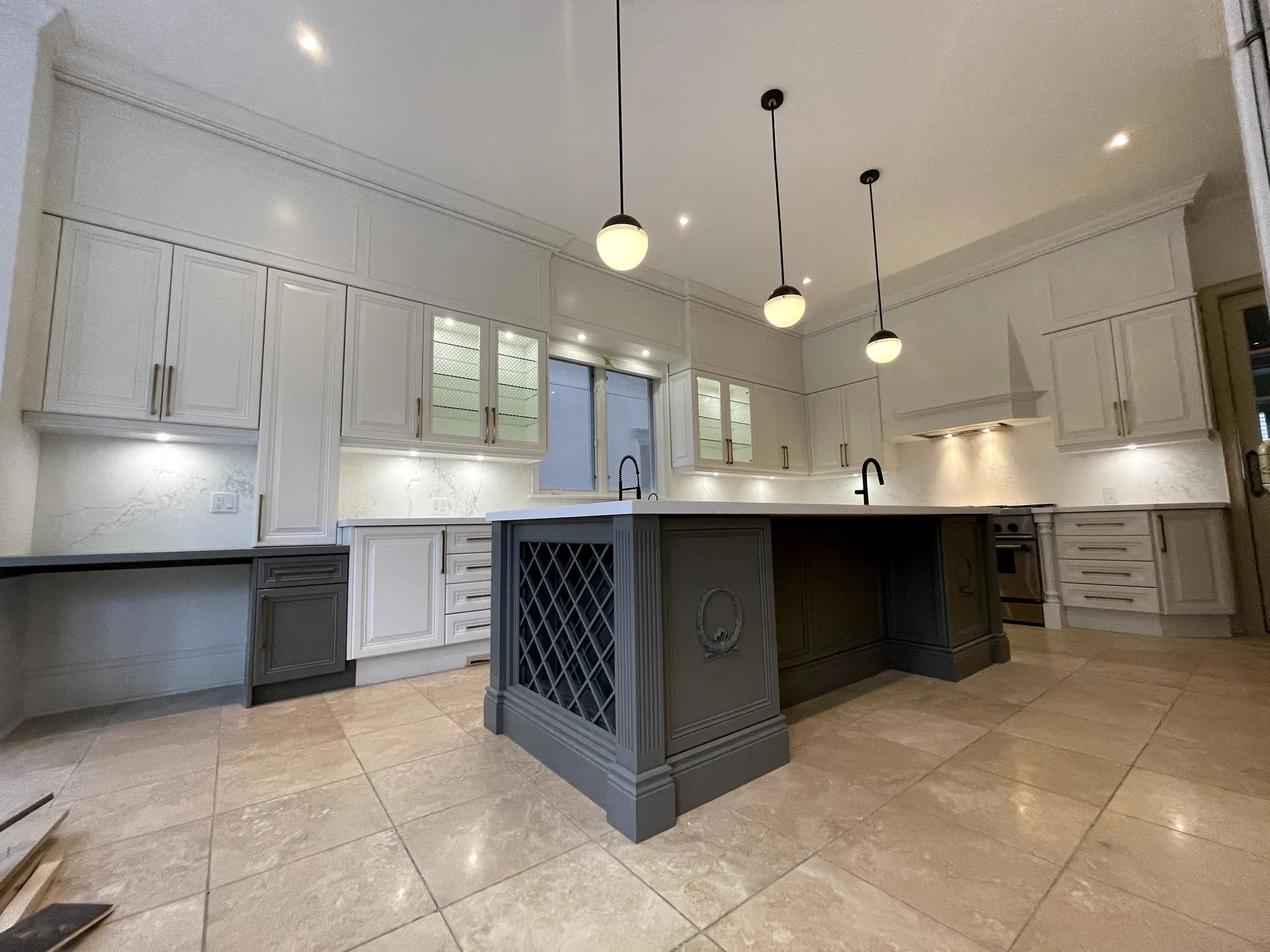
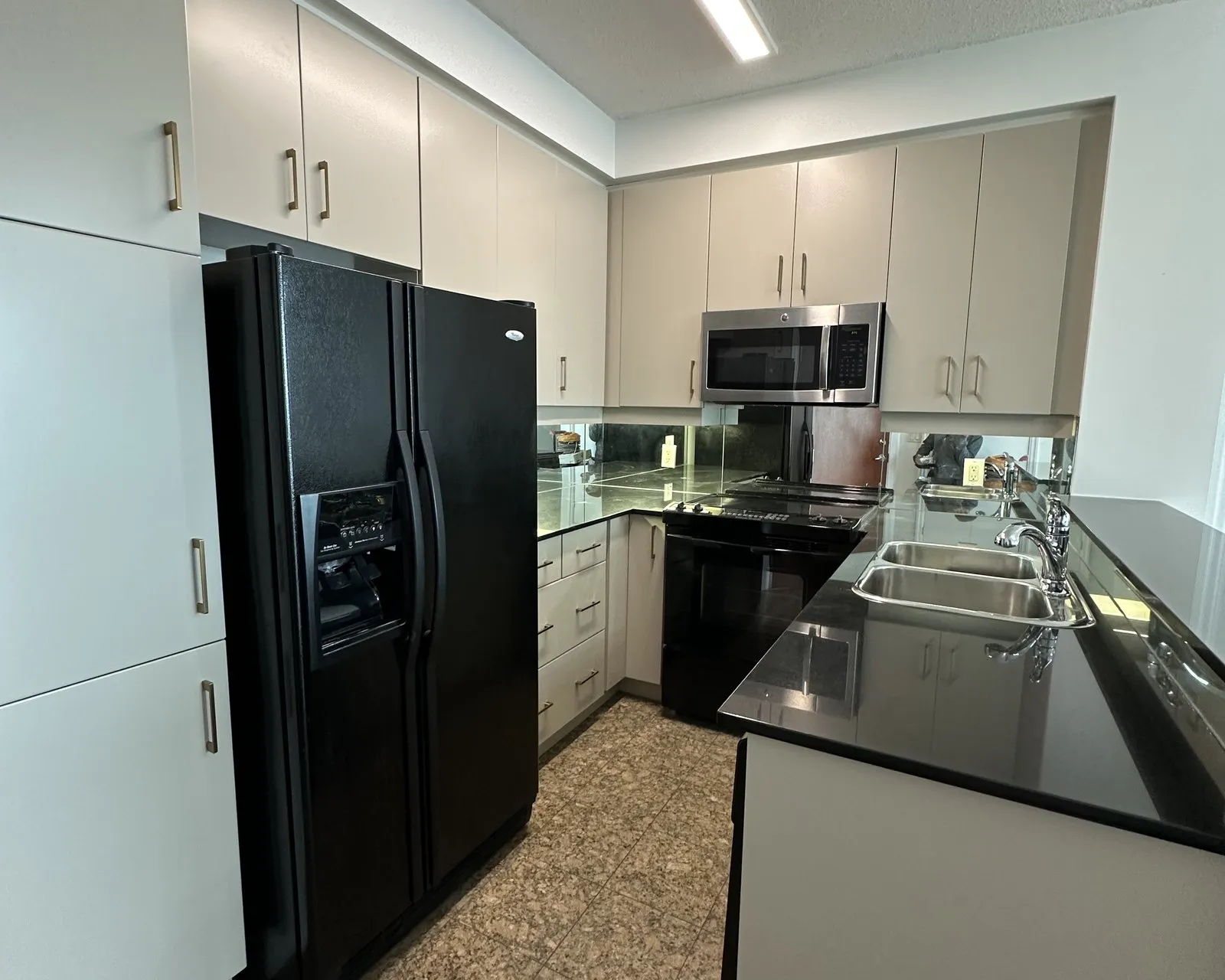
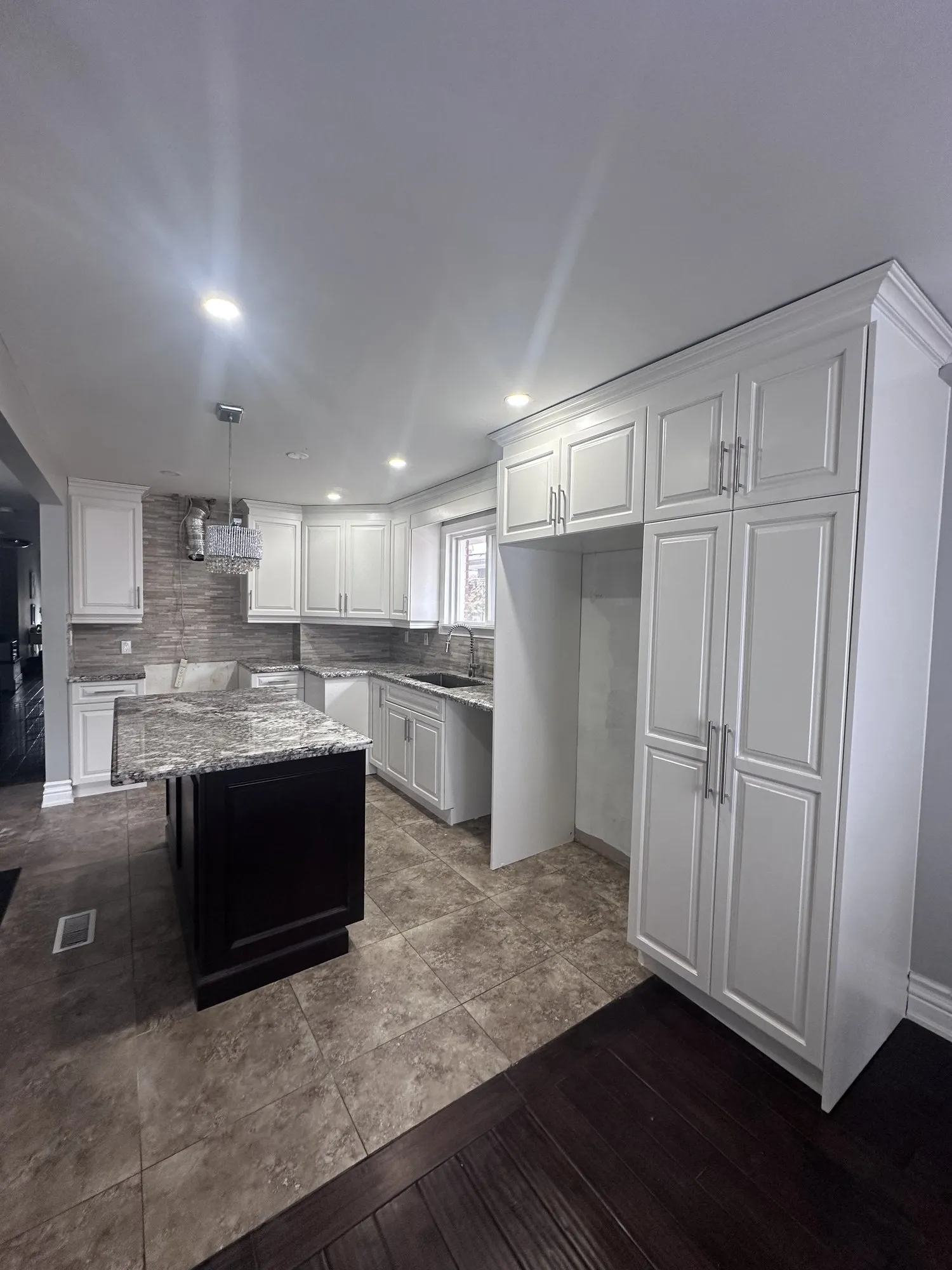
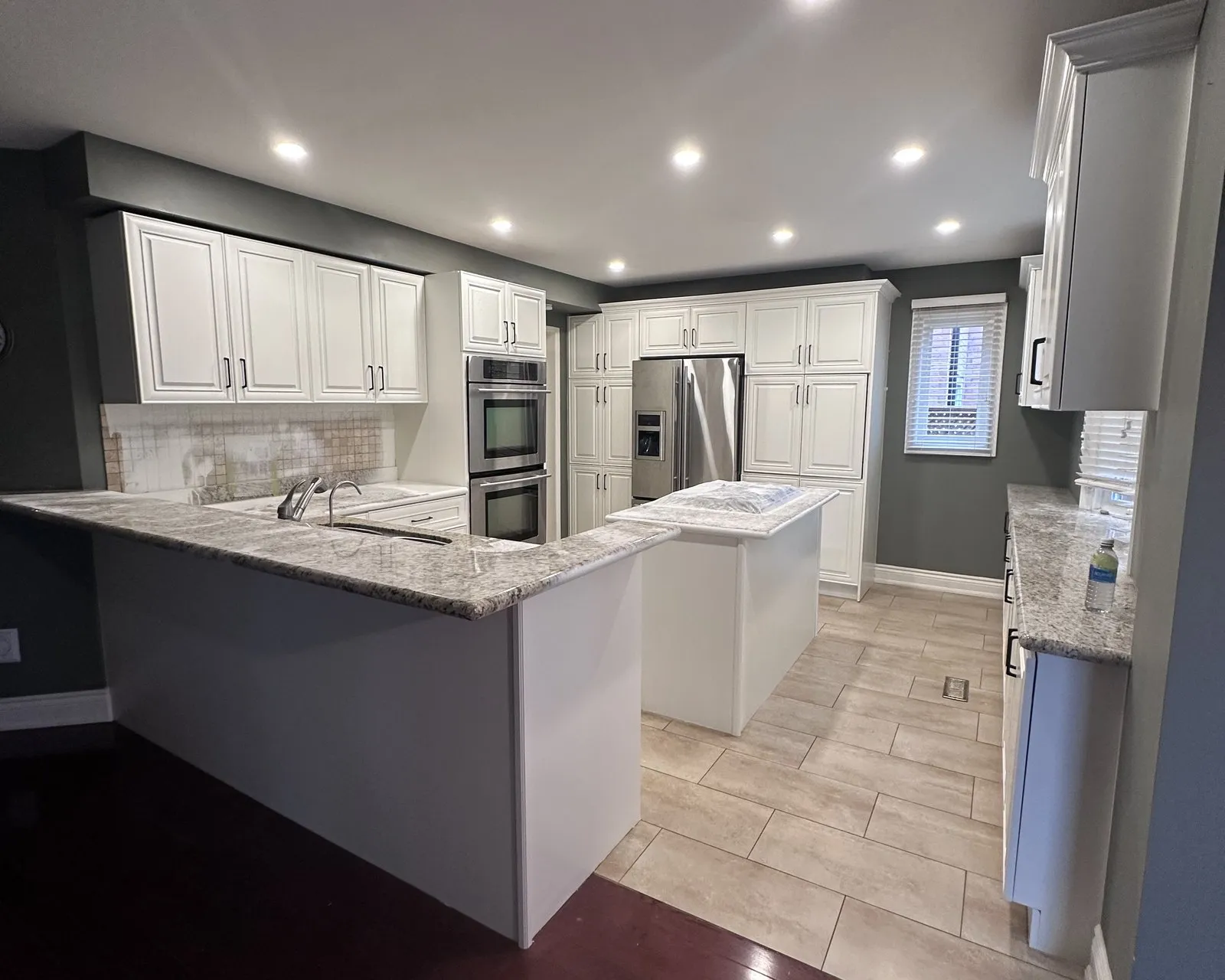
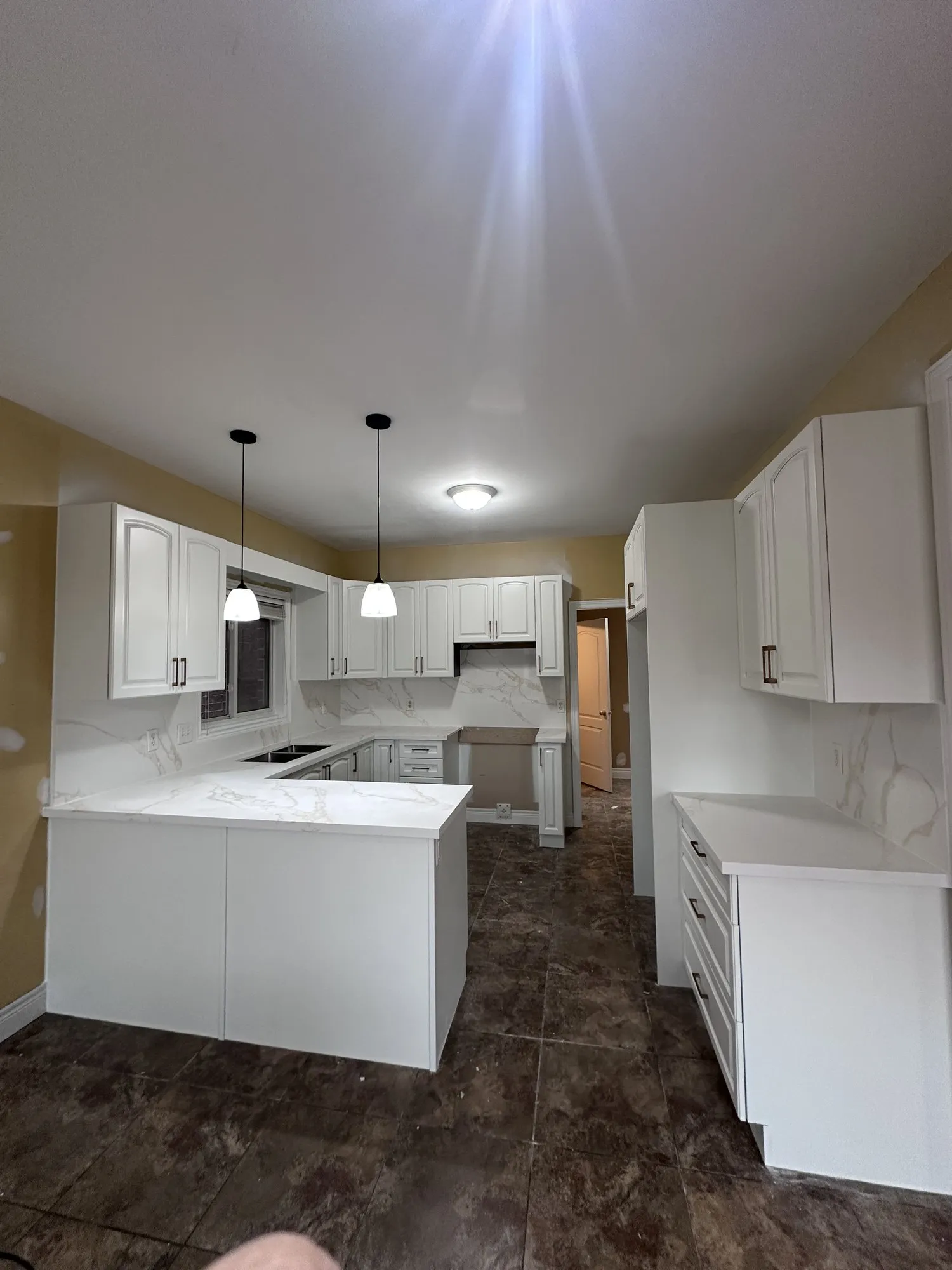
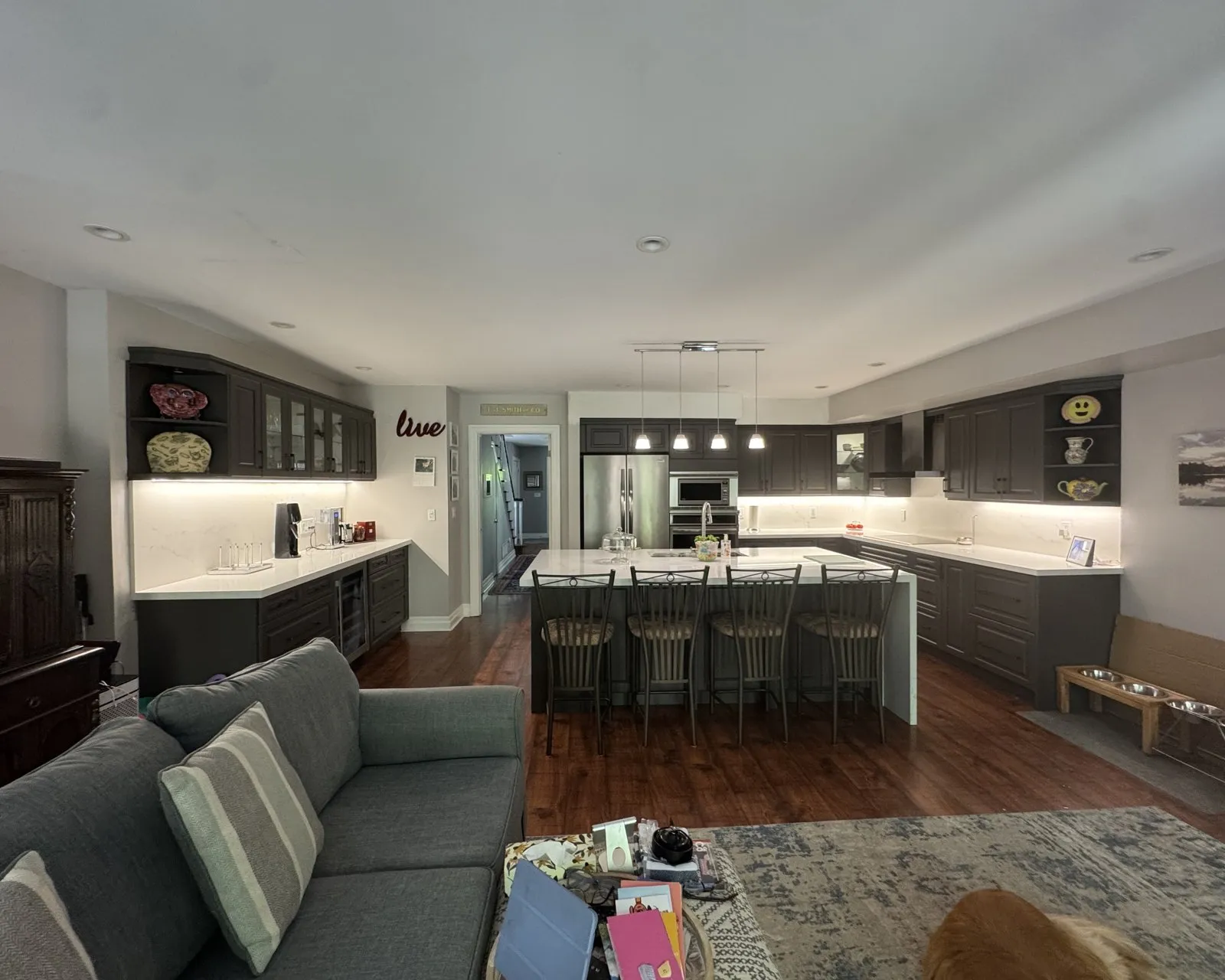
Cabinet painting in Toronto, before and after
Doors sprayed at the shop, frames sprayed in the house.
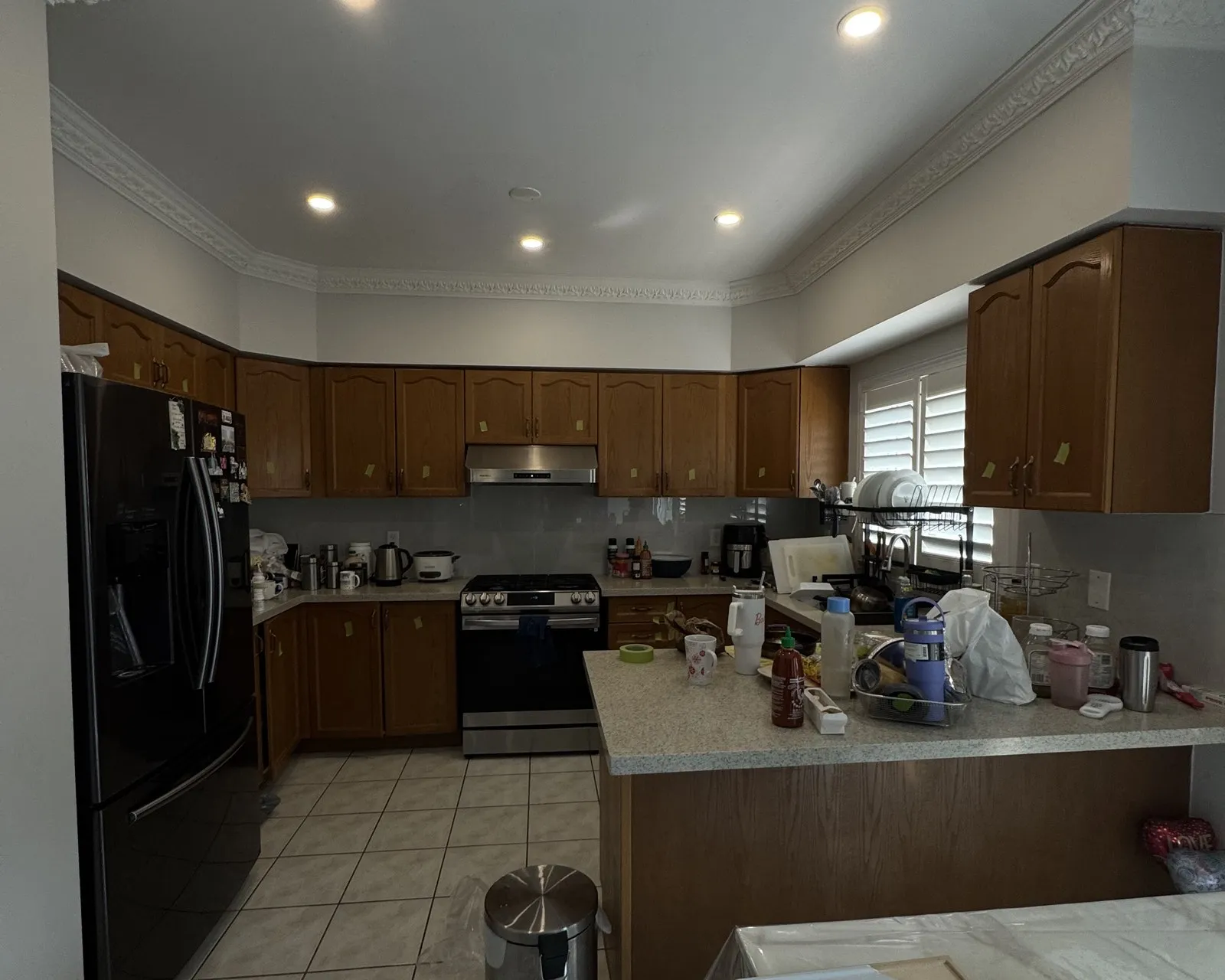 Before
 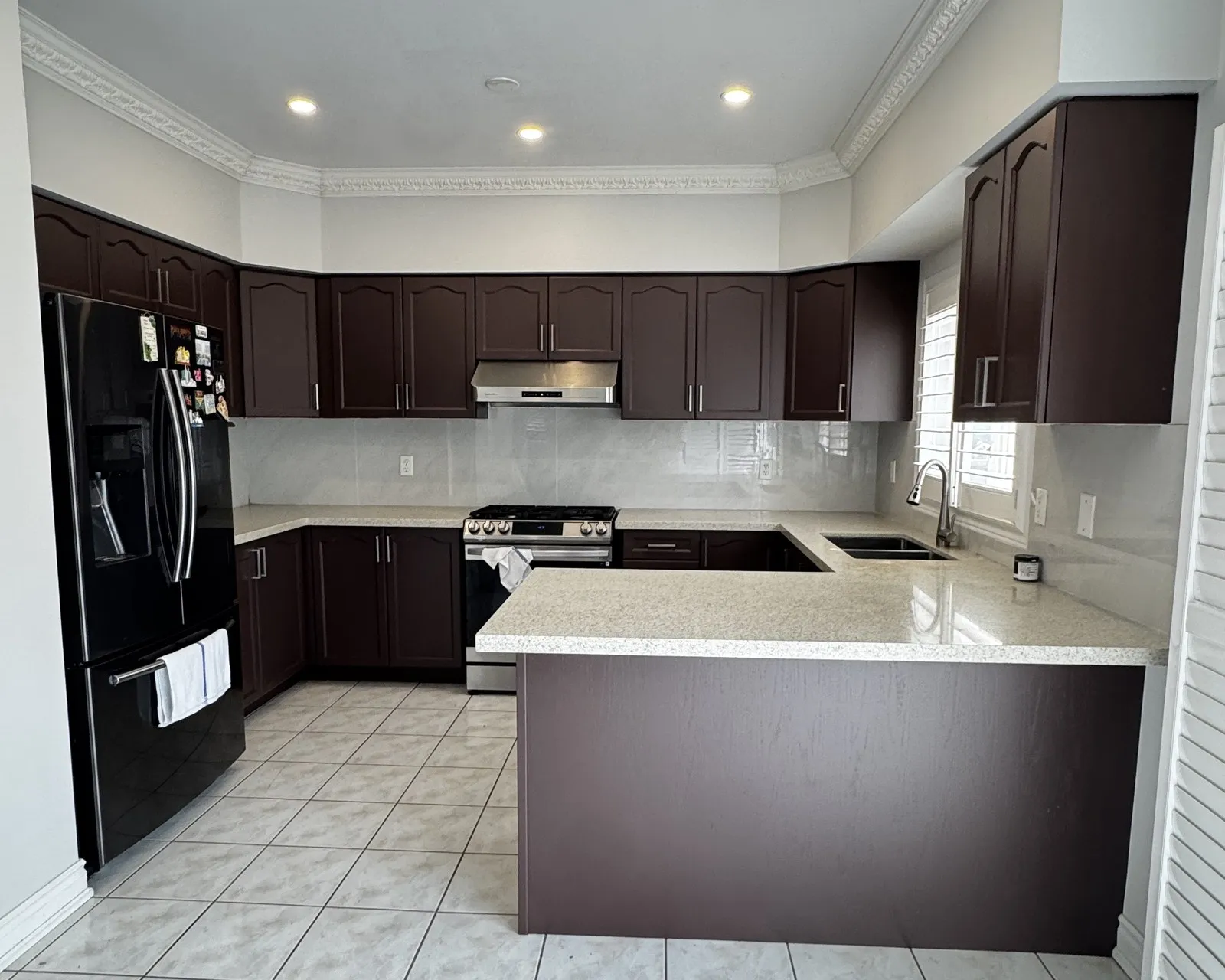 After
After 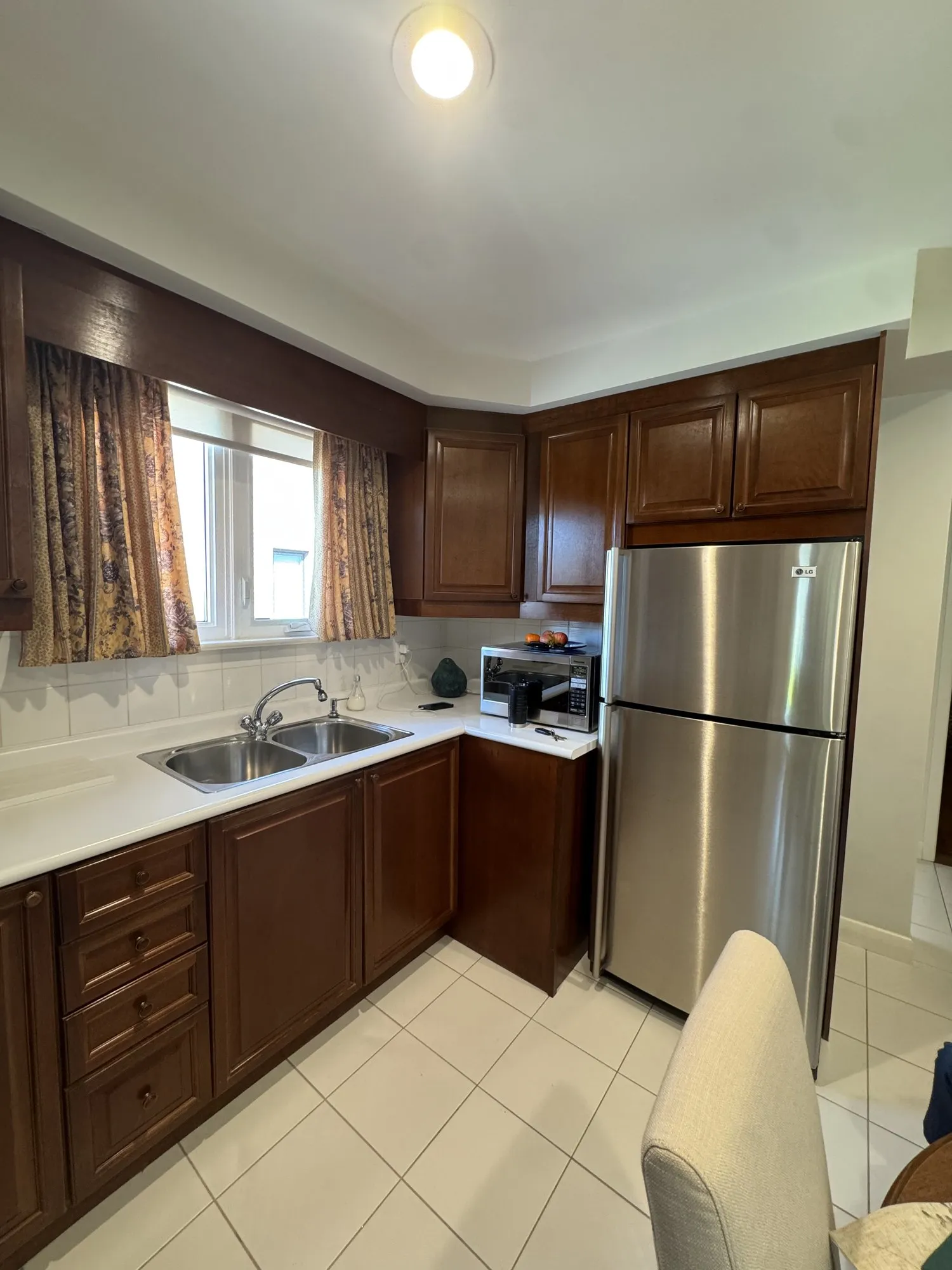 Before
 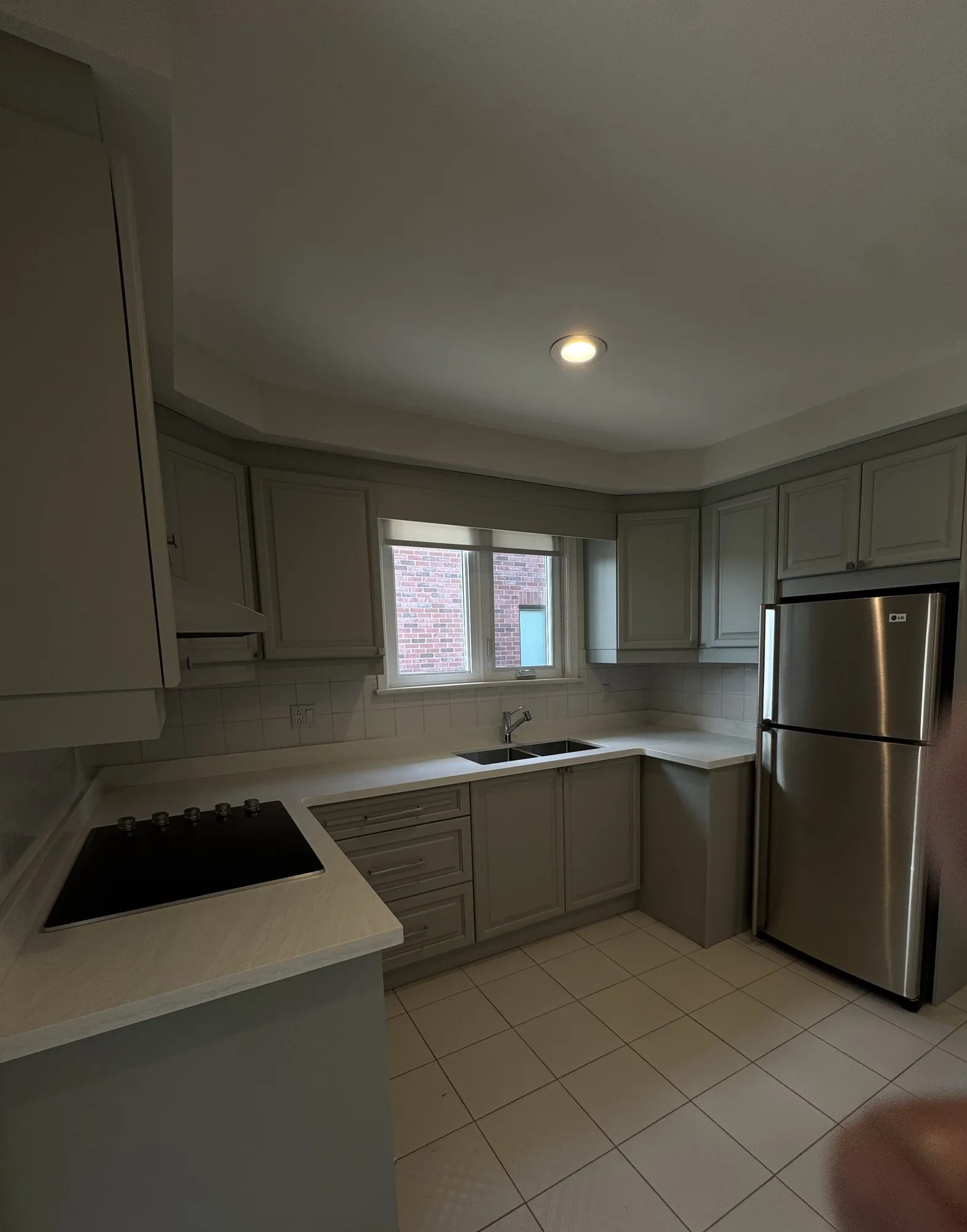 After
After 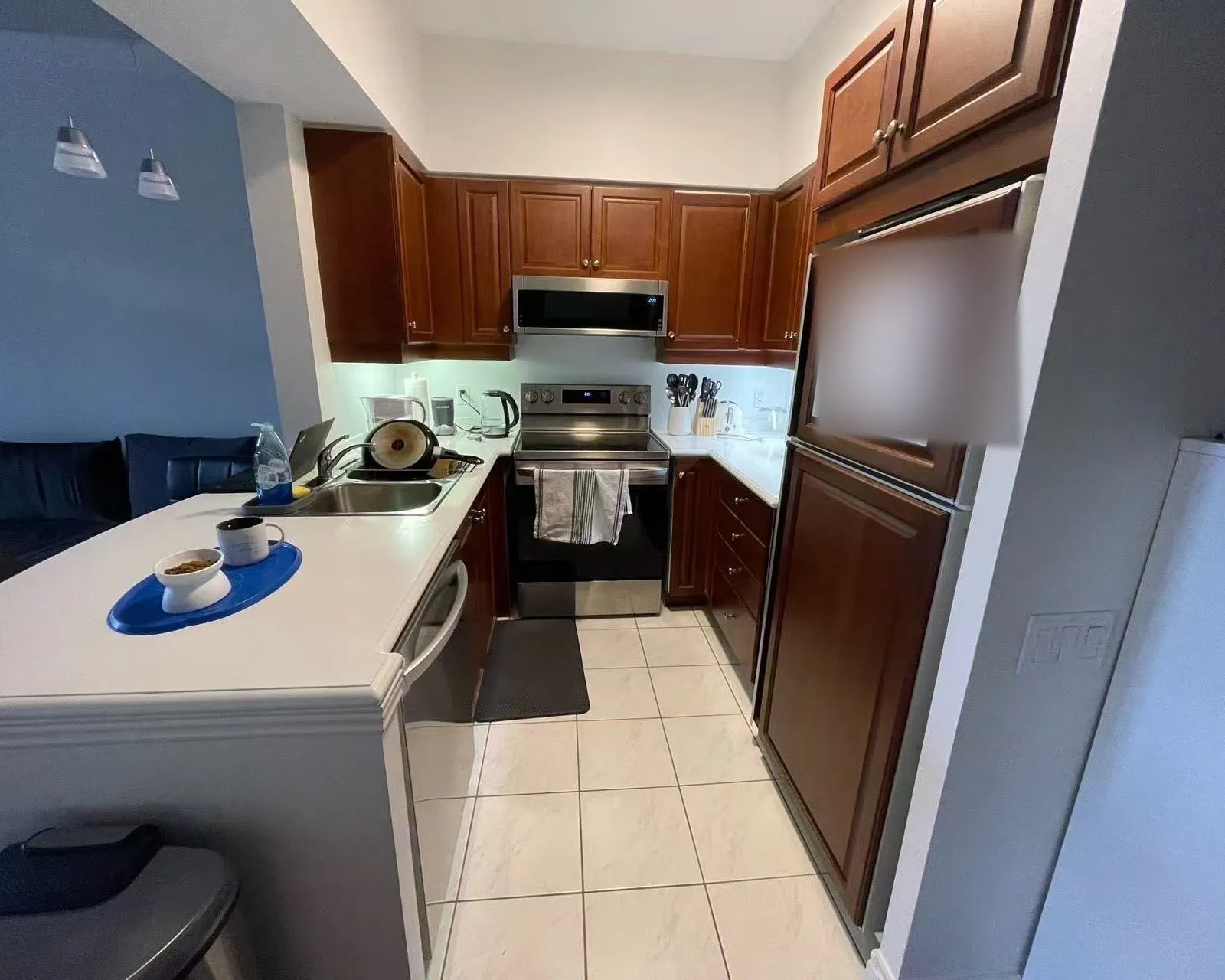 Before
 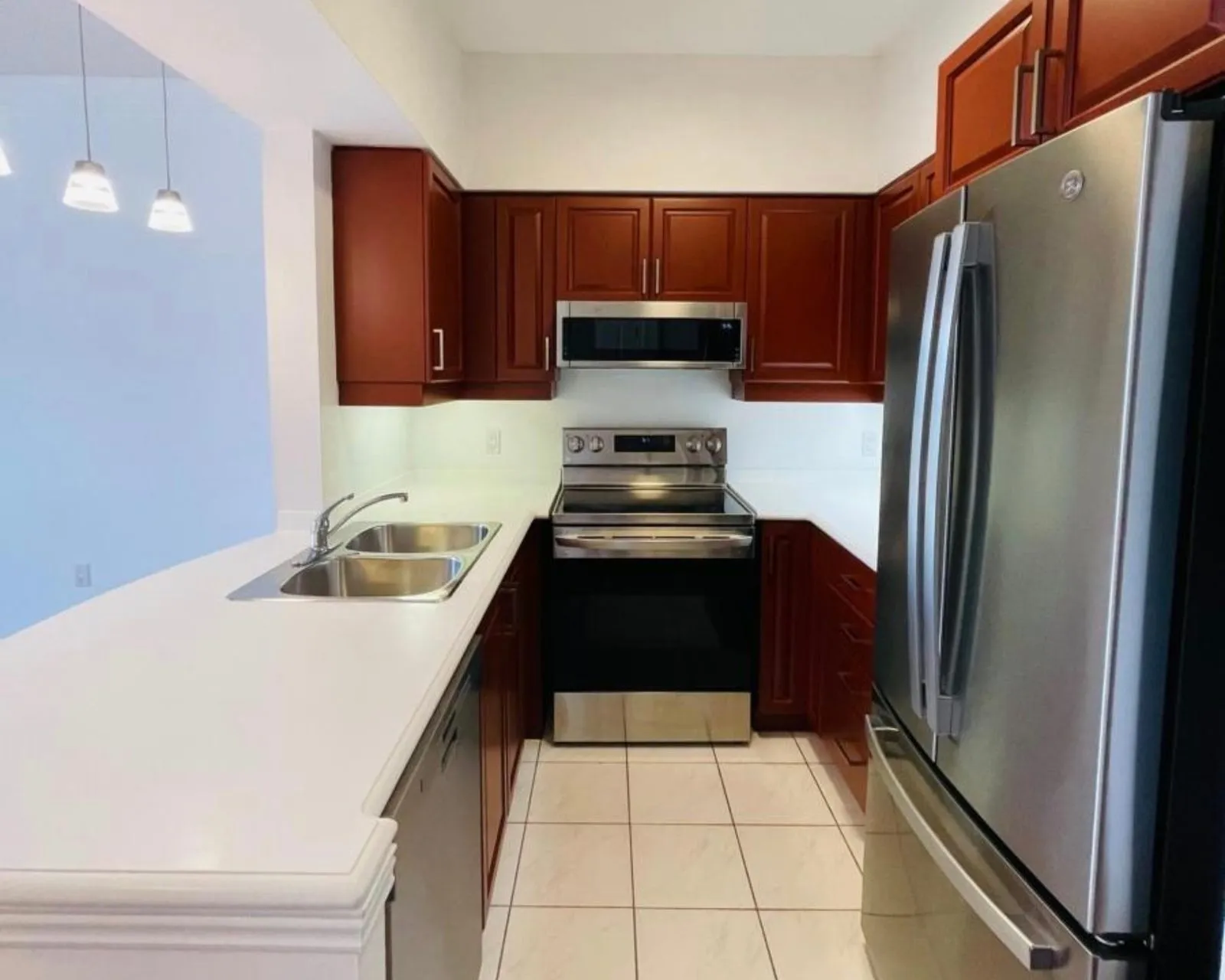 After
After 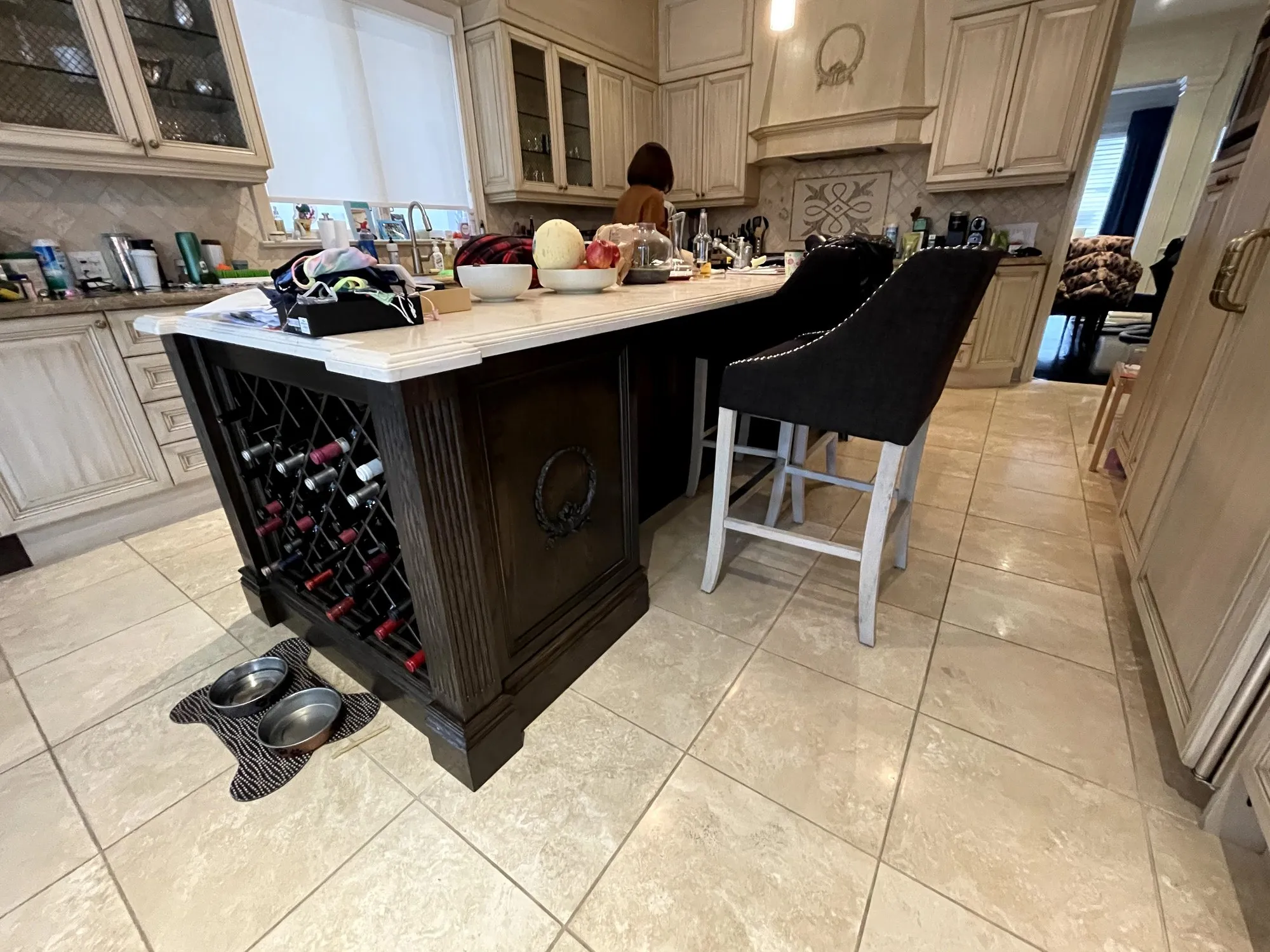 Before
  After
After 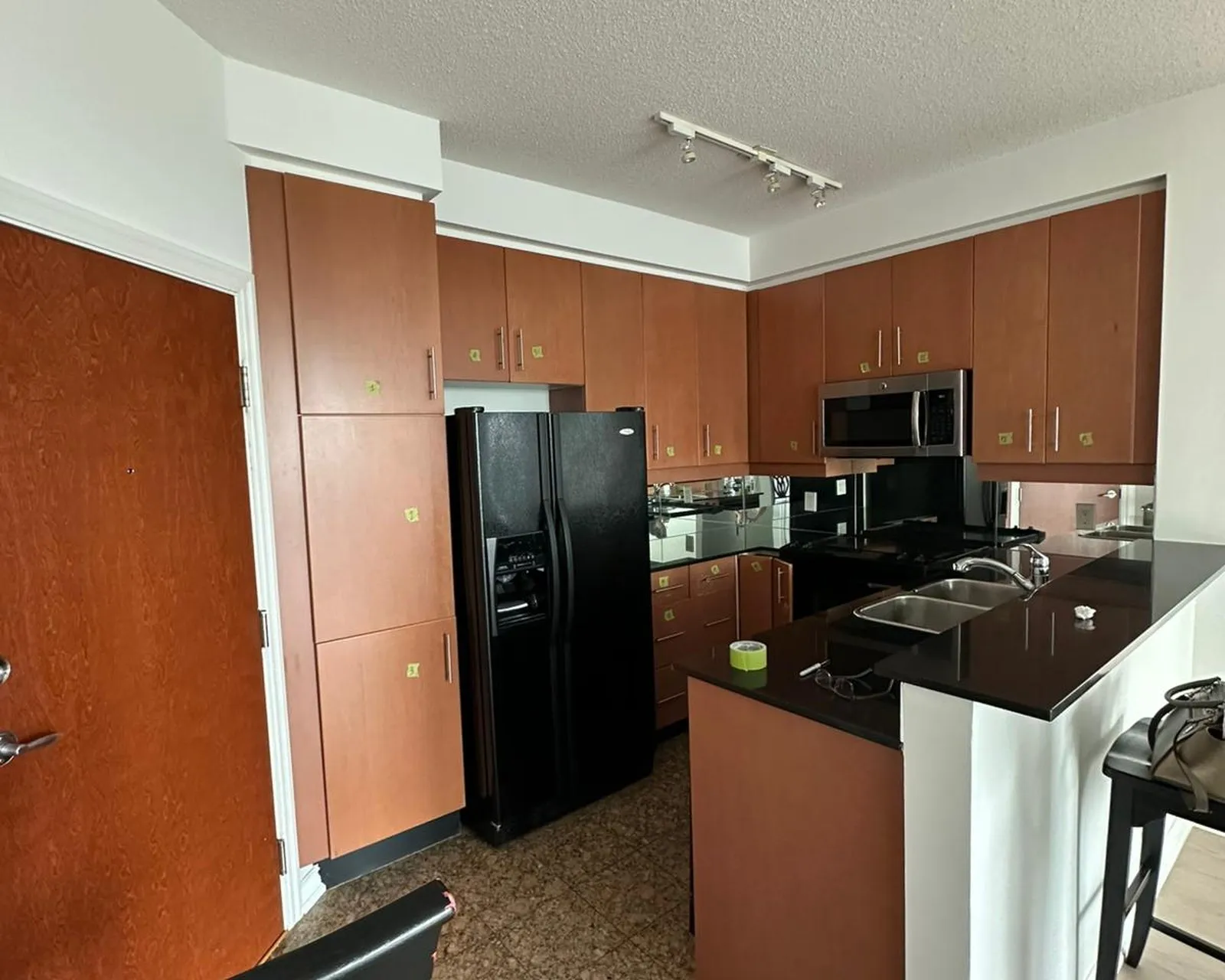 Before
  After
After 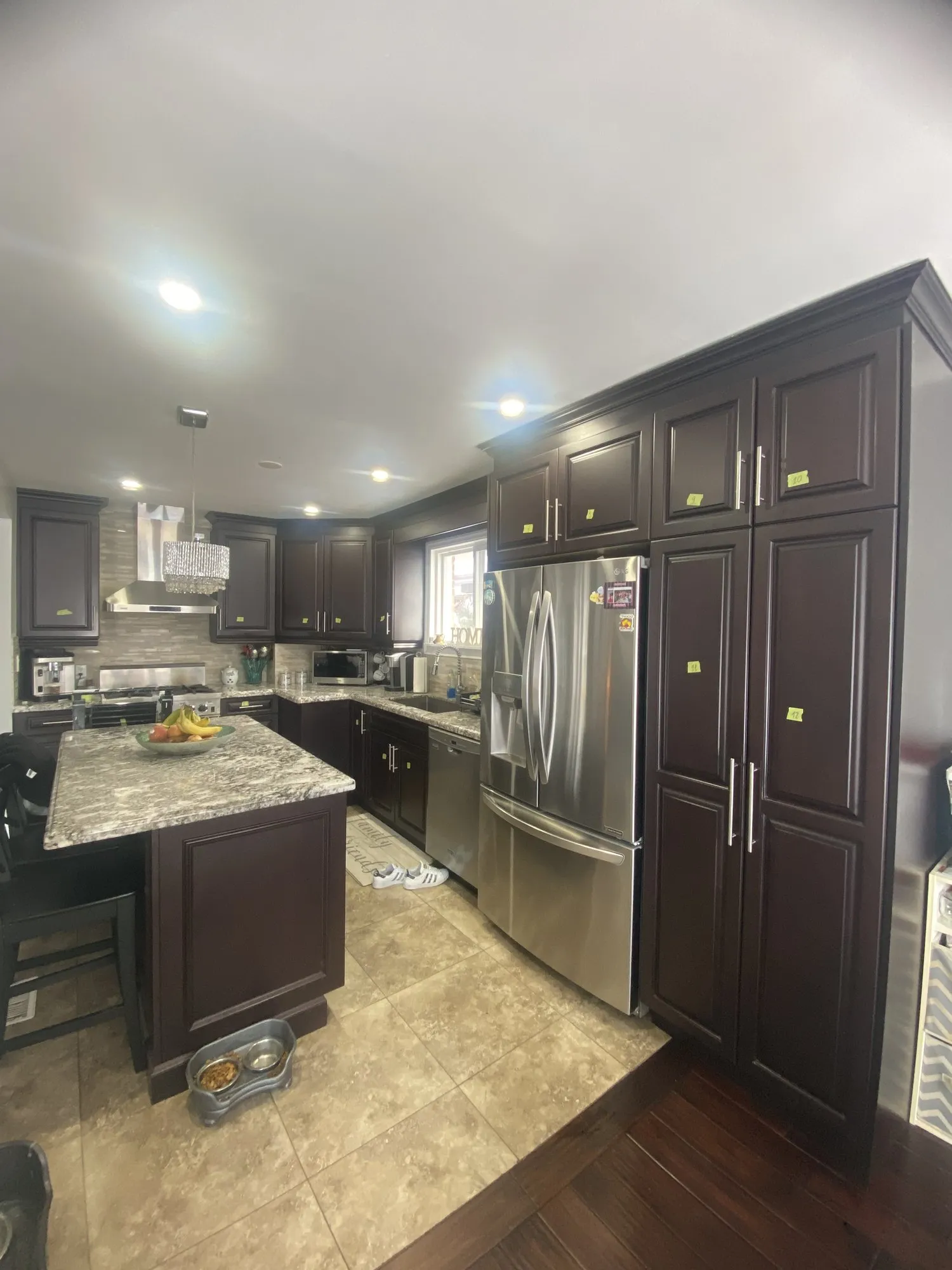 Before
  After
After 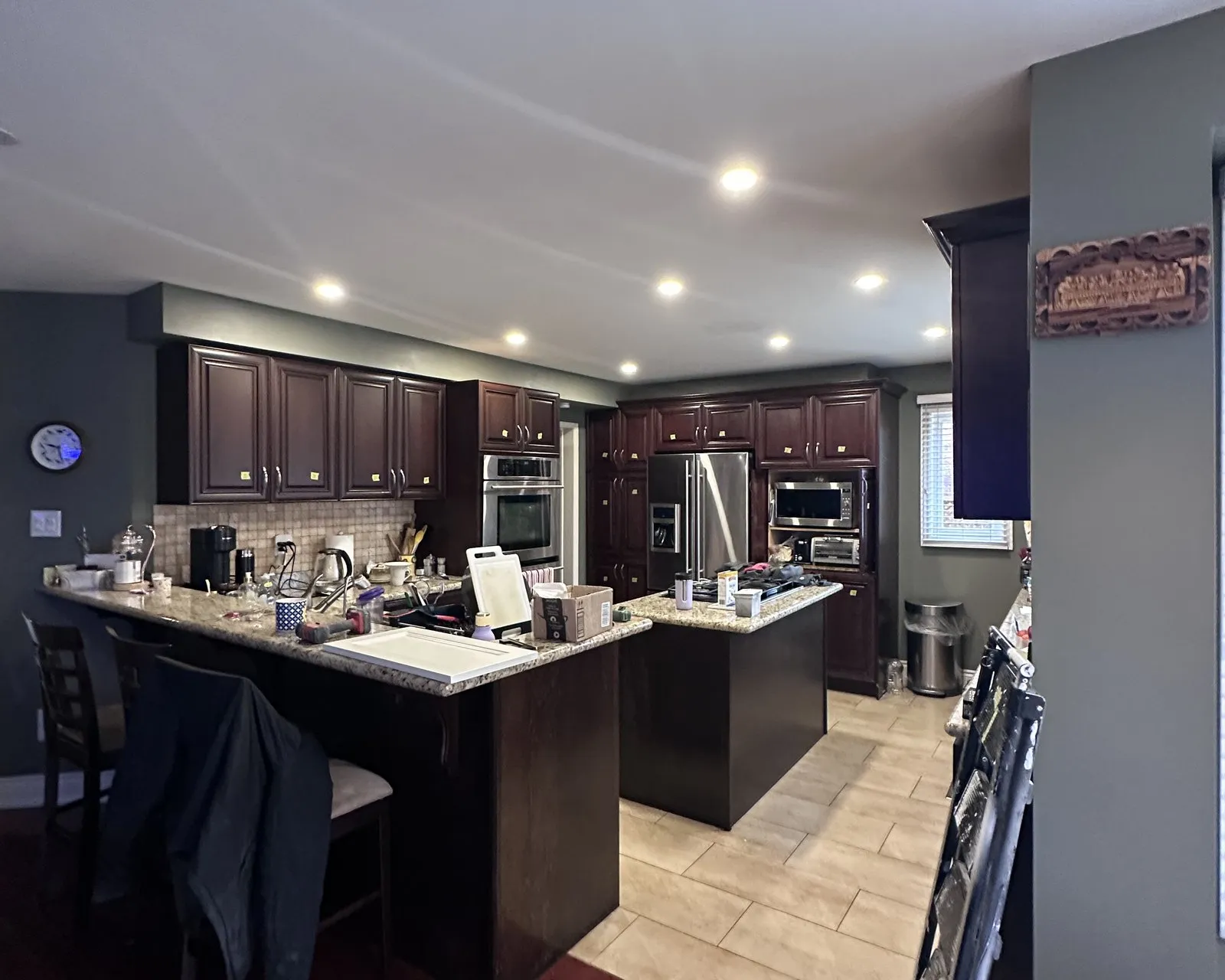 Before
  After
After 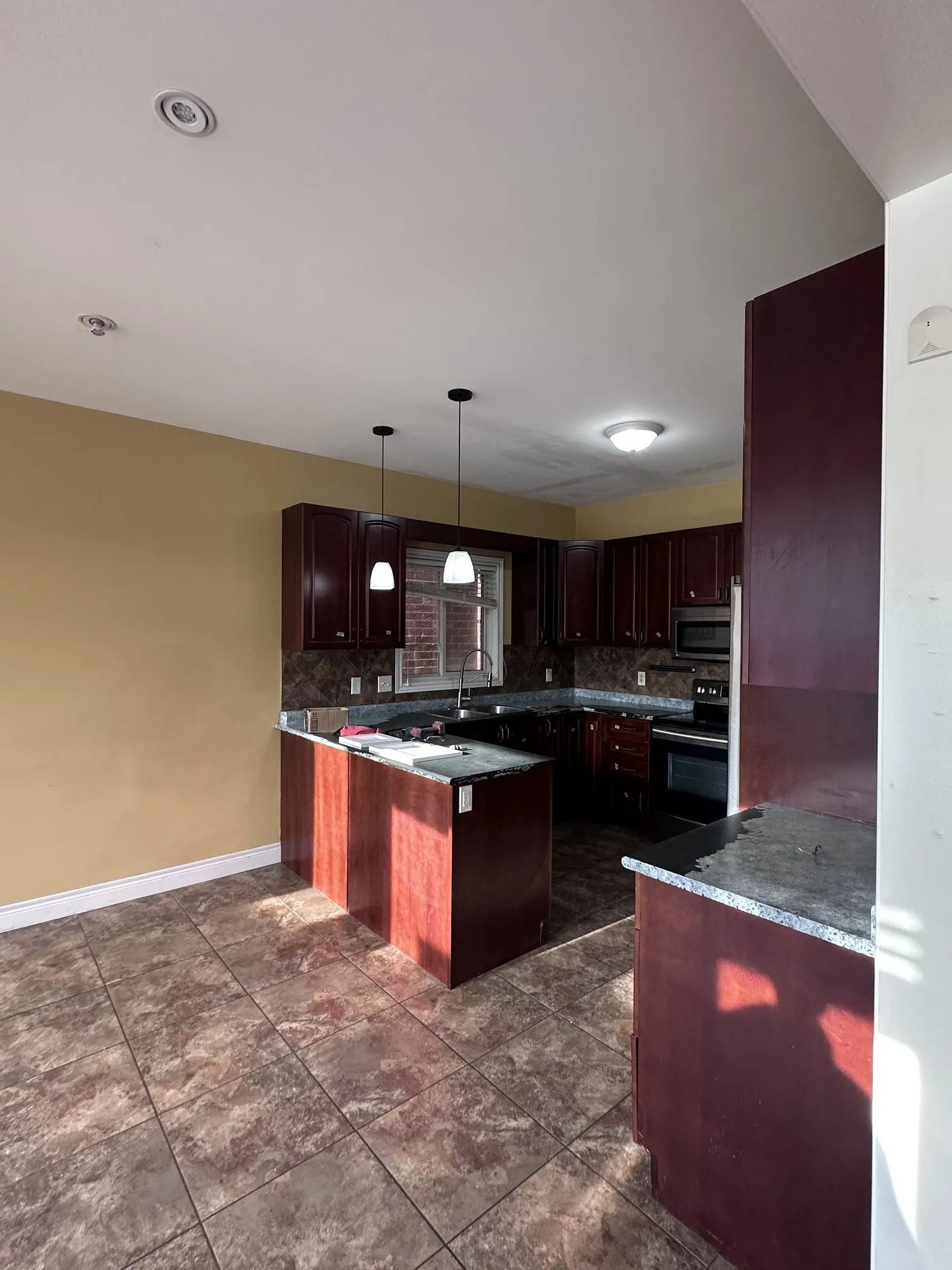 Before
  After
After 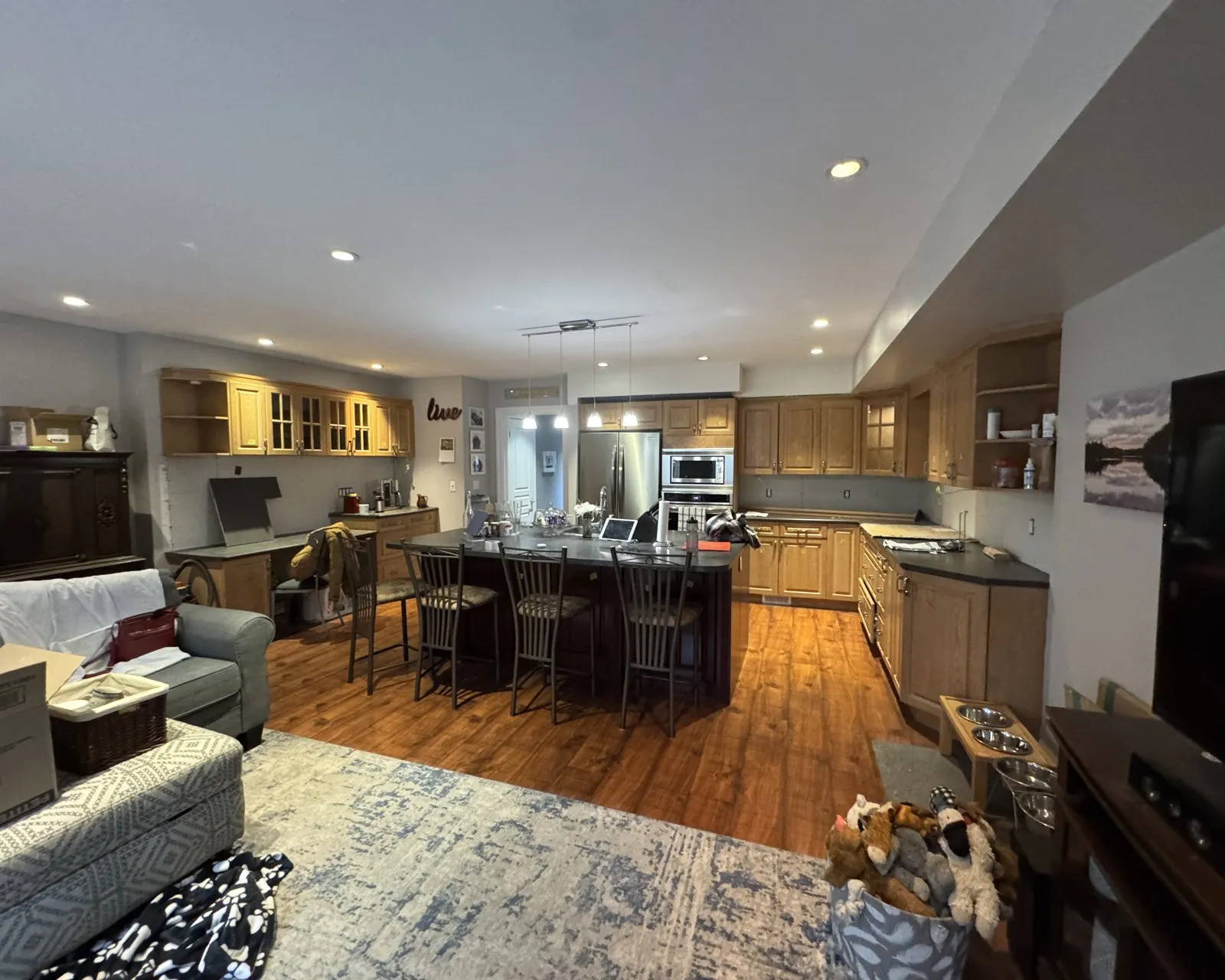 Before
  After
After 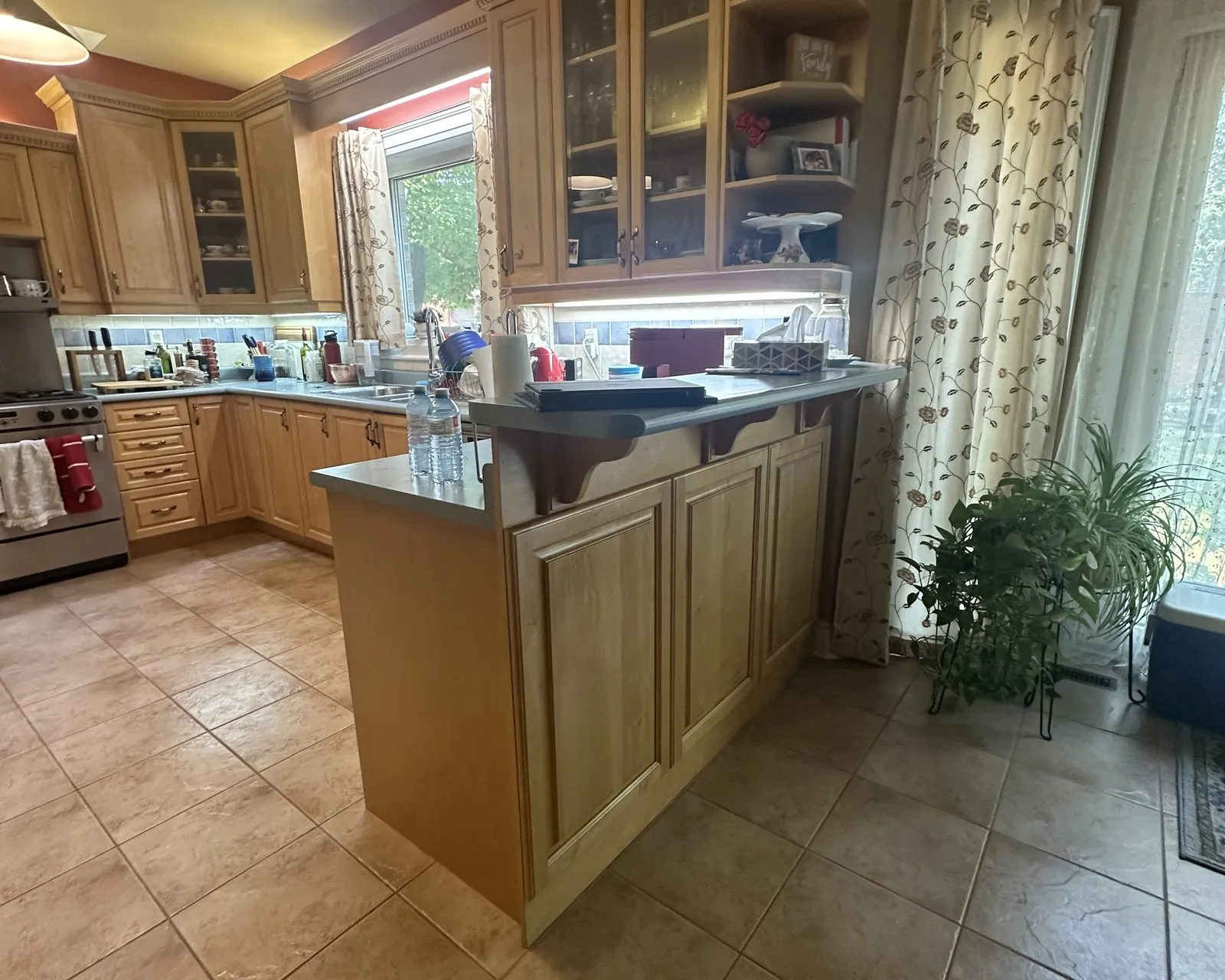 Before
 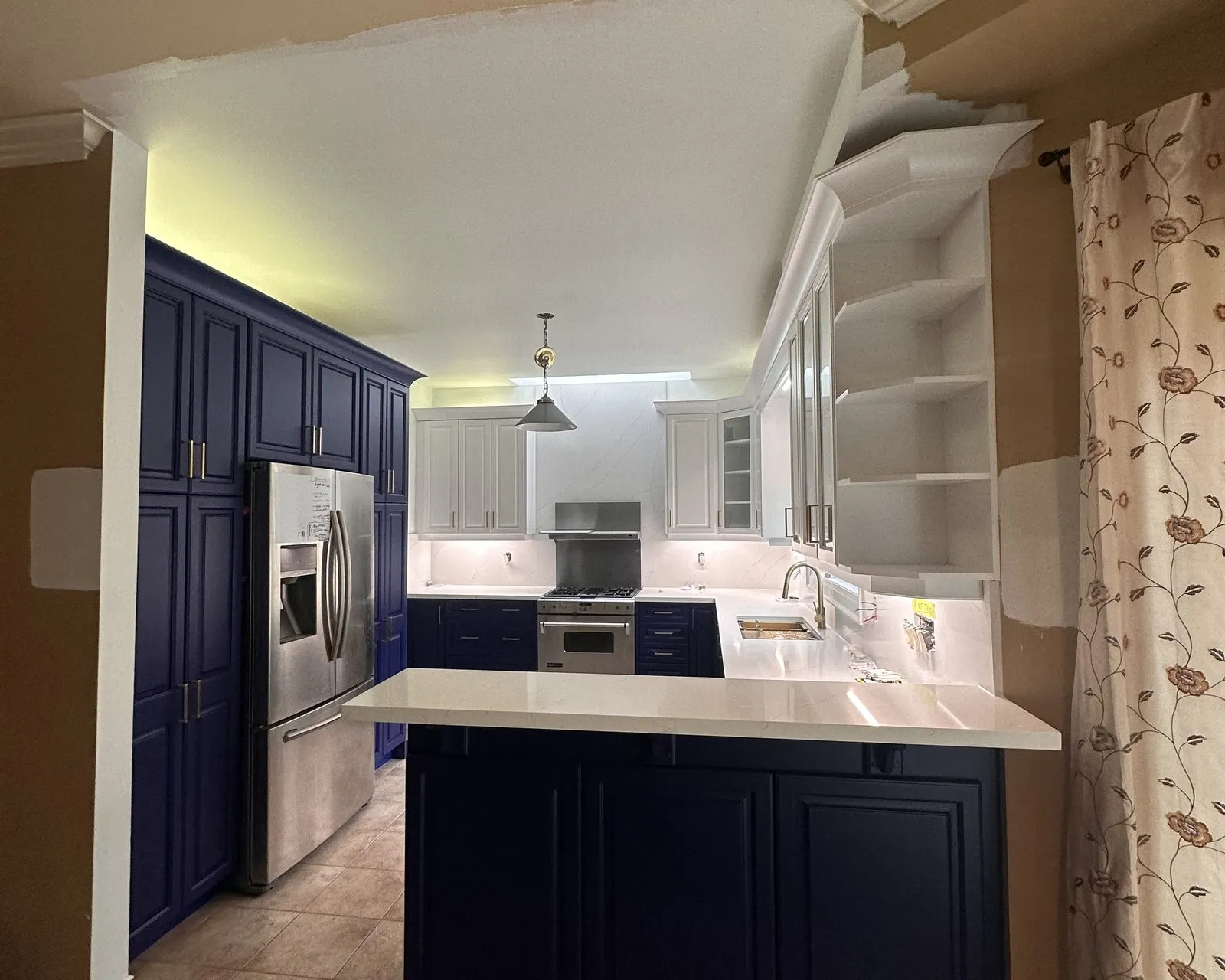 After
After What goes through the booth
Spray work, in the kitchen and beyond it
Five services on one set of equipment. What changes between them is the object being sprayed and whether it can leave the house.
Door painting in Toronto
Cabinet doors, interior doors and front doors, taken off their hinges and sprayed flat. A door is the one surface people touch, look at closely and slam, and it is the surface where a brushed finish reports every stroke back to you. Off the hinges and horizontal, a coating flows out with nothing running and nothing sagging — why a door is the hardest surface in a house to finish is really a question about geometry rather than about paint.
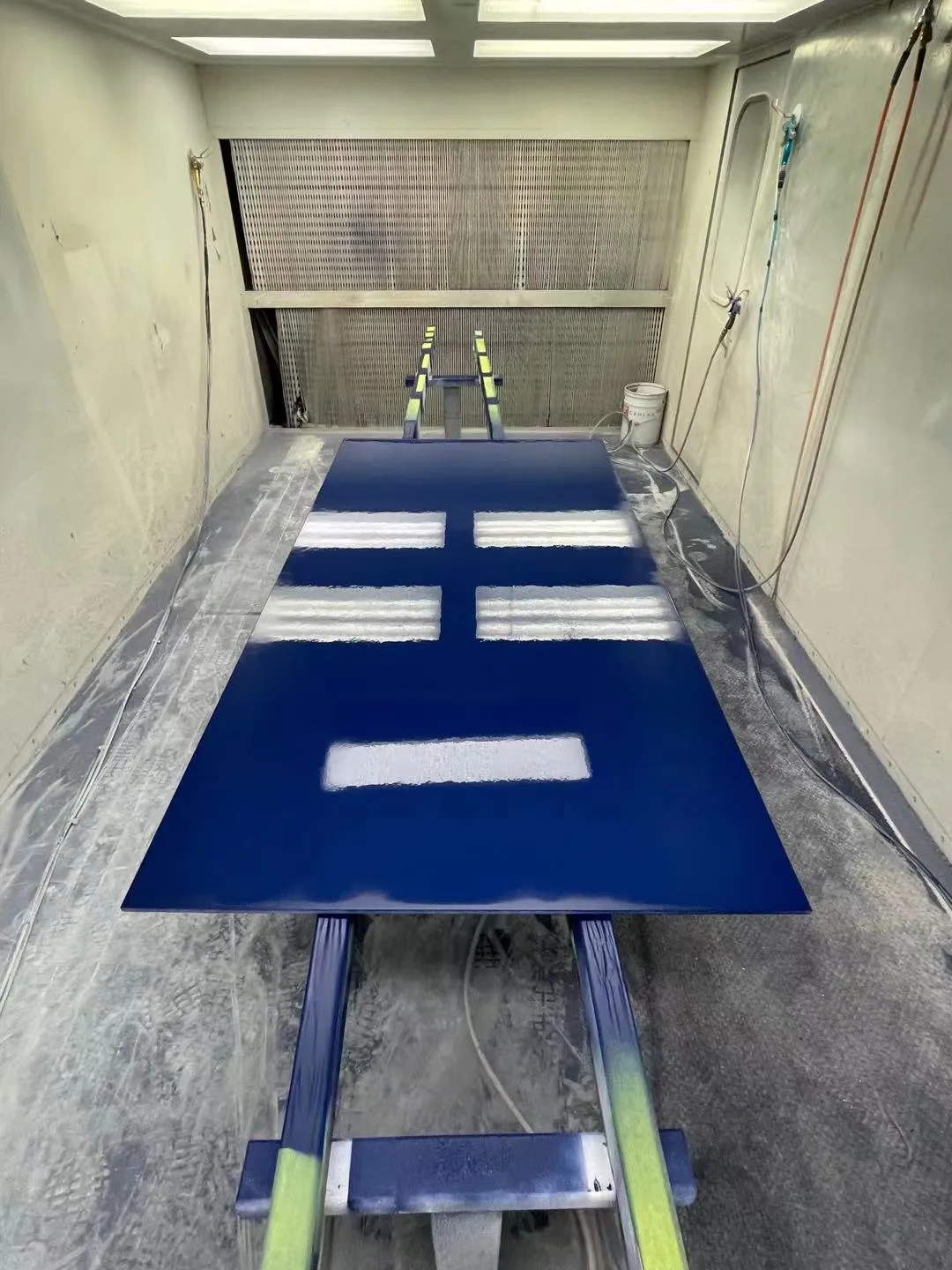
Spray painting and what a booth provides
Everything we finish is atomised rather than laid on, and the parts that can leave the house do. Filtered air, stable temperature and humidity, extraction and light from the right angle — a kitchen has none of those and cannot be made to. That is why this trade splits every job in two, and what a filtered room does that an occupied house cannot explains what each half of the split is buying you.
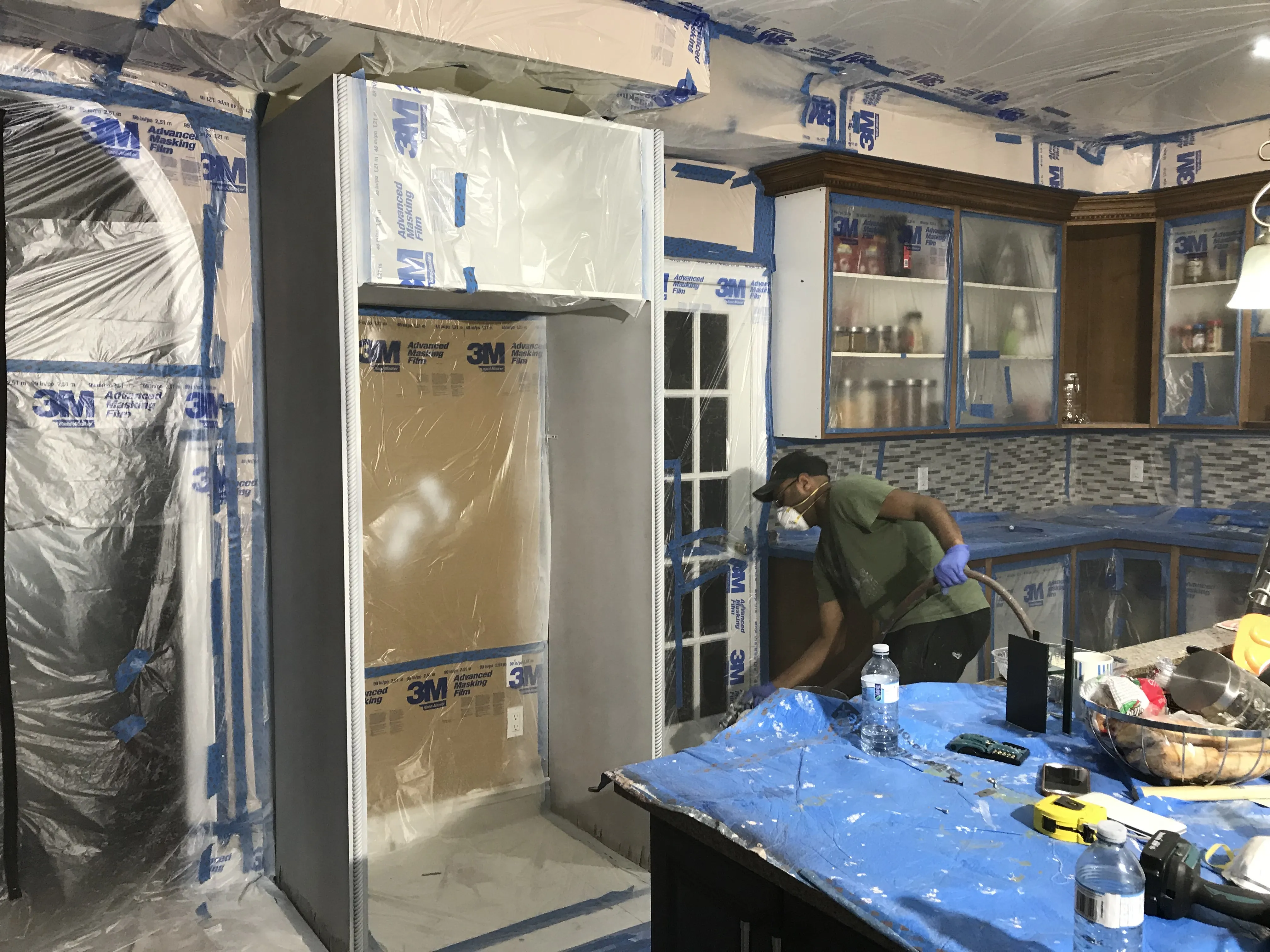
Wood painting beyond the kitchen
Trim, banisters, mantels, built-ins, radiator covers and the odd piece of furniture. Some of it is sprayed and some honestly is not — baseboard fixed to a wall in an occupied Toronto semi is brushed in a waterborne alkyd, because masking a whole room to spray it costs more than it returns. Knowing where a brush is genuinely the right tool is a judgement about the object rather than a rule about the finish.
Wood staining, where the grain survives
The opposite decision from painting, using the same booth. Stain colours the wood rather than covering it and goes under a clear 2K so the figure still reads. It needs solid timber, it only travels darker, and it is right far less often than people hope — what stain does to timber that paint cannot comes down to whether there is anything under the old lacquer worth the cost of uncovering it.
Colour consultation, in your own light
Samples brought to your kitchen, in the real finish rather than on printed card, looked at in the morning and again with the lights on. Every kitchen colour regret we have ever been told about was a colour agreed somewhere other than the room it went into, and why a colour chosen anywhere else is chosen wrong is a fact about how light works rather than a service we invented to fill a visit.
Painting is the cheapest of the options and not always the right one
Painting keeps your doors and changes their colour, which is the correct spend where the profile is right and the doors are sound. Where the door style itself is what dates the room, no colour rescues it and you are finishing the wrong thing beautifully. Where there is grain worth showing, covering it is a one-way decision. Reading when a new door beats a new colour on the same kitchen settles which of those your kitchen is in.
Questions
Common questions about cabinet painting in Toronto
- Why is spraying more expensive than brushing?
- Because of everything around it rather than the act. Doors come off, travel to the shop, get sprayed in filtered air at controlled humidity, cure properly and come back — against somebody arriving with a brush and working in your room. What you buy is a surface with no texture in it, which at door-viewing distance is the entire difference.
- My last painted kitchen chipped. Why would this not?
- Two causes, and both are preparation rather than paint. Kitchen cabinets collect cooking grease and furniture polish that water-based cleaners will not lift, so the coating bonds to the wax and lets go months later. And most painters finish in a water-based enamel that stays comparatively soft. We degrease with a solvent formula and spray catalysed 2K.
- Can thermofoil or laminate be painted?
- Sometimes, and we say which after seeing photographs rather than in advance. Thermofoil already lifting at a corner will keep lifting under paint, because the failure is the bond underneath and not the surface. Where it is sound it can be prepared and sprayed — it is the one substrate we quote conditionally.
- How long is the kitchen out of action?
- Less than people brace for. The doors are away about a fortnight and the kitchen works normally throughout, with open shelving where the fronts were. The disruptive part is the two or three days at the end while the frames are sprayed in place, and we ask you out of the house for those.
- Do you paint inside the cabinets?
- Not as standard, and it is a separate line rather than an assumption. What gets sprayed is everything visible with the doors shut — faces, frames, exposed ends. Spraying interiors and shelving roughly doubles the surface area, and most people look at that line once and decline it.
- Can I see a colour on my own kitchen before I decide?
Yes. Send one wide photograph through our colour visualiser and you get your kitchen previewed in the colour you are considering back in about half a minute. It is a visualisation rather than a proof, and we still bring painted samples before committing, but it turns a long list of maybes into two or three worth looking at properly.
Wondering what your kitchen looks like in a different colour?
Send wide photographs of every run of cabinet and a written price comes back inside 24 hours, fixed. If painting is the wrong answer for the doors you have, that is the first thing you will hear rather than something discovered later.
Free in-home consultation · no obligation
Refaced. Repainted. Refinished.