
Kitchen Cabinet Refinishing in Toronto — Keeping the Wood You Already Own
Refinishing is the only one of these services that keeps your actual doors. It is also the one that depends entirely on what they are made of.
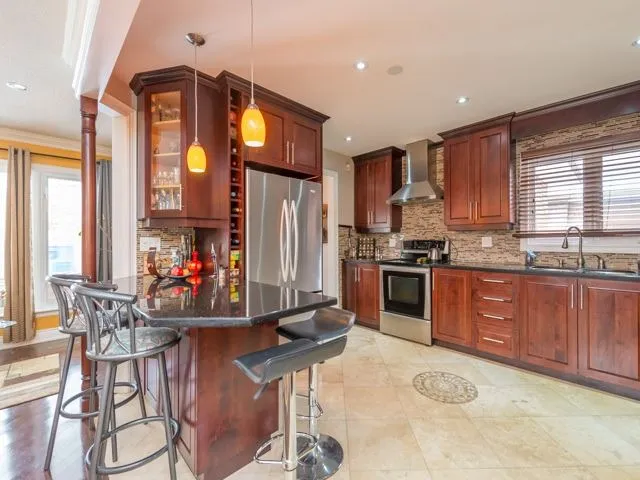
Solid wood
The only substrate this works on
Darker only
Stain adds colour, it cannot remove it
5 years
On the finish and the workmanship
5.0
Rated on Google
What refinishing is, in one sentence
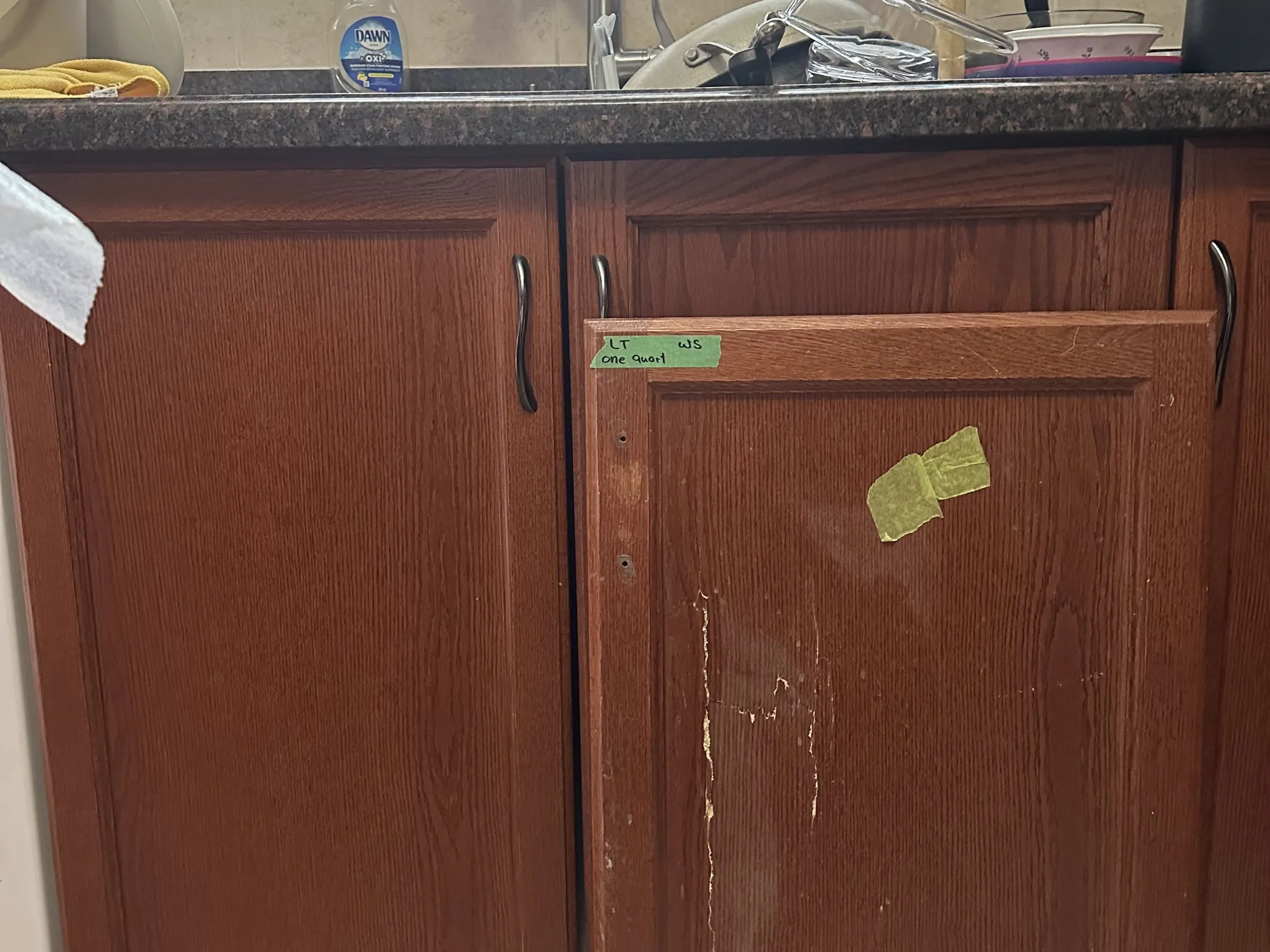
Your doors stay in your kitchen's ownership and everything on them comes off.
Stripped back to bare timber, sanded through the grits, recoloured with stain if you want the tone changed, and sealed under clear catalysed 2K so the grain reads through the finish. The frames get the same treatment in place. The hardware is usually replaced while everything is apart, because it is the cheapest it will ever be to do.
What you end up with is the kitchen you already have, in a different colour, with the wood still visible. That is a narrower outcome than refacing and it is exactly what some houses want.
The substrate decides everything, and it decides it first
There is no version of this service that works on veneer, thermofoil or MDF, and that is not a preference — it is arithmetic.
Stripping is chemical and then abrasive. On a veneered door the face sheet is a fraction of a millimetre thick, and somewhere in the process, at some corner or along some edge, it will be sanded through. A veneer sanded through cannot be patched; the only repair is a new door. Thermofoil is a vinyl film heat-pressed onto MDF and it does not strip at all, it melts and peels. MDF has no grain to uncover, so there is nothing for a clear finish to show.
Refinishing needs solid timber, and about half the kitchens that ask for it do not have any. We check before quoting, from a photograph of the back and edge of one door, and the answer takes minutes.
What we do find in this part of the city, regularly, is oak. Toronto's postwar housing stock is full of solid oak kitchens from the seventies and eighties — Downsview, Bathurst Manor, the older parts of Willowdale — and a lot of it is better timber than anything currently affordable.
The one hard limit, said early
Stain goes darker. It never goes lighter.
Colour is added to wood, not taken out of it. Honey oak can become walnut. Walnut cannot become honey oak. There is no product and no technique that reverses that, and anybody who says otherwise is either selling a tinted topcoat or has not tried it.
There is one genuine caveat that works in your favour. A great deal of what people read as orange in an eighties oak kitchen is not the timber — it is forty years of amber lacquer that has yellowed on top of it. Strip that off and the wood beneath is frequently several shades cooler and paler than anyone in the house expected. That is not bleaching, it is removal, and it is occasionally the whole transformation somebody wanted.
Where somebody genuinely needs a pale kitchen out of dark timber, the honest answer is paint. We say it, we lose some of those jobs, and it is better than the conversation at the end.
Why stripping is the expensive part
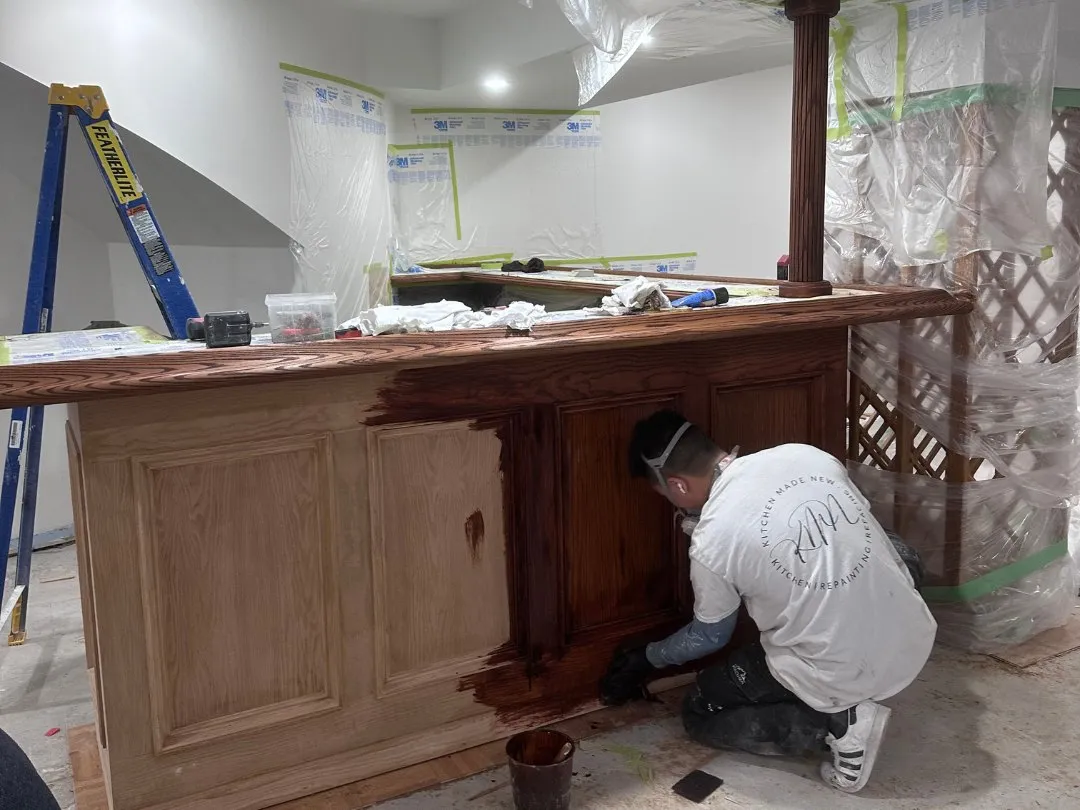
Stain works by penetrating. It has to reach open timber, which means every trace of the old lacquer, varnish or oil has to be gone before any colour goes on.
Chemical stripper, dwell time, scraping, neutralising, then sanding up through the grits. On a flat slab door that is quick. On a raised panel with a moulded profile — which is most of what we strip — the corners where the old finish sat thickest are precisely where no orbital sander reaches. That is hands, hooks, and hours.
Anything sold as refinishing that skips the stripping is a tinted topcoat: a translucent varnish laid over the old surface. It looks reasonable for about two years, it cannot be repaired locally, and it fails as a film peeling off rather than as a finish wearing down.
This is why refinishing is priced closer to refacing than to painting. The doors are free and the labour is not.
What goes on top, and why it is kept separate from the colour
Clear 2K polyurethane, over the stain rather than mixed into it.
That separation is deliberate and it matters for the life of the kitchen. When the colour lives in the topcoat, every bit of wear takes colour with it, and any repair means recoating an entire panel to avoid a visible patch. When the colour is in the timber and a clear film sits over it, wear removes finish and leaves the colour where it is — and a damaged area can be made good locally without redoing the door.
The clear coat is the same catalysed product used on everything else here: hard enough for kitchen cleaning, resistant to the degreasers people actually use, and non-yellowing. That last one is not a small point on a stained finish. An air-drying clear over a cool-toned stain drifts warm within a few years and quietly undoes the decision you made.
Sheen is chosen with you. Most kitchens here go to a satin; the higher the sheen, the more a door reports every fingerprint and every imperfection in the substrate underneath it.
The service that keeps the most and suits the fewest kitchens
Refinishing keeps your doors and changes what is on them, which is the least wasteful of the three and the most limited. It needs solid timber worth looking at, it only goes darker, and it costs more than painting because stripping cannot be rushed. Where the door profile itself is dated, no finish rescues it. Reading how refinishing compares with refacing and painting on one kitchen is the quickest way to find out which of the three your kitchen wants.
Cabinet Refinishing Cost in Toronto
Refinishing is priced on the count of doors and drawer fronts and on how long the stripping will take, which is a function of the profile rather than the size. A kitchen of flat slab doors and a kitchen of moulded raised panels with the same door count are not the same job and are not the same number.
The quote itemises the stripping, the sanding, the colour work, the clear coats, the frames done in place, and the hardware if you are changing it. Interiors and shelving are a separate line and most people decline them once they see what spraying them adds.
The written price comes from photographs inside 24 to 48 hours and it does not change afterwards. The one thing that can stop a refinishing job is discovering that a door is veneered after all, and that is why we ask for a photograph of a door edge before quoting rather than after starting.
Cash, debit, credit and Visa, staged rather than up front, with nothing taken at the design visit.
Questions
Common questions about cabinet refinishing in Toronto
- Can I see how a refinishing job runs before I book?
Yes. Our showcase shows how a refinishing job runs, start to finish, with real kitchens we have finished, what gets sprayed where, prices and warranties.
- How do I know if my doors are solid wood?
- Open one and look at the edge and the back. Solid timber shows grain running continuously round the edge; veneer shows a thin face sheet over a different core, usually with a banded edge. Photographs of the back and edge of one door are enough for us to tell you, and it is the first thing we check.
- Can you make my dark cabinets lighter?
- Not by staining, no. Stain adds colour to timber; it cannot subtract it. Stripping does remove the yellowed lacquer on top, and on nineties oak that alone is often most of the orange people dislike — but going from walnut to honey is paint, and we will say so rather than take the job.
- Is this cheaper than refacing?
- Usually somewhat, but less than people expect, and on a moulded raised-panel door it can be close to level. You are not buying cabinetry, but you are buying a great many hours of stripping, and the corners where the old finish is thickest are exactly where no machine reaches.
- Will the new finish yellow like the old one did?
- No, and that is the specific reason for the product we use. What has gone amber on a forty-year-old kitchen is an air-drying lacquer. Catalysed 2K is non-yellowing, which matters far more on a clear coat over stain than it does under an opaque colour.
- Can you refinish only the doors and leave the frames?
- We would rather not, and it is worth understanding why. Stripping and recolouring the doors while leaving forty-year-old lacquer on the frames gives you two different colours in one run, and the frames are what you see with the doors shut. The frames are done in place.
Not sure whether your doors are worth stripping?
Photograph the back and the edge of one door along with wide shots of the runs. That is enough to say whether this is solid timber worth uncovering, and the answer comes back the same day.
Free in-home consultation · no obligation
Refaced. Repainted. Refinished.