
Wood Painting in Toronto — The Joinery That Is Not a Kitchen
Toronto's older houses are full of joinery worth keeping and painted six times over. The build-up is the job, far more often than the colour is.
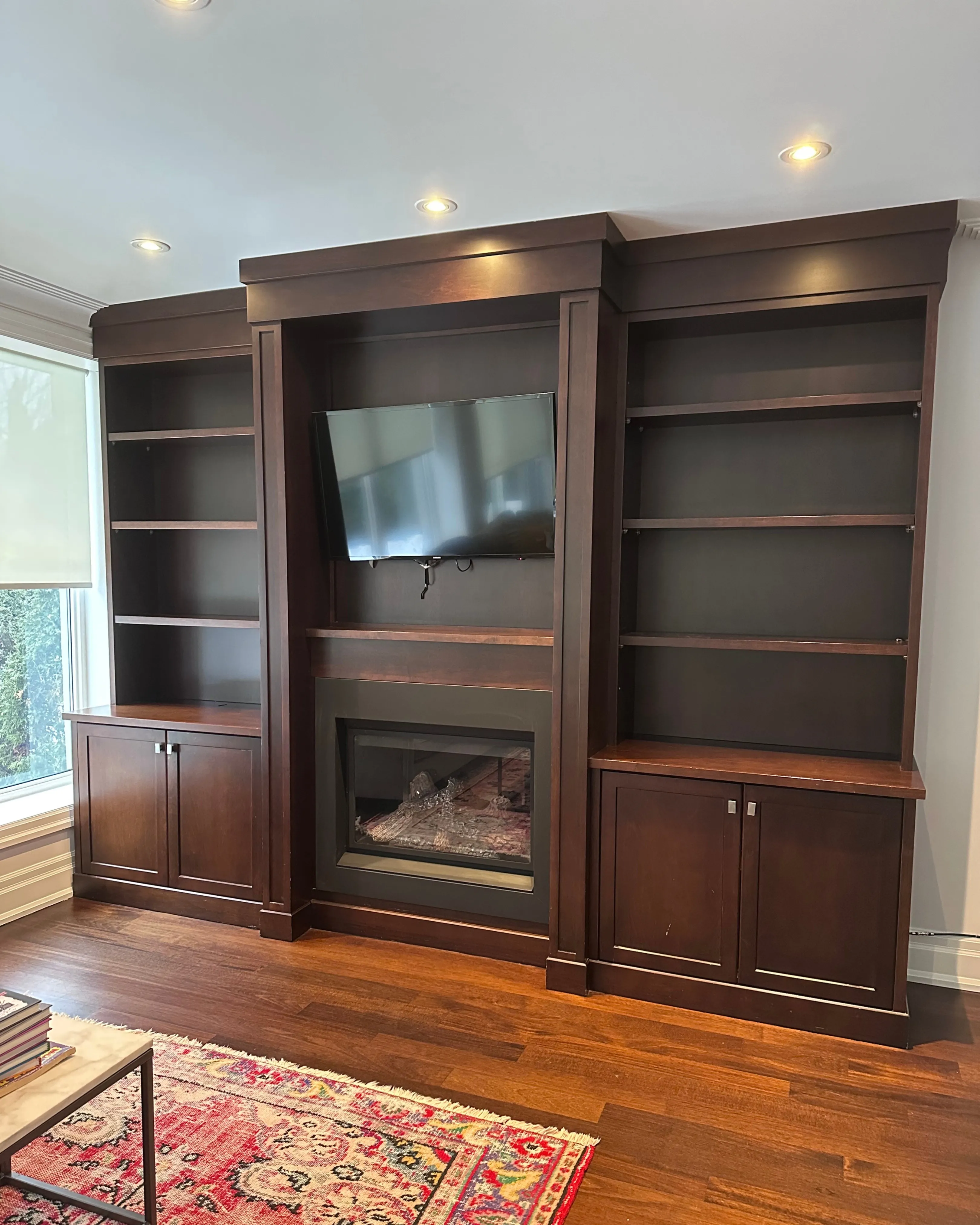 Before
 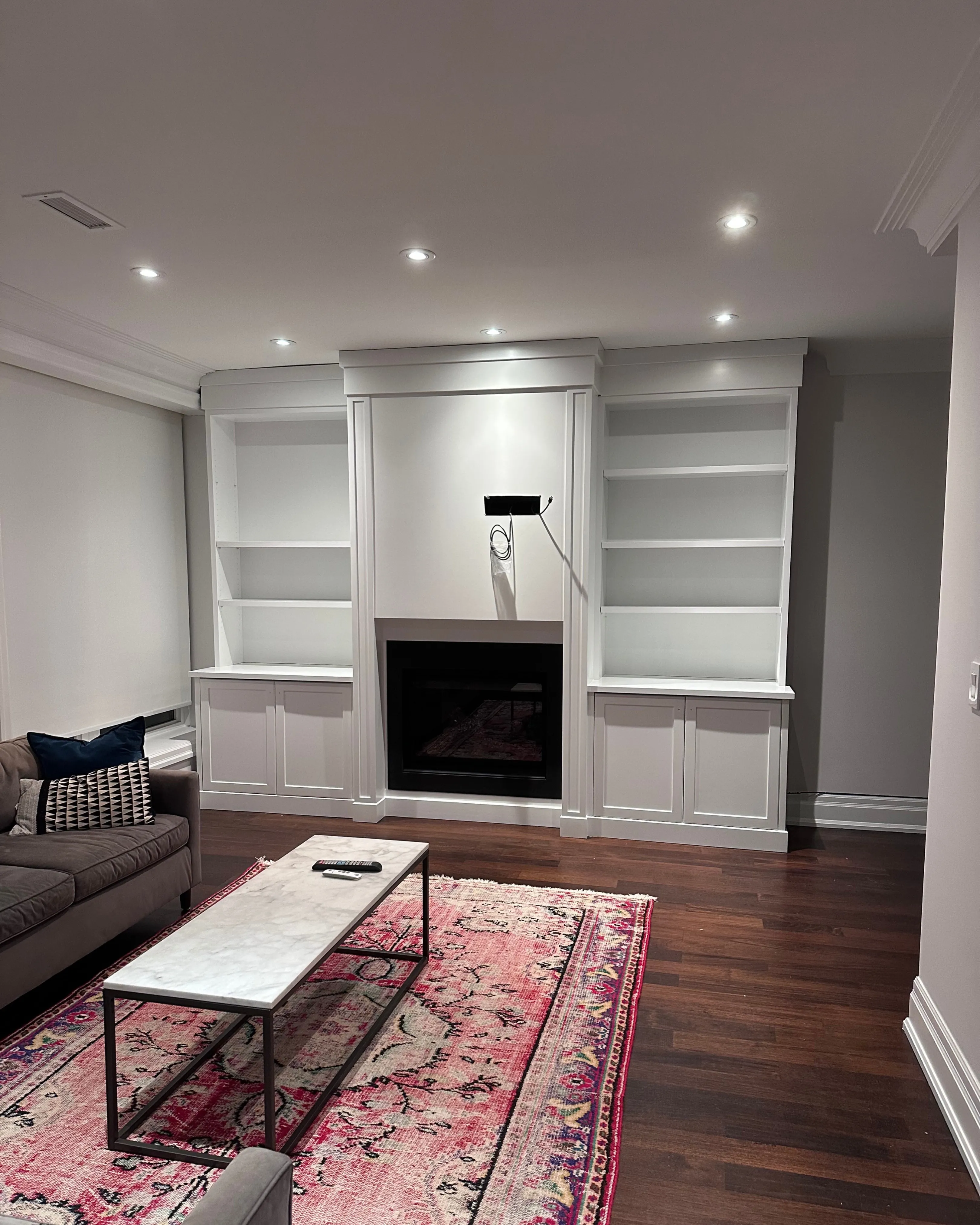 After
After Six coats
What a 1920s baseboard often carries
Brush or gun
Chosen by the object, not by habit
5 years
On the finish and the workmanship
5.0
Rated on Google
What this covers
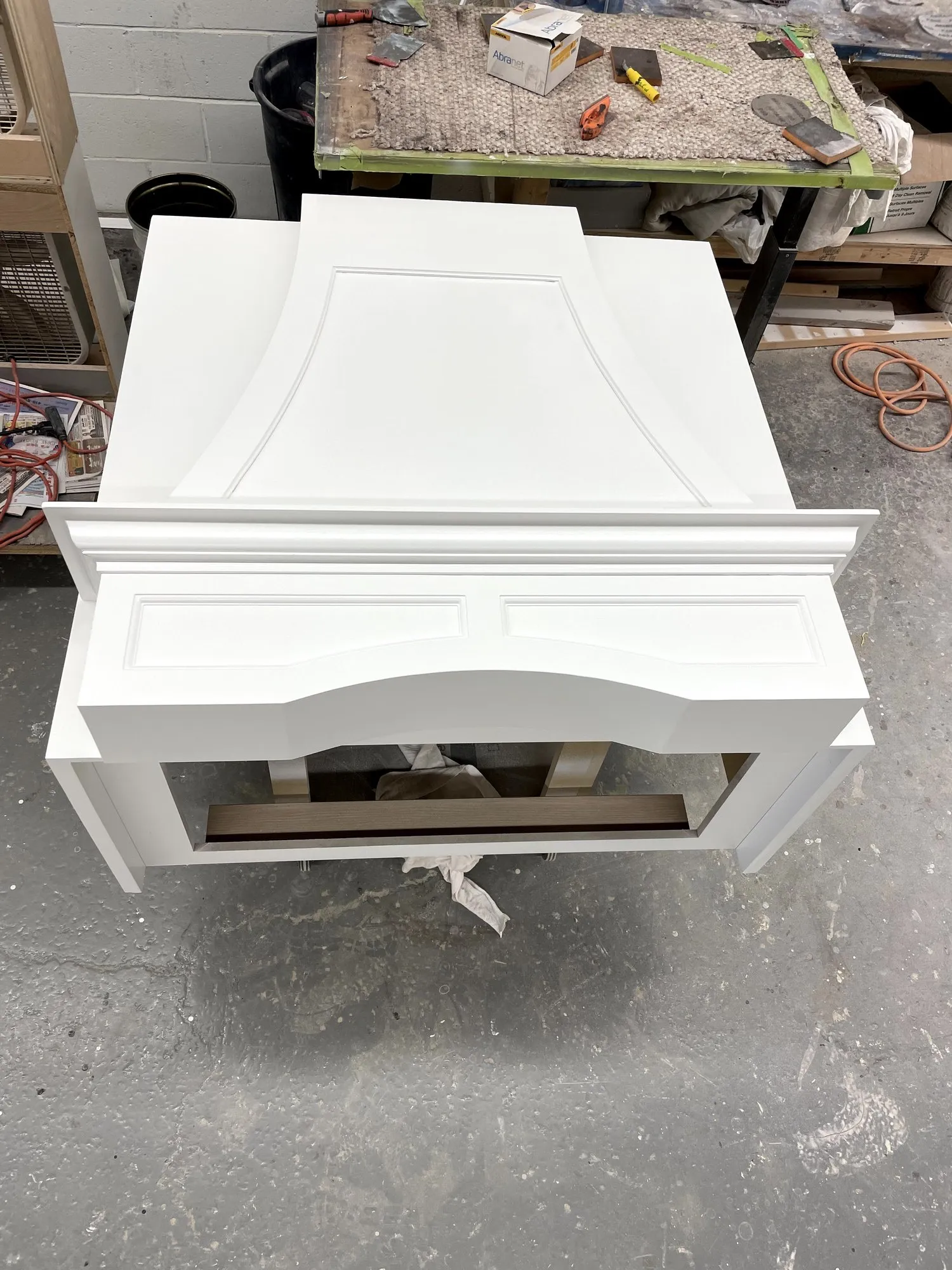
Everything wooden in a house that is not kitchen cabinetry.
Baseboards, casings and architrave. Crown moulding. Staircases — treads, risers, stringers, balusters, newel posts and handrails. Mantels and fire surrounds. Built-in bookcases, window seats and linen presses. Bathroom vanities. Radiator covers. Interior shutters. And freestanding furniture, which comes to the booth and gets exactly what a cabinet door gets.
It is roughly a third of what this shop does, and in Toronto's older stock it is frequently the work that changes a room more than the walls do.
The build-up problem, which is most of the work
A house built in 1925 in the west end has been decorated somewhere between eight and fifteen times. Almost none of those decorators stripped anything.
What that leaves is a moulding carrying millimetres of accumulated paint. Every coat softens the arrises — the sharp edges where two faces of a profile meet — and fills the quirks and coves a little more. After enough decades an elaborate Edwardian casing reads as a vague hump with a suggestion of shape in it, and people assume their trim is plain.
It is usually not plain. It is buried.
Bringing it back is chemical stripper, dwell time, and a lot of hand work with hooks and shaped scrapers, because the detail that needs clearing is exactly where no machine reaches. It is slow, it is priced by the hour rather than by the foot, and it is the single most transformative thing available in an older Toronto house.
Not every room is worth it and we will say which. Plain modern trim in a nineties build has nothing buried in it, and stripping that is spending money to arrive where you already are.
Brush or gun, decided by the object
We own a spray booth and we still brush a great deal of this work, which surprises people.
The rule is not about quality. It is about what masking costs. To spray a skirting board in an occupied living room you have to sheet the walls, the floor, the furniture and the openings, run extraction, and keep the family out of the room. To brush the same skirting board you need a dust sheet and a good brush.
A modern waterborne alkyd, brushed by somebody who knows how to keep a wet edge, levels far better than the enamel most people remember from twenty years ago. On a baseboard viewed from standing height, the difference between that and a sprayed finish is genuinely hard to see.
So the split we use is: if it can come off and go to the booth, it goes — doors, shutters, furniture, removable shelving, and any built-in component that unscrews. If it is fixed and in a room you are living in, it gets brushed, unless the whole room is being done at once and containment is going up anyway.
Where spraying is clearly right on fixed work is a staircase. Balusters are impossible to brush well — dozens of turned spindles, every one of them a four-sided object with no flat face — and a stair is usually in a hall that can be sealed off for a couple of days.
Preparation, and the two things that undo it
The sequence is the same as everywhere else here: degrease, abrade, prime, sand the primer, two topcoats. The two failures specific to this work are worth naming.
The first is tannin. Oak, fir, cedar and knotty pine all contain compounds that migrate into a paint film and appear as brown or amber staining, and old Toronto trim is very often fir. Ordinary primer does not stop it. A dedicated blocking primer does, and skipping it produces a white staircase that is faintly tea-coloured across the newel post four weeks later. This is not recoverable by adding more topcoat — the only fix is to go back and block it.
The second is movement. Trim is fixed to a house that moves seasonally, and the joints between lengths, and between trim and wall, open and close through the year. Caulking those before painting is standard. Using the right caulk is not always — a rigid filler in a joint that moves cracks in one winter, and the crack shows as a dark line down a white casing. Flexible where it moves, filler where it does not.
Staircases, which deserve their own paragraph
The most abused painted surface in any house, by a distance.
A handrail is gripped by a hand carrying skin oil, several times a day, for decades. Balusters get kicked. Treads take the entire weight of everyone in the house, and if they are painted rather than carpeted or clear-finished they need a coating hard enough to accept that.
So a stair is finished differently from the trim around it. Handrails and treads get 2K where the layout allows containment, because nothing water-based holds up to that contact. Balusters and stringers can take a waterborne alkyd since nothing grips them.
There is also a practical constraint people forget: a staircase is the only route between the floors of a house. It cannot be closed for three days in most homes. So stairs get done in halves — one side at a time with a rope, or treads on alternate steps so the stair remains walkable while the finish cures. That doubles the visits and it is the only way it works in a house people are living in.
The same trade, applied to things that are not cabinets
Everything here uses the equipment and the preparation sequence built for kitchen cabinetry, applied to the rest of a house. The reason it transfers is that a banister and a cabinet door have the same problem — a surface people touch, seen close, that has to stay hard. Reading how one spray shop ends up doing stairs and mantels covers the method this all rests on before any of it reaches your staircase.
Wood Painting Cost in Toronto
Trim is priced by the linear foot, built-ins and furniture by the piece, and stripping by the hour — because stripping is the one part where the time cannot be predicted from a measurement.
The condition drives the number far more than the size does. A run of casing in sound condition needing degrease, abrade and two coats is straightforward. The same run carrying eight coats of build-up, with a previous gloss that has gone brittle and is flaking, is several times the work.
Which is why photographs matter here more than on any other page on this site. A close, well-lit shot of a moulding profile tells us whether there is detail buried in it, whether the existing finish is sound or failing, and whether there is a tannin issue coming. From a wide shot alone we would be guessing.
Doing a whole floor at once is meaningfully cheaper per foot than doing one room, for the same reason it is on every other page: setup, protection and travel are shared. It is worth asking for both numbers so you can see the difference.
Written price inside 24 to 48 hours, itemised with stripping separated from finishing so you can take one and leave the other. Cash, debit, credit and Visa.
Questions
Common questions about wood painting in Toronto
- Should my trim be sprayed or brushed?
- Brushed, in most occupied houses, and we will usually say so against our own interests. Masking a whole room to spray a skirting board costs more than the improvement returns. A waterborne alkyd laid on with a good brush levels far better than people expect and leaves no overspray risk in a house you are living in.
- Can you paint over stained trim without it looking wrong?
- Yes, though it is a one-way decision worth sitting with. The technical part is straightforward — degrease, abrade, blocking primer, two coats — and the blocking primer is not optional, because the tannin in old oak or fir will come through white within weeks otherwise.
- There is a lot of paint build-up on my mouldings. Can that be fixed?
- Usually, and it is the most satisfying part of this work. Six decades of coats round off every arris until a detailed moulding reads as a soft lump. Stripping the build-up back brings the profile out again. It is slow and it is priced by the hour rather than the foot.
- Will you paint furniture?
- Yes, and it goes to the booth where it gets the same treatment a cabinet door does. Pieces with existing wax or oil finishes need real degreasing rather than a wipe, and anything veneered gets checked first — the same rule as everywhere else on this site.
- Do you do the whole house or only the woodwork?
- Only the woodwork. We hold two trades, cabinetmaking and spray finishing — walls and ceilings are a decorator's job and a good decorator is cheaper at it than we would be. We are frequently on site alongside one and the sequencing works fine.
Joinery that deserves better than another coat?
Photograph each run of trim or piece of joinery, plus a close shot of any moulding that has lost its detail. The written price comes back inside 24 hours and separates the stripping from the finishing.
Free in-home consultation · no obligation
Refaced. Repainted. Refinished.