
Custom cabinet doors
Cabinet Maker in Toronto — Doors Made to Your Openings
Refacing only works if somebody can build a door to an opening that is not a standard size. Almost no opening in an old house is, which is the whole point.
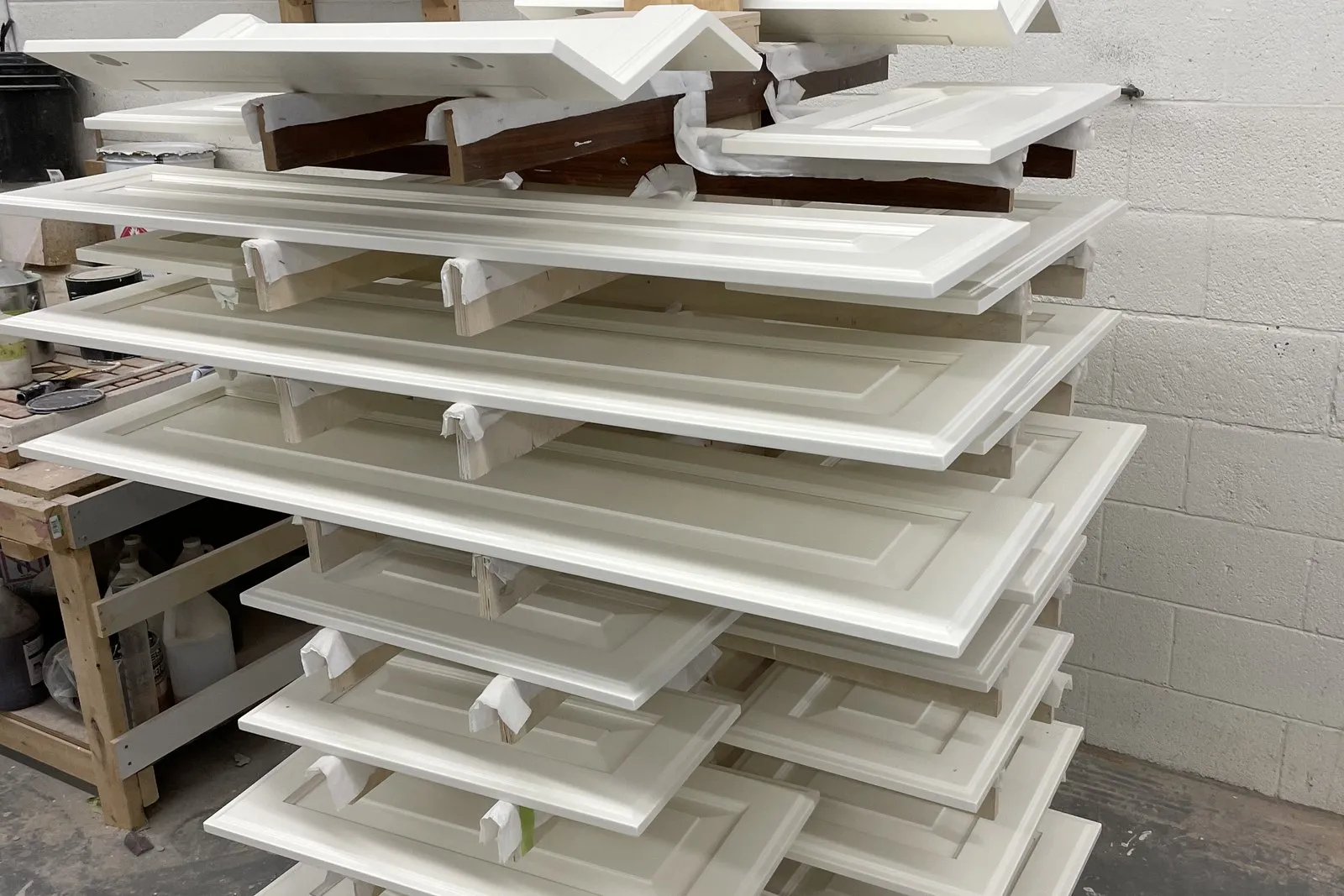
To your opening
Not to the nearest catalogue size
15 years
On waterproof MDF doors and fronts
25 years
In the trade, and here since 2013
5.0
Rated on Google
What we make when the kitchen already exists
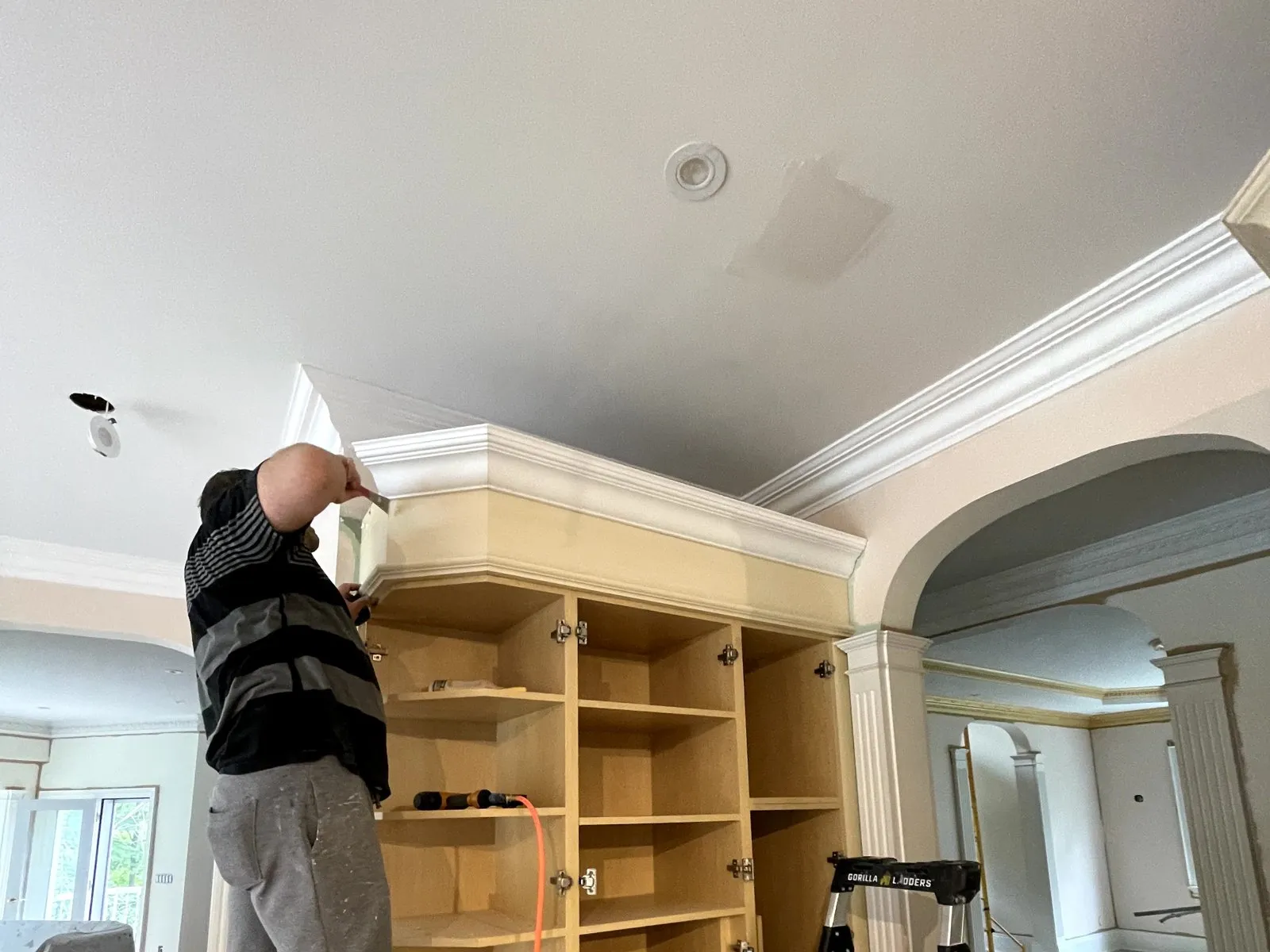
Most cabinetmakers build kitchens from nothing. We mostly do the opposite: we specify and build the parts that let an existing kitchen carry on.
Custom cabinet doors are most of what we order and fit, and measuring them for a kitchen that already exists is a different discipline — harder in one specific way. A new kitchen is built to dimensions the maker chose. An existing kitchen has dimensions somebody else chose in 1962, then a house settled around them for sixty years, and now nothing in the run is quite what the drawing said it was.
So the work is measurement before it is manufacture. Every opening in a run gets measured individually rather than one being measured and multiplied, because in an old house they differ — by two or three millimetres usually, occasionally by more, and always enough to matter across a row of doors where the eye reads the gaps rather than the doors.
The gaps are what people see. Nobody looks at a kitchen and assesses door widths. Everybody notices when the space between two doors is wider at one end of a run than the other, even if they cannot say what is bothering them.
Why measuring to the opening beats a catalogue size on an old kitchen
There is a version of refacing that works from a catalogue. Standard door sizes get ordered, and where an opening does not match one, the difference is made up with a filler strip or by packing the frame out.
It works, in the sense that the kitchen ends up with new doors on it. What it is not is custom cabinet doors, whatever the quote calls them. What it produces is a run with inconsistent reveals and the occasional strip of made-up material beside a door, and it is why some refaced kitchens read as slightly wrong without anybody being able to say why.
Making the door to the opening removes the problem rather than managing it. The door is made to the size the gap needs, so the reveal is what it is meant to be all the way along, and there are no fillers because nothing needs filling.
It also costs less than people assume in this situation, because the comparison is not door against door. It is a door plus fitting carpentry against a door that already fits. On a kitchen of thirty openings, the carpentry side of that adds up.
What is made to measure and what is bought
Worth being precise, because "custom" is a word that gets used loosely in this trade.
Made to our measurements by door makers: doors and drawer fronts.
Made here: drawer boxes, end and side panels, valances, fillers, toe kicks, and any trim or millwork run to match an existing profile. Doors are booth-sprayed before anything travels.
Bought in: hinges, runners, handles and knobs, and the sheet material and timber the parts are made from. Nobody manufactures their own hinges and anybody claiming to is describing something else.
Contracted out: stone. Countertops are templated, fabricated and installed by a fabricator who is named in your quote, because we do not own a saw for it and would not pretend to.
That list is the honest boundary of this business, and it is on the page because the alternative — a company saying yes to every part of a kitchen — is a company marking up other people's work without telling you.
The four things this shop is asked for most
Custom cabinet doors, obviously. That is the volume of it and it is what makes refacing possible at all.
Drawer boxes second, and usually as a discovery rather than a request. People ask for new fronts and we find that half the boxes behind them are stapled particleboard with bottoms sitting loose in their grooves. A new front on one of those is a good-looking drawer that still does not work.
Soft-close hinges third, and it is the smallest spend on this page by a distance. Retrofitting concealed dampered hinges into a face-frame cabinet built decades before they existed is a fitting problem, but it is an hour's work per door and people report noticing it every single day afterwards.
Millwork fourth, and it is the one that saves old rooms. A house in the west end with an original profile that no merchant stocks does not need its trim replaced throughout — it needs the missing length reproduced, and that is a matter of reading the section and cutting a knife to it.
What we make to measure
Four parts, made to your kitchen
Four things are made to your kitchen's measurements rather than taken off a shelf. Each of them is the reason a kitchen can be kept rather than replaced.
Custom cabinet door replacement
Doors and drawer fronts made to your openings, to our measurements, in the profile and finish you choose, then booth-sprayed before they ever reach your house. The measuring is the part that decides whether a kitchen looks made or looks fitted — reveals have to be consistent across a run whose openings are not, and how a door gets measured before it gets made is where that gets resolved on paper rather than at the wall.
Soft-close hinge upgrades
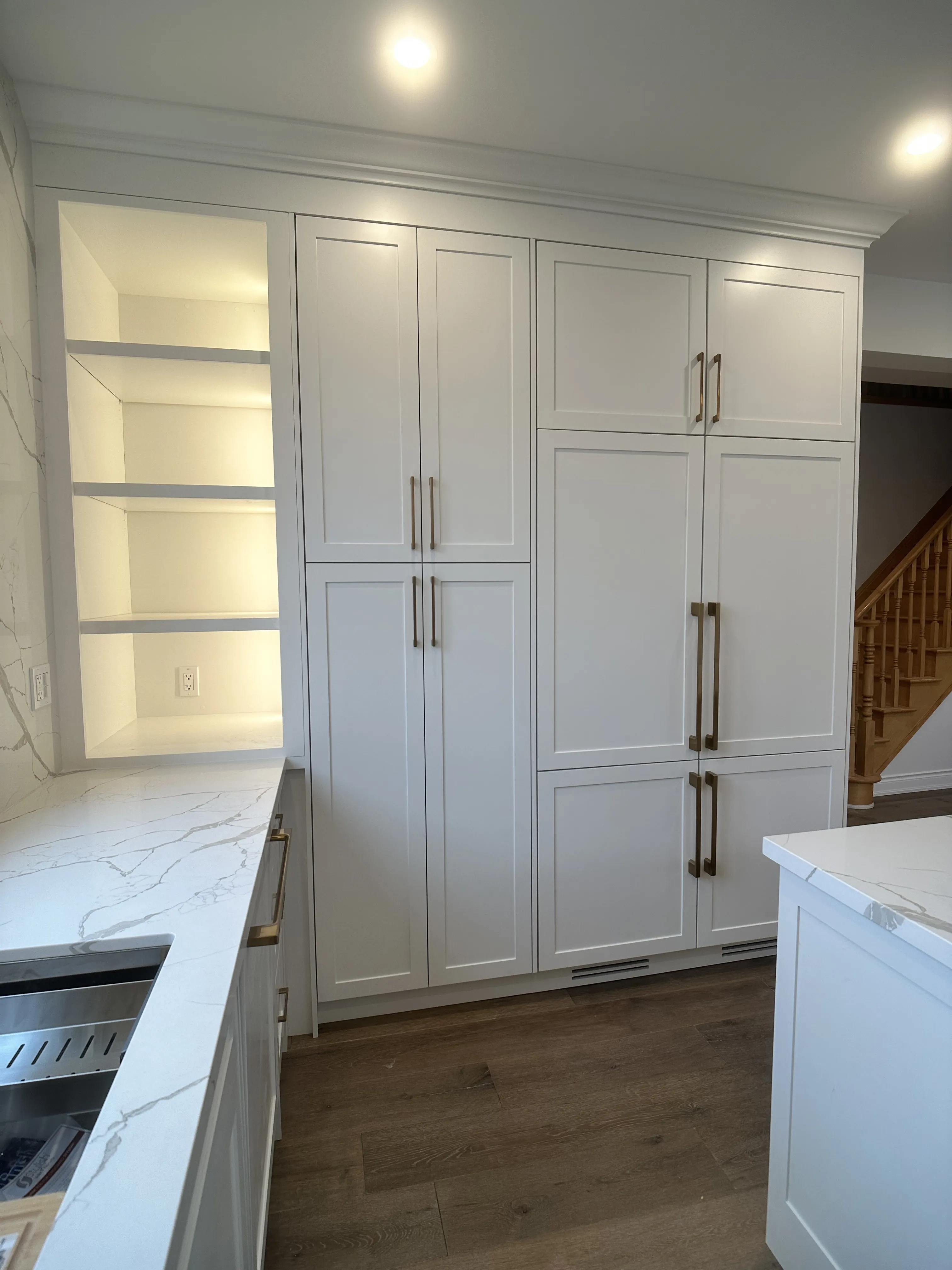
The cheapest change in this list and the one people report noticing daily. Modern concealed hinges with an integrated damper, retrofitted into cabinets built long before they existed — which is a fitting problem rather than a shopping one, because a face-frame cabinet from 1962 was never designed for them. Understanding what a hinge actually has to do in a face-frame kitchen explains why this is quoted per door rather than per box.
Custom millwork and trim
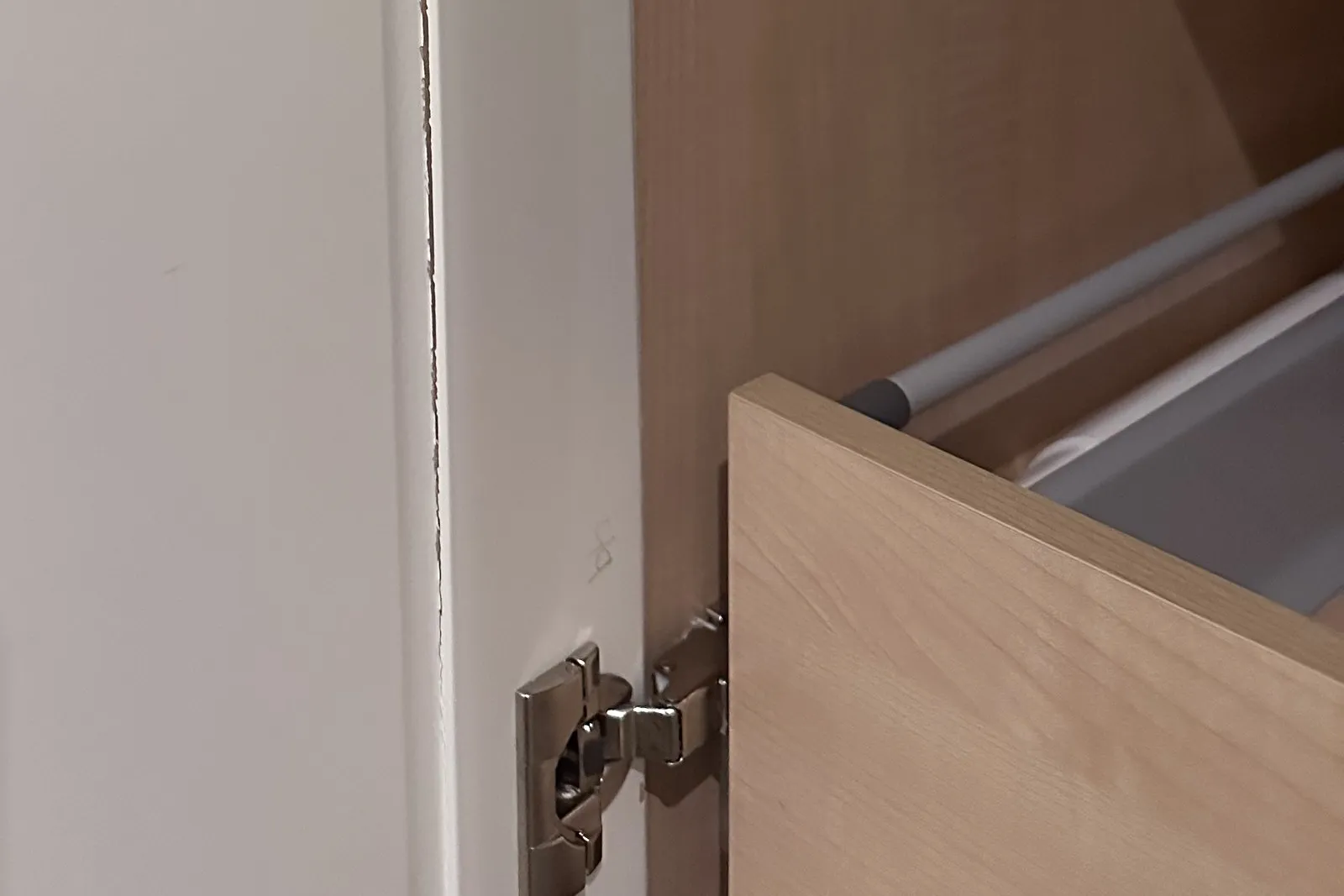
Trim, valances, end panels, crown and filler pieces, run to match what is already in the room rather than to whatever the merchant stocks. Toronto's older houses use profiles that stopped being made decades ago, and matching one means reading the section and cutting to it. Reading how an existing moulding profile gets reproduced shows why a patched run and a matched run look nothing alike.
Drawer box replacement
New boxes in ply or solid stock, on undermount runners, sized to the opening. A drawer is the part of a kitchen that gets used hardest, and a stapled particleboard box with a bottom that has dropped out of its groove is the most common failure we find. Putting a new front on one is why the box matters more than the front on it in the wrong order.
Measuring to the opening is what makes keeping a kitchen possible
None of the services on this page are usually bought on their own. They are what a refacing project is made of — the doors, the boxes, the hinges and the trim that together let a sound one carry an entirely new kitchen. Reading what happens to a kitchen that is refaced rather than replaced puts them in order and explains why a company that orders standard sizes has to make your openings fit them.
Questions
Common questions about custom cabinet work in Toronto
- Do you actually make the doors or order them in?
- We order them in from door makers we work with, made to the measurements we take in your kitchen. That is how we can build to an opening rather than to a catalogue. A company ordering from a list of standard sizes has a problem where your opening does not match one, and the usual resolution is a filler strip — which is visible and is why some refaced kitchens look slightly off.
- Is custom more expensive than standard?
- On a new build, yes. On an existing kitchen, frequently not, because the alternative is not a cheaper door — it is a cheaper door plus the carpentry to make your opening accept it. Fillers, packers and scribes are labour, and they are labour that shows.
- Can you match cabinetry that is staying?
- Usually, and it is common — a new run alongside an existing one, or a pantry added to a kitchen otherwise being refaced. Profile is reproducible from a sample. Colour is matched physically in your own light. Species and grain on a stained kitchen are the harder part and we are honest about how close it will get.
- What are the doors made from?
- Waterproof-grade MDF for anything painted or sprayed, which is the better material for that job and not a compromise — no grain telegraphing, no seasonal movement opening a joint. Solid timber where the finish is stain or clear and the grain is meant to be seen.
- How long does the shop work take?
- About four weeks from the measure to the doors being ready, and your kitchen is entirely normal for all of it. That is the part of a project people brace for unnecessarily — nothing happens at your house until the parts exist.
Openings that no standard door fits?
Send wide photographs of every run of cabinet and a written price comes back inside 24 hours. Doors, boxes, hinges and trim are separate lines, so you can take the parts your kitchen needs and leave the rest.
Free in-home consultation · no obligation
Refaced. Repainted. Refinished.