
How Long Painted Kitchen Cabinets Last in Oakville
The honest answer is a range from eighteen months to well past a decade, and the finish decides which end of it you get. Here is what separates the two.
What “last” actually means
When people ask how long painted cabinets last, they are asking two questions at once. The first is whether the finish will stay attached to the door. The second is whether it will still look the way it did the week it was sprayed. These have different answers, and it is worth separating them, because a finish that stays on for twenty years but wears through around the handles in three has answered the first and failed the second.
The finish we spray answers both for the five years we warrant it and, in a normal kitchen, for a long time after. Staying attached is settled by the preparation. Staying good-looking is settled by the hardness of the coating and by what the kitchen does to it. The rest of this page takes each of those in turn.
Eighteen months or a decade
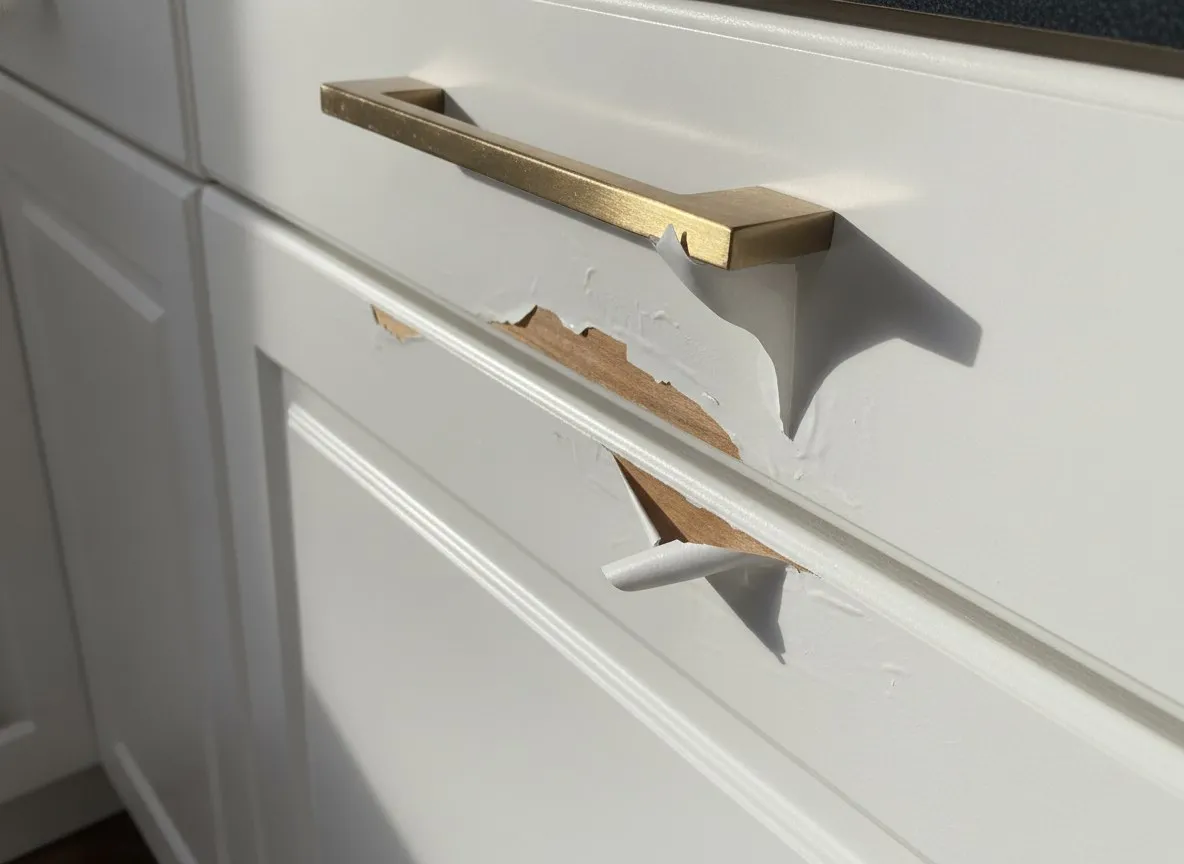
Painted kitchens in Oakville fail early for one reason far more often than any other, and it is not the paint. It is that the coating went down onto years of furniture polish and cooking film that a water-based cleaner never lifted. The paint bonds to the wax rather than to the door, holds through one season of use, and begins letting go around the handles. That is the eighteen-month kitchen, and it is common enough to have given painted cabinets a reputation.
The other end of the range comes from doing the opposite. A solvent degreaser that cuts the wax, a proper sand, and a catalysed two-component polyurethane that cross-links into a film substantially harder than anything that dries by evaporation. The coating outlasts the warranty in a normal kitchen, and most painters would not offer five years on it because their finish could not carry the claim.
Wear against damage
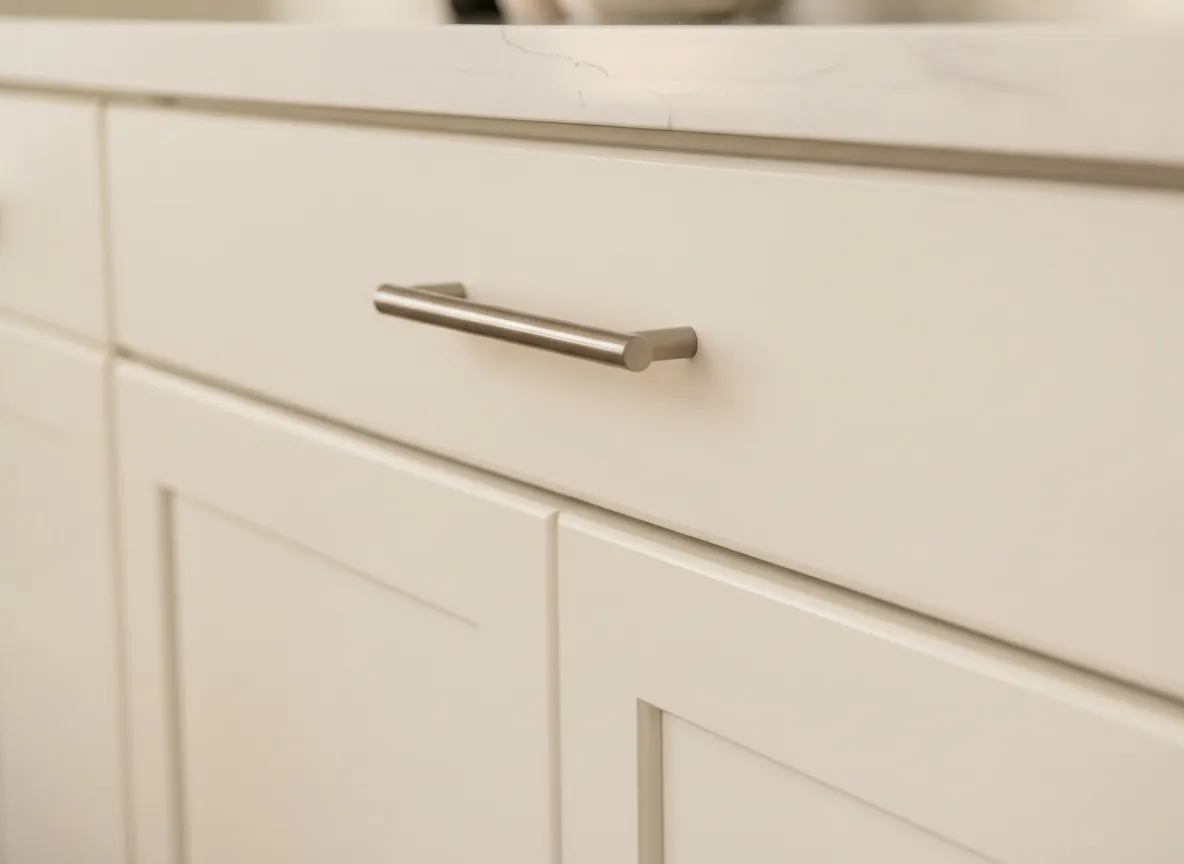
Once a finish is properly attached, what shortens its life is damage rather than wear. Wear is what hands, cloths and cleaners do over years, and a cured 2K coating is hard enough that in a normal kitchen it barely registers. It does not soften under grease, it stands up to ordinary kitchen cleaners, and it does not yellow.
Damage is a different category. A chair back that meets the same lower door every evening, a recycling bin lid that swings into an end panel, a dishwasher door left open against a run of drawer fronts. These take pieces out of any finish, factory or sprayed. Two things soften the blow. The primer under every door is tinted to the topcoat colour, so a chip shows as a dent in the same shade rather than a flash of white, and a chip in a sound finish can be touched in. A flake cannot, but a properly prepared finish does not flake.
What five years covers
Peeling, flaking, adhesion. Not the chair back that meets the same door every evening.
The warranty is five years on the finish and the workmanship. On the finish, that means peeling, flaking, delamination and loss of adhesion — the coating letting go of the door on its own. On the workmanship, it means the doors hanging true, the adjustments holding and the hardware seated as it should be. If the finish itself fails, it is ours to come back and put right, and the colour and product used on your kitchen are on file so the repair matches.
What it does not cover is the damage described above, or the ordinary wear of a kitchen in daily use. The industry standard for cabinet painting is one to two years, and the reason we can write five is not optimism. A catalysed finish over a properly degreased door produces dramatically fewer callbacks than the water-based systems most painters use, and the warranty is priced on that record rather than on hope.
Why the cure matters as much as the coat
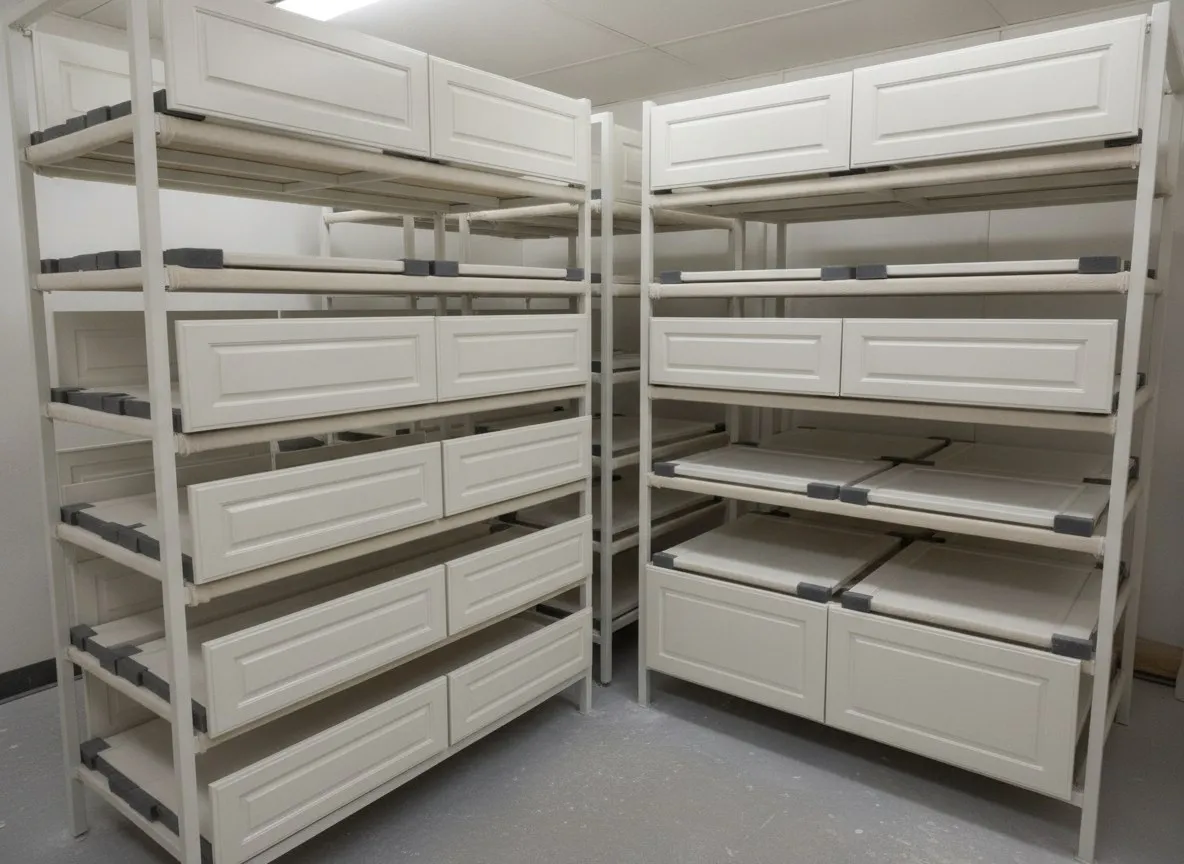
A 2K polyurethane does not dry; it cures. The two components react and cross-link, and that reaction needs time to develop the full hardness the coating is capable of. The doors have a fortnight in the shop, which is far longer than they need for spraying alone, and that is deliberate — the last coat has time to reach full hardness before the doors are handled, packed and hung. On site, the frames and boxes get a minimum of 24 hours from the final topcoat before the walkthrough, and the on-site days are timed to guarantee it.
This is the part of longevity nobody photographs. A finish rushed back into service before it has cured takes fingerprints, dents under a knock it would otherwise shrug off, and never reaches the hardness it was mixed for. The years are made in the waiting, and the schedule is built around not shortening it.
The finish the years depend on
None of the figures on this page belong to painted cabinets in general. They belong to one way of painting them — doors degreased with a solvent, sanded, sprayed in a booth with a catalysed two-component polyurethane, sanded between every coat and left to cure before they come home. The page above sets that out end to end, and reading the service the five-year warranty is written on is the way to check that what is being promised here is the same thing that is being sold, which in cabinet painting is not always the case.
Where the durability is actually made
Longevity is decided in the fortnight the doors are away and the five days the crew is on site, not afterwards. The degreasing, the sanding between coats and the cure times are where a finish earns its years, and none of it is visible in the finished kitchen. The next page walks through what the two and a half weeks actually look like day by day — what happens on the day the doors come off, what your kitchen is like without them, and why the on-site week is timed the way it is.
Questions
Common questions
- How long do professionally painted kitchen cabinets last?
- With a booth-sprayed catalysed finish over properly degreased doors, well past the five years we warrant — the coating outlasts the warranty in a normal kitchen. With a brushed water-based enamel over a wiped-down surface, eighteen months to two years is common before the handles start to show through.
- What is the warranty on painted cabinets in Oakville?
- Five years on the finish and the workmanship. That covers peeling, flaking, delamination and loss of adhesion. Most cabinet painters offer one to two years at most, and the difference is the finish they use rather than their confidence.
- What is not covered?
- Damage and ordinary wear. A chair back scraping a run of doors, a leak under the sink, a dropped pot — those are not the finish failing. If the coating lifts, flakes or lets go of the door on its own, that is ours to put right.
- Does painted cabinetry yellow over time?
- A catalysed two-component polyurethane does not yellow as it ages. Water-based enamels on white cabinetry famously do, which is one of the reasons a painted white kitchen gets a bad name that it does not always deserve.
- Do painted cabinets wear faster than factory ones?
- Not when the finish is sprayed and catalysed. A 2K polyurethane cures harder than the water-based coatings most painters brush on, resists grease and does not soften under kitchen cleaners. What people notice on a painted kitchen is the finish, not the fact it was painted.
- Why do painted cabinets peel?
- Because the coating went onto wax rather than wood. Years of furniture polish sit in the surface, water-based cleaners cannot lift it, and the paint bonds to the polish instead. It holds for a season and then lets go around the handles, which is where the hands were.
- How should I look after painted cabinets?
- A cured 2K finish stands up to ordinary kitchen cleaners and grease without softening, so the cleaning is not the worry. The more useful advice is about what touches the doors — chair backs, bin lids, a dishwasher door left open against a run — because those cause damage no finish resists.
Wondering what shape your existing finish is in?
Send close photographs of the worst doors along with wide shots of each run. We will tell you whether it is wear, damage or a finish letting go, and what that means for painting it.
Free in-home consultation · no obligation
Refaced. Repainted. Refinished.