
Backsplash Installation in Oakville — Fitted to the Counter, Not the Wall
A backsplash is fitted to the counter that is already there, not to the wall behind it. That is why it comes last, and why booking it first causes most of the problems on this job.
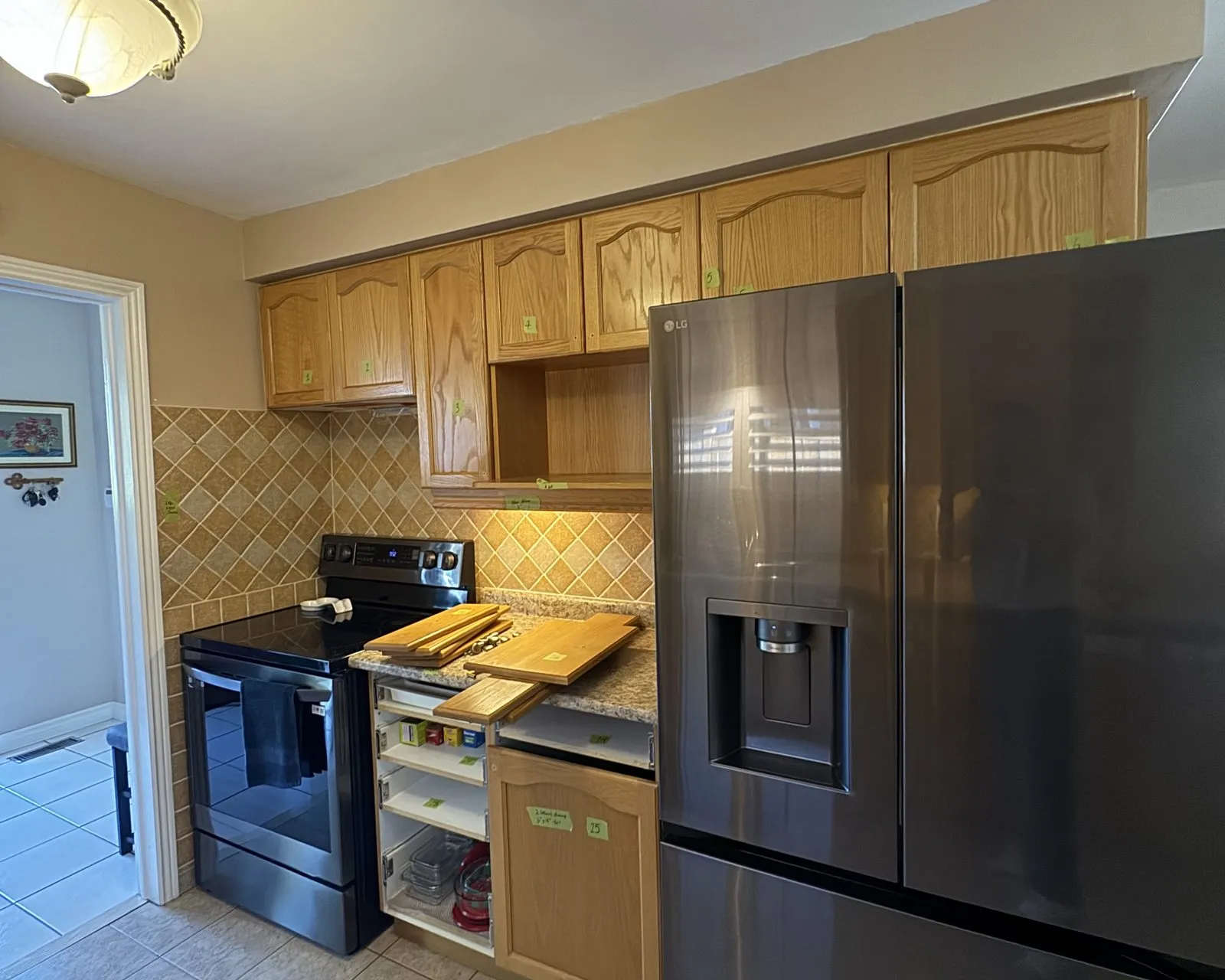 Before
 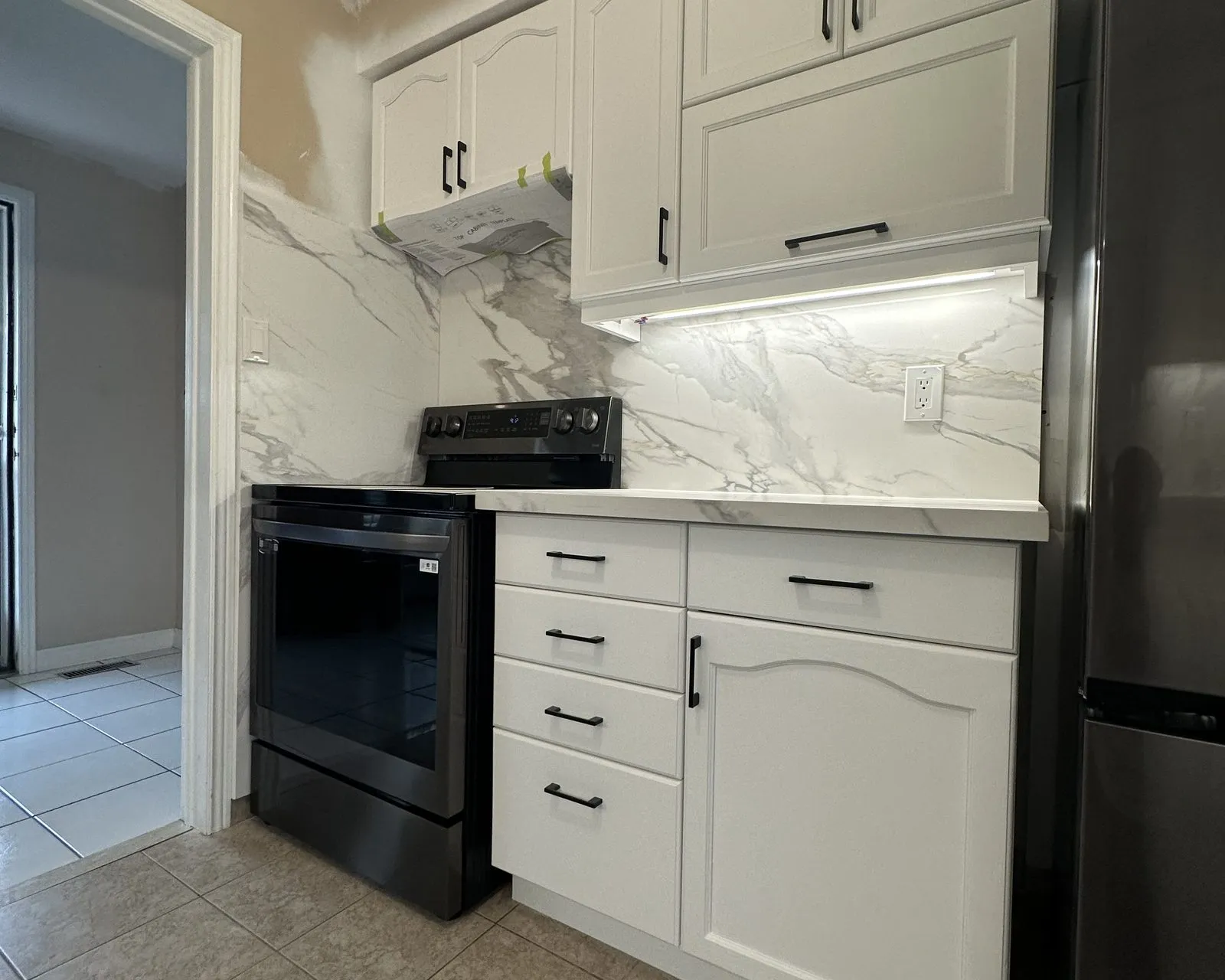 After
After Last
Fitted to the counter, not the wall
100+
Kitchens completed
25 years
In the trade, and here since 2013
5.0
Rated on Google
Why it goes in last
Walls are not straight. That is the whole reason for the order of this job.
A countertop installer does not simply lay a slab on the cabinets. They shim the boxes level, scribe the stone where the wall bows, and set the slab so it sits properly supported and looks balanced against a room that is nowhere near square. Only once that is done does anyone know where the top edge of the counter actually falls.
The backsplash is then set to meet it. Tile is cut to the counter as installed, not to the counter as measured a month earlier and not to a drawing.
Do it the other way round and you have committed to a line before the slab has arrived. Sometimes it works. Often you end up with a gap that gets filled with more caulk than anyone is happy with, or a first course of tile that has to come off.
The same logic applies further back in a project. Three stages in a fixed order, each measured off the one before it:
- Cabinets — refaced, sprayed or replaced, and cured
- Counter — templated off the finished cabinets, then fitted
- Backsplash — cut to the counter as it actually sits
This is the question we are asked most often about backsplash work and it is the one no competitor page in Oakville seems to answer.
Stone and tile are two different jobs
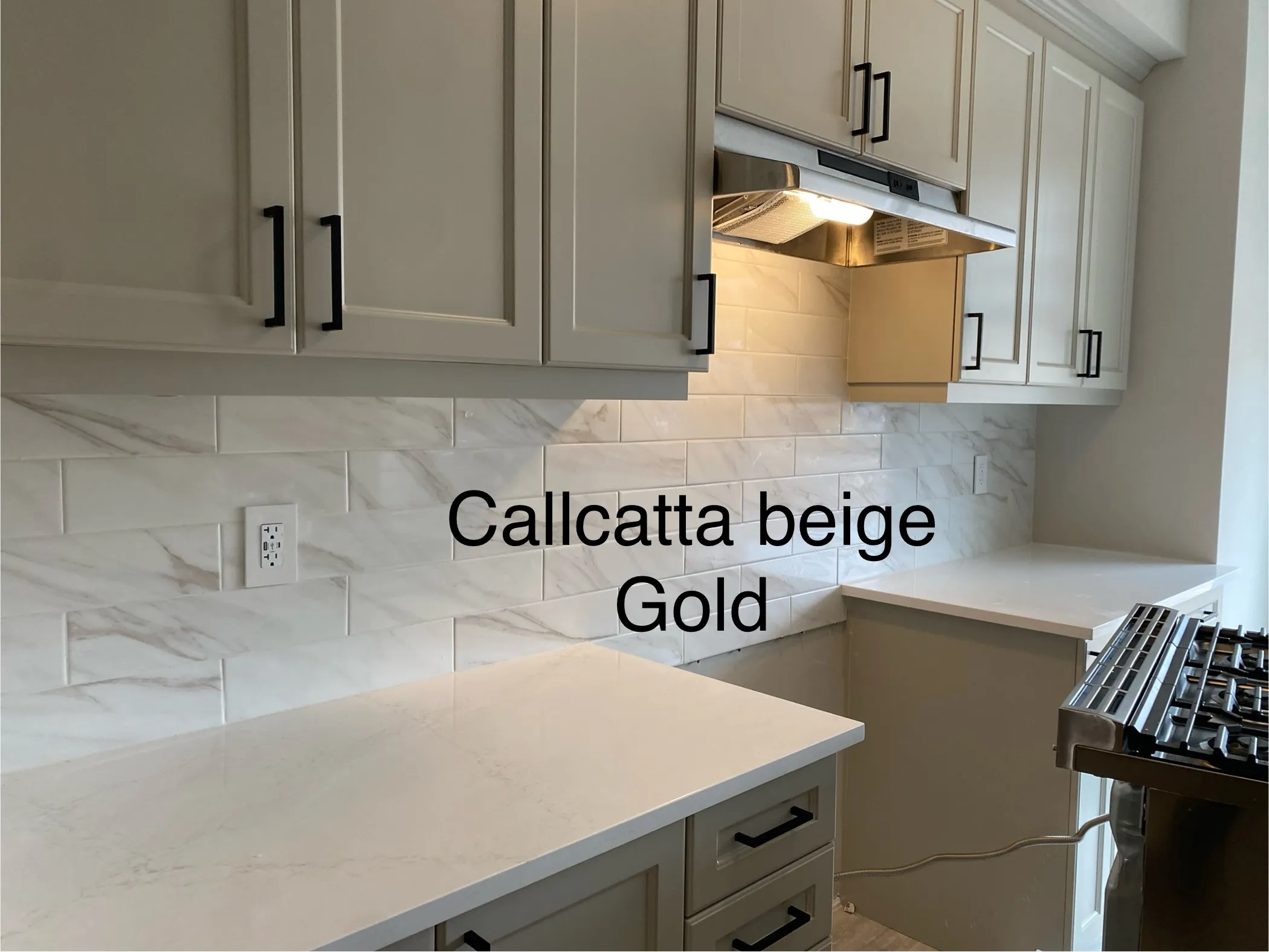
Worth knowing before you choose a material, because it changes who turns up and when.
A stone backsplash — the same slab material running up the wall — is fitted by the countertop fabricator. It is cut from the same template, it usually goes on during the same visit as the counter, and it is one trade doing both.
A tile backsplash is a separate trade and goes on afterwards. Different skill, different day, different person.
Same wall, same purpose, two entirely different jobs. People choose between them on how they look and rarely realise they are also choosing between one visit and two.
Neither is better. A stone splash gives you no grout lines and a continuous surface, which some people want and some find severe. Tile gives you pattern, texture and a much wider range of looks, and it costs less per square foot in most cases. What matters is knowing which one you are buying, because it changes the schedule.
What is behind the old one
Nobody knows until it comes off.
Behind an old backsplash we routinely find things that were never visible:
- Adhesive from a previous installation, which has to come back to a flat surface
- Drywall patched around an outlet and never sanded
- Damp in the wall behind the sink, where failed caulk has been letting water through for years without anything showing on the surface
That last one matters. It is the difference between a tiling job and a tiling job with a repair in front of it, and it is not discoverable in advance.
So the honest position is this. Wall preparation is the variable in a backsplash quote, and any quote that pretends otherwise is guessing. We price the work we can see and tell you at the point of tear-out if there is something behind it, before anybody carries on. Finding damp behind a sink is not a disaster if it is dealt with then. It is a disaster if it gets tiled over.
The outlets, which are the part people miss
Tile makes the wall deeper. Every outlet and switch inside the backsplash zone sits behind that new depth.
Extenders, which most kitchens need
An electrical box is not allowed to sit more than a quarter of an inch back from a finished surface that will not burn. Tile does not burn. So the boxes behind a new backsplash normally need approved extenders fitted, bringing the device forward to sit correctly against the tile.
This is a safety requirement rather than a cosmetic one, and it is genuinely common for it to be skipped. You can check a kitchen you already have. Take off a cover plate and look at how far back the box sits behind the tile. If there is a visible gap around the sides of the box, it was not done.
Relocating an outlet, which most do not
Relocating an outlet is a different matter again. If you want a socket moved out of the middle of a feature wall, or added for something new, that is electrical work. It needs a licensed electrical contractor and in Ontario it comes under the Electrical Safety Authority. It also has to happen before the tiling, because doing it afterwards means cutting finished tile.
Most kitchens need extenders and no relocation. It is worth asking the question early either way, since it is the cheapest decision in the project before the tiling starts and one of the more annoying ones afterwards.
Who does the work, and what the quote covers
We do not tile. Tile setting is its own craft, this company holds cabinetry and spray finishing, and we would rather book somebody who sets tile every day than have a cabinetmaker make a reasonable attempt at it.
So the tiling goes to a tiler we contract and have worked with for years. What we do is scope it, price it into one quote alongside the cabinet and counter work, and carry the schedule.
That arrangement is the point rather than an apology for it. The common alternative is booking the work through somebody who subcontracts it and then disappears from the conversation, which is where the horror stories come from. Here there is one company answerable for the sequence and one number to call when the counter and the wall need to agree with each other.
The quote is fixed. Whatever we send is what you pay, and tiling appears as its own line so you can take it out without renegotiating anything else. What moves that line is the area, the pattern you choose, how many cuts the outlets and window reveals force, and what condition the wall turns out to be in.
Warranties
Since one contract can be mistaken for one warranty. Our five years covers our own work. The tiling carries the tiler's, and stone carries the fabricator's one year. Different terms from different trades, and better known now than looked up later.
When you should not book this
Some kitchens do not need a new backsplash and it is worth saying so.
When it is a grout job, not a tile job
If the tile is sound and the problem is that the grout has gone grey and patchy, that is a cleaning or a regrouting job, and neither requires anything to come off the wall. Grout can be raked out and replaced for a fraction of a reinstallation. Discoloured silicone along the counter seam is a half-hour job with a blade and a fresh tube.
When the kitchen is coming out anyway
If you are in a rental, or you know the kitchen is coming out within a couple of years, the peel-and-stick panels sold for exactly this are a reasonable answer. They are not what we do and we have no interest in talking anyone out of them.
When only the counter is changing
If the counter is being replaced and the existing backsplash is fine, it can often stay. It depends on where the old tile stops relative to the new counter thickness, and that is worth checking before assuming both have to go.
What should not wait
Water. Soft or blown wall behind the tile, staining that keeps coming back, or tiles that sound hollow when tapped near the sink all point at moisture getting behind the surface. That is not a decorating decision.
Two ways to do the same wall
Stone backsplash or tile — different trades, different days
People choose between these on how they look, and rarely realise they are also choosing between one visit and two.
| Aspect | Stone backsplash | Tile backsplash |
|---|---|---|
| Who fits it | The countertop fabricator, as part of the stone work. | A tiler, contracted and scheduled separately. |
| When it happens | Usually the same visit as the counter. | A separate day, after the counter is in. |
| What it is cut to | The same template as the slab. | The counter as installed, not as drawn. |
| How it looks | No grout lines. One continuous surface. | Pattern, texture, and a far wider range of looks. |
| Cost | Higher per square foot — it is slab material. | Lower per square foot in most cases. |
| Trades involved | One, doing both halves. | Two, on two different days. |
The wall is the third thing that happens to a counter
Slab, wall, island. Most kitchens want two of the three and a fair number want all of them, and they cannot be booked independently because each one is measured off the last. Putting the counter and the wall on one schedule is the difference between a kitchen that shuts once and a kitchen that shuts three times for three different trades. The page above this one covers the stone and the island work that usually arrive in the same conversation.
Backsplash Installation Cost in Oakville
A backsplash is priced on the area, the tile and the preparation, in that order of predictability. The area is easy to establish from photographs. The tile varies enormously — a large-format porcelain sets far faster than a mosaic or a herringbone, and the setting time is most of the labour.
Tile setting is its own craft and this company holds two trades already, which are cabinetry and spray finishing. The tiling goes to a tiler we contract and have used for years. What we do is scope it, price it into the same quote as everything else, and hold the schedule so the wall is ready when he arrives.
The unpredictable part is what is behind the old one. New tile can sometimes go straight over the existing backsplash, and often taking the old one off is the cheaper route once you account for the depth being added — outlets, window returns and the gap under the wall cabinets all stop lining up if the wall gains ten millimetres.
It comes last, after the counters land. Booking it first causes most of the problems on this job.
Questions
Common questions about backsplash installation in Oakville
- Does the backsplash go in before or after the countertop?
- After, almost always. Walls are rarely straight or square, so the counter is shimmed and scribed into position first and the tile is then set to meet it as installed. Tile the wall first and you are asking a slab to fit a line somebody else already committed to. The exception is a stone backsplash, which is a different job. See below.
- Should the outlets be moved before the backsplash goes on?
- If you want them moved, yes, and it has to happen before rather than after. Relocating an outlet is electrical work, it needs a licensed electrical contractor, and in Ontario it falls under the Electrical Safety Authority. Doing it afterwards means cutting into finished tile. Most kitchens do not need anything moved, but they usually do need the boxes brought forward, which is the next question.
- Why do the outlets need work if nothing is being relocated?
- Because tile changes how deep the wall is. An electrical box may not sit more than a quarter inch back from a finished surface that will not burn, and tile will not burn, so the boxes behind a new backsplash normally need approved extenders fitted to bring them forward. It is a safety requirement rather than a tidiness one. You can check your own kitchen by taking a cover plate off and looking at how far back the box sits.
- Do you tile it yourselves?
- No. Tile setting is its own craft and this company holds two trades already, which are cabinetry and spray finishing. The tiling goes to a tiler we contract and have used for years. What we do is scope it, price it into the same quote as everything else, and hold the schedule so the wall and the counter are not two projects you are chasing separately.
- Can new tile go straight over the old backsplash?
- Sometimes, and it is not a decision to make from a photograph. It depends on what is under there, how well it is bonded, and how much depth you can afford to add before the outlets and the cabinets stop lining up. Often taking the old one off is the cheaper route once you account for what tiling over it does to everything around it.
- Whose warranty covers the tiling?
- The tiler's, in the same way stone carries the fabricator's rather than ours. Our five-year warranty covers the work we carry out, which is the cabinetry, the finish and the installation of it. We would rather set that out than let one contract be read as one warranty, because that is the sort of thing people only look up when something has gone wrong.
- Will I lose the kitchen while it happens?
- Not really. This is one of the least disruptive jobs in a kitchen. The counter and the area behind it are out of use while the tiling is going on and while the grout sets, and there is dust during removal of the old one. Everything else keeps working. If it is happening as part of a cabinet project, it is the cabinet work that decides your timeline, not this.
Doing the counter and the wall in the same project?
Send photographs of the run and tell us what is going on the counter. Both get priced in one written quote inside 24 hours, and it does not change afterwards. If the backsplash is all you need, we will tell you that too.
Free in-home consultation · no obligation
Refaced. Repainted. Refinished.