
Can You Reface Cabinets Yourself in Oakville?
Some of it, yes, and the parts you can do are not the parts that decide the result. Here is the honest split, from people whose interest is in you hiring them.
What you genuinely can do
More than the trade usually admits, so it is worth being straight about it.
- Taking the doors off is straightforward. Label everything, keep the hinges with their doors, and photograph the runs before you start.
- Cleaning and sanding is patience rather than skill. It is slow, unglamorous and completely achievable, and it is also where most of the quality of any finish is decided — which means effort here is not wasted even if a professional does the rest.
- Fitting hardware is a drill, a jig and care. New handles on existing doors is one of the highest-impact things anybody can do to a tired kitchen in an afternoon.
- Painting by hand, accepting brush marks, is a legitimate outcome if you go in knowing that is what you are getting.
What you cannot, and it is not about skill
The obstacle is equipment rather than ability.
The finish is the wall, and the obstacle is equipment rather than ability.
A sprayed 2K polyurethane finish needs a catalysed two-component system, forced ventilation, respiratory protection rated for organic vapour, and a space where dust is controlled while the coating cures. Not one of those is a domestic kitchen. It is also unforgiving of time: once the two components are mixed the material has a working life and cannot be kept, so a slow afternoon throws away what was mixed.
That is why the answer to "can I rent a sprayer" is technically yes and practically no. The sprayer was never the hard part.
Where home attempts actually fail
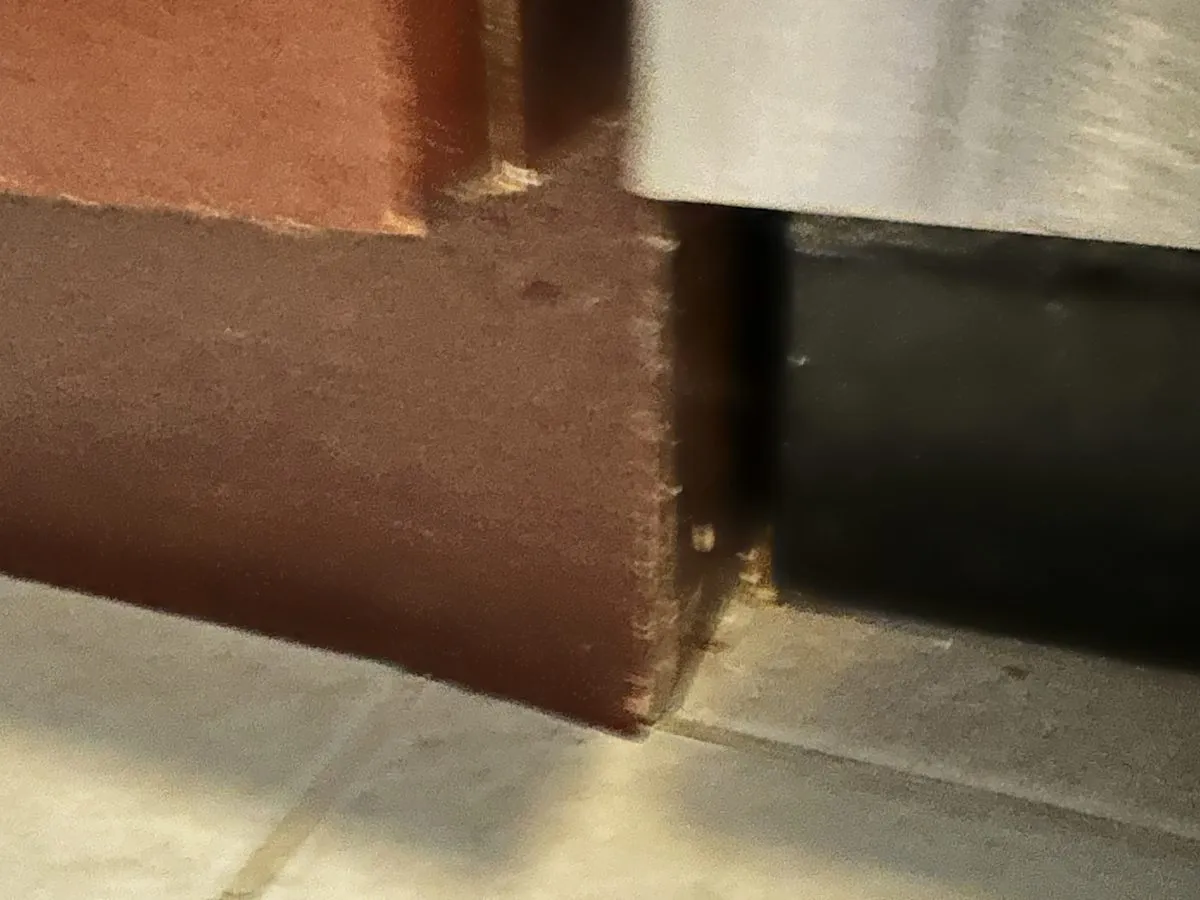
It is almost never the painting. It is what happened before it.
Kitchen cabinets carry years of cooking grease and, on older kitchens, layers of furniture polish and wax. Household degreasers do not shift that, and neither does TSP — it is water-based, it cannot cut wax, and it swells solid timber and raises the grain while it fails.
So the finish goes onto a surface that looks clean and is not. It behaves perfectly for weeks. Then it begins to let go around the handles and along the bottom rails, where hands touch it most, and by then the only fix is to start again.
This is the step that separates a lasting finish from a temporary one, and it is invisible in every photograph of every finished kitchen.
The honest arithmetic
A DIY job saves labour and spends weekends.
A DIY refacing job saves labour and spends weekends.
Doors, hinges and materials are a real cost whoever fits them. What you save is the crew, and what you spend instead is several weekends of preparation, a kitchen out of action for longer than five days, and the risk that the finish needs redoing — which costs more than having it done, because somebody has to strip your work off first.
For a kitchen you plan to keep, that arithmetic usually favours paying for it. For a rental, a flip, or a kitchen you expect to replace within a few years, it genuinely may not, and we would rather say so than pretend every job needs us.
What we would suggest instead
Not a professional job done badly. A smaller job done well.
If the budget is the constraint rather than the inclination, the useful move is not to do a professional job badly. It is to do a smaller job well.
New hardware and a careful hand-painted finish on sound doors will lift a kitchen substantially and costs very little. It will not look sprayed, but it will look deliberate — which is more than a failed spray job manages.
And if the doors themselves are what you dislike, no amount of finish work at home will change the profile. That is the point at which the job stops being a weekend and starts being a quote.
In one glance
DIY against professional, on the four things above
| Aspect | DIY | Professional |
|---|---|---|
| Doors off, cleaning, hardware | Genuinely doable with patience. | Same result, done by the crew. |
| The sprayed finish | Needs equipment you cannot rent — ventilation, a respirator, a controlled space. | A booth — filtered air, controlled cure, extraction. |
| Where it usually fails | Adhesion. TSP cannot cut wax, and the finish lifts within months. | A solvent degreaser lifts what TSP leaves behind. |
| What it costs you | Several weekends, plus the risk of redoing it. | The price of the crew, once. |
What the professional version involves
It is worth reading this page against what the job actually involves when a crew does it — the booth, the catalysed finish, the containment and the five days. Reading what the work looks like when it is not done at home makes the comparison concrete rather than abstract, and it will also tell you plainly whether refacing is even the right job for your kitchen, which is a separate question from who does it.
Before you attempt anything
There is a category of kitchen where the DIY question does not arise, because the job cannot be done well by anyone. Substrates that will not hold a finish and boxes that have failed rule themselves out whoever picks up the sander. Knowing which cabinets rule themselves out regardless of who does the work before buying materials is what stops a weekend becoming a write-off.
Questions
Common questions
- Can I reface my kitchen cabinets myself?
- Parts of it. Removing doors, cleaning, sanding and fitting new hardware are all genuinely doable with patience. The finish is the part that is not, because a sprayed catalysed coating needs equipment and ventilation that do not exist in a domestic kitchen.
- What is the cheapest way to reface kitchen cabinets?
- Painting the doors you already have, by hand, accepting brush marks. That is a real option and for some kitchens it is the right one — but it is a different job from refacing, and it should be chosen deliberately rather than arrived at by running out of budget.
- Why can't I just spray it myself with rented equipment?
- 2K polyurethane is a catalysed, solvent-based system. It needs forced ventilation, respiratory protection rated for organic vapour, and a controlled space — it is not a garage job, and once mixed it cannot be kept, so a slow afternoon wastes the material.
- What usually goes wrong on a home attempt?
- Adhesion, almost always. Years of cooking grease and furniture polish defeat household cleaners and even TSP, so the finish goes on over a contaminated surface and lets go months later — long after it looked fine.
Decided it is not a weekend job after all?
Send wide photographs of each run of cabinet. The written quote comes back inside 24 hours, and it will tell you honestly if painting is the smaller job you actually need.
Free in-home consultation · no obligation
Refaced. Repainted. Refinished.