
Wood Staining in Oakville — The Old Finish Comes Off Completely
Staining is the one service where the old finish has to come off completely. You cannot stain through a coating, which is why this costs more than painting the same piece.
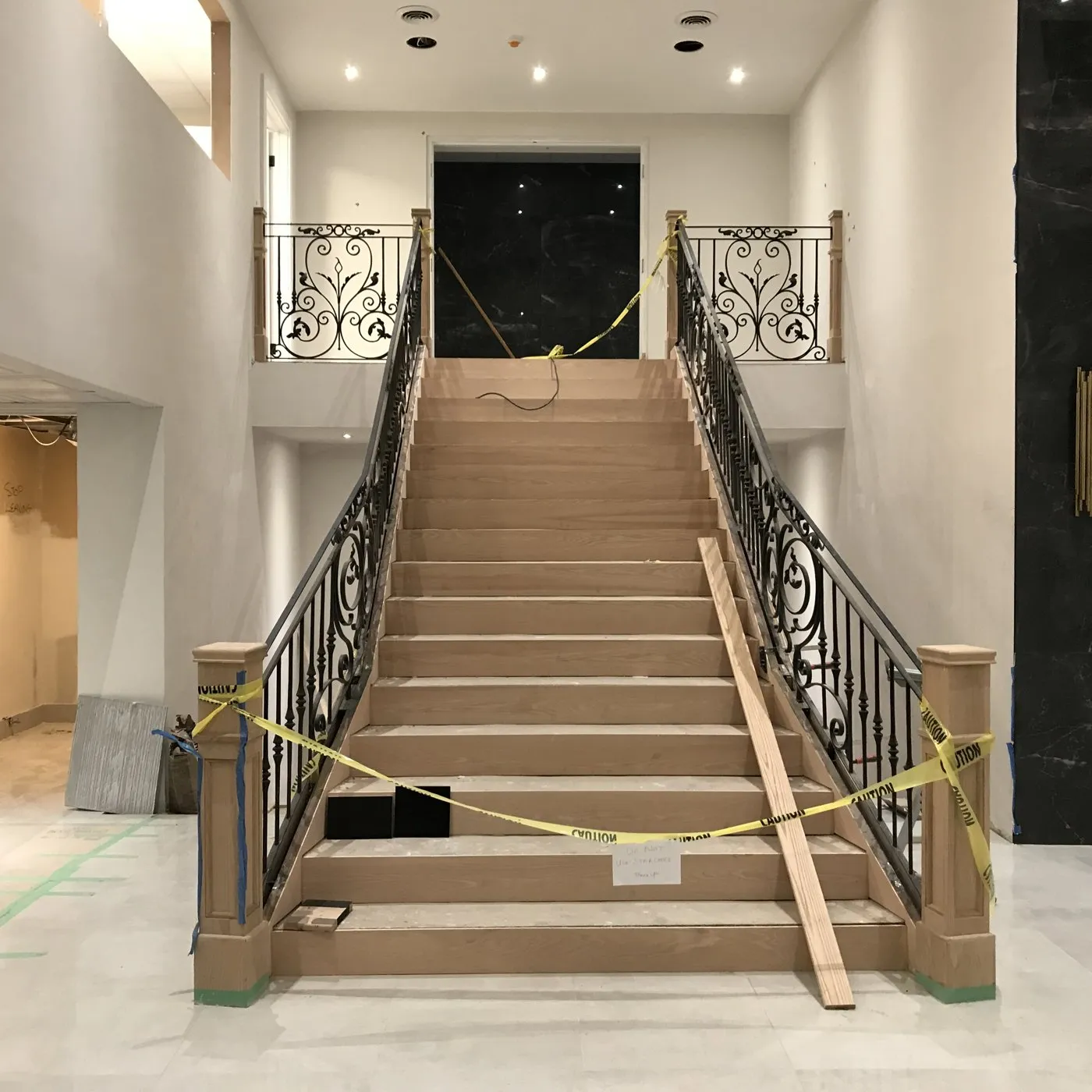 Before
 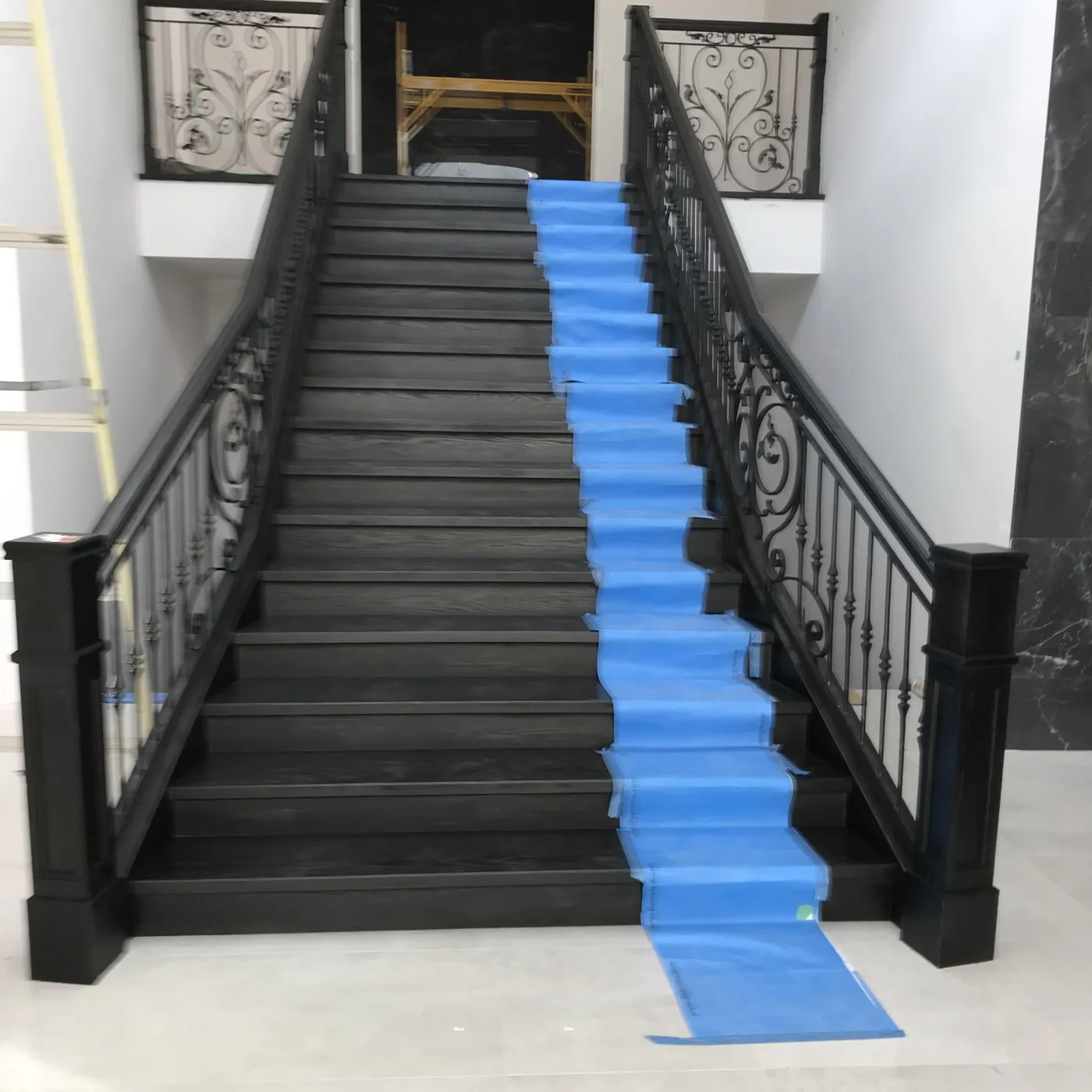 After
After Stripped
You cannot stain through a coating
100+
Kitchens completed
25 years
In the trade, and here since 2013
5.0
Rated on Google
What staining is for
Staining is for people who want to see the wood. Paint is a film that covers timber; stain is colour that sinks into it and leaves the grain visible. If what you like about a staircase is that it looks like oak, painting it solves a colour problem by removing the thing you liked.
What we stain
Most of this work is:
- Stairs — treads, handrails and newels
- Interior doors and their casings
- Built-in shelving and mantels
- Trim in houses where the original woodwork is worth keeping visible
It comes up in rooms where the original woodwork is worth keeping visible. In kitchens it comes up less often than painting does, because a stained kitchen is a considerably bigger job than a painted one, and most people choose the painted finish once they have both numbers.
Changing a tone, not just restoring one
The service also covers changing a tone rather than restoring one. Orange-toned oak from the nineties is the most common starting point in Oakville, and it can be taken to a walnut, a grey-brown or something much closer to neutral without losing the grain that made it worth keeping.
Why the old finish has to come off
This is the part that separates staining from every other service on this site.
Stain colours timber by soaking in. A finish — varnish, lacquer, polyurethane, whatever is on there now — is a film sitting on the surface, and it is specifically designed to stop liquids getting into the wood. Brushing stain over it puts pigment on top of a sealed layer, where it sits as a tint that looks flat, obscures rather than reveals grain, and wears off first at exactly the points that get touched most.
So the finish comes off completely, back to bare timber. That is chemical stripping followed by sanding, and it is slow, messy work that has to be done thoroughly, because any residue left in a corner or a moulding profile shows up as a pale patch the moment the stain goes on. Detail work — turned spindles, carved profiles, the underside of a handrail — takes disproportionately long because a sander cannot reach into it.
Stripping is also the step that makes this the one service where the price genuinely reflects labour rather than materials.
What stripping tends to find
Bare timber is honest in a way that a painted surface is not, and it is worth knowing that before you commit.
Old repairs come to light. Four things turn up regularly:
- Filler that was invisible under paint takes no stain at all and stays as a pale mark
- A replaced piece may be a different species, or the same species from a different part of the tree, and takes colour differently from everything around it
- Water damage that had been sealed over shows as darkening
- Veneer thinner than it looked can sand through at an edge, which cannot be undone
None of that is a reason to avoid the work. It is a reason to have it looked at first, and to hear an honest opinion rather than an optimistic one. Where a piece is likely to strip badly we will say so, and where painting would give a better result for less money we will say that too — that conversation is the reason this is a small part of the business rather than a large one.
Getting the colour right
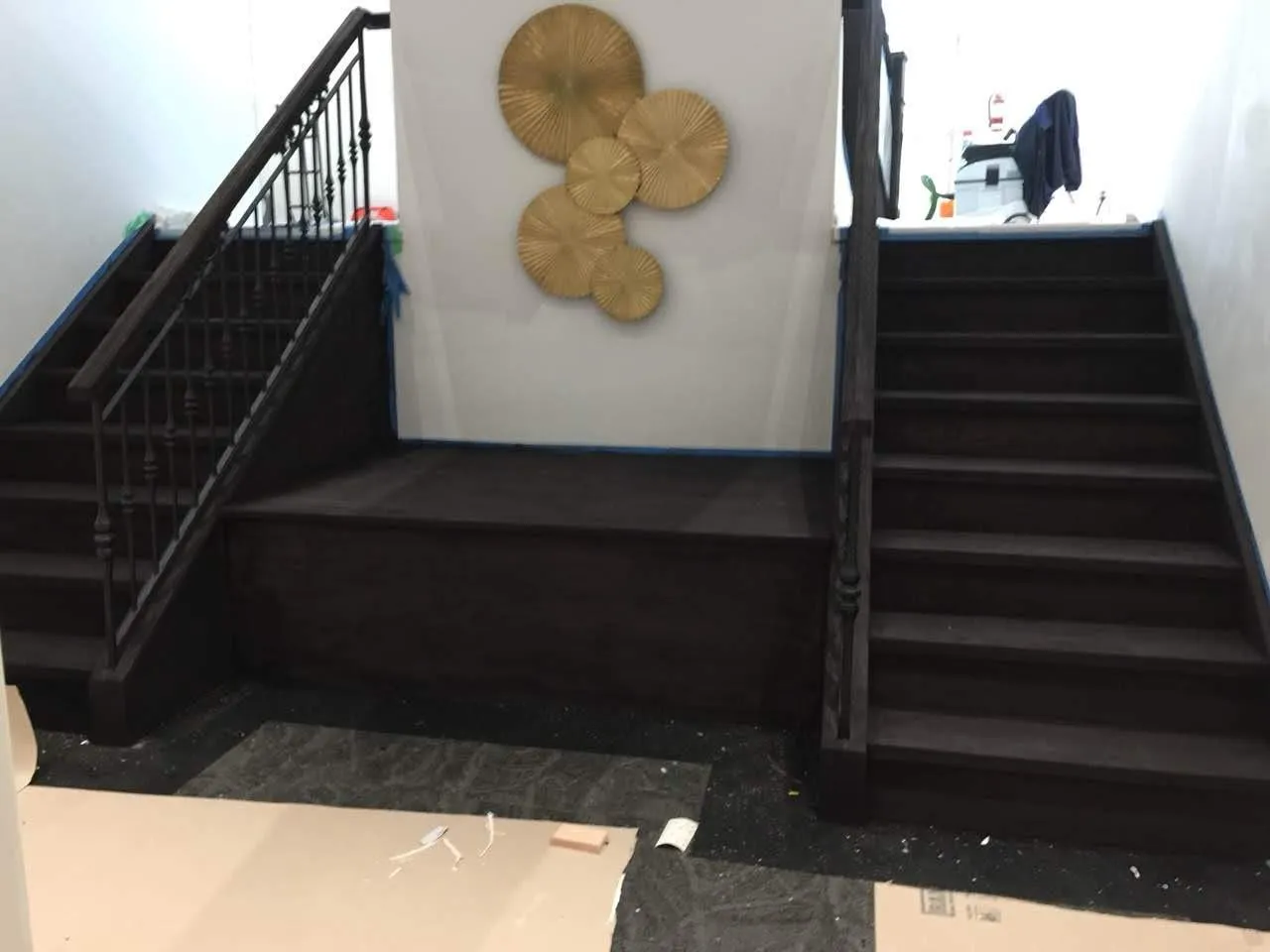
The same tin, three different results
Stain behaves differently on every species, and differently again on the same species depending on how the timber was cut:
- Oak takes colour into its open grain and emphasises the figure
- Maple is dense and close-grained, and can blotch where it absorbs unevenly
- Pine is soft and drinks stain unpredictably
So we test on your timber
We test on the actual timber rather than working from a sample board, and we look at the test in the room it will live in. A hallway staircase is often lit by one window and a light fitting, and a brown that looked warm in the shop can turn grey there. Where a stain needs to match an existing floor or the woodwork in an adjoining room, testing is not optional — matching by eye between a sample chip and a floor that has aged for fifteen years does not work.
Then the clear coats
Once the tone is agreed, the stain goes on and then the protection goes over it: clear 2K polyurethane, the same catalysed system we spray on cabinet doors, minus the pigment. That gives a staircase the same hardness and the same resistance to cleaning products that a sprayed kitchen has, which matters on the one surface in a house that gets walked on.
What to expect while it happens
Staining is more disruptive than painting the same piece, and the honest reason is the chemicals rather than the time.
Why you need to be out
Stripping is done in place for anything fixed, and chemical strippers need real ventilation. The clear coats are solvent-based and need the same. A staircase sits in the middle of a house rather than behind a door, so containment helps less than it does in a kitchen. We will tell you at quoting which days you should plan to be elsewhere, rather than mentioning it on the morning we arrive.
If it is your only staircase
There is a practical point about stairs specifically: you cannot use them while they are being stripped, stained or coated, and the coats need curing time between them. On a single-staircase house that has to be planned around, and it is usually the thing that decides when the work happens rather than the price.
The warranty
The same five years on the finish and the workmanship that everything else here carries.
Staining and painting are different amounts of work
The gap between these two services is not the stain, it is the stripping. Painting can go over a sound existing finish once it has been degreased and sanded. Staining cannot go over anything at all — the timber has to be bare before colour will take evenly, and getting it there is slow, chemical and unforgiving. That is why bare timber costs more than a repaint, usually by half again or more. The pillar above this page sets the finishing services beside each other so the difference is visible before you choose.
Wood Staining Cost in Oakville
Staining costs meaningfully more than painting the same piece — commonly half again as much, and sometimes more than that. Almost all of the difference is labour rather than materials.
The reason is the step painting does not have. Stain has to soak into timber, and a finish is a film sitting on top of it, so everything currently on the wood has to come off before any colour can go in. That means chemical stripping, then sanding back to a clean, even surface that will take the stain at the same rate everywhere. Blotchy stain is almost always a preparation failure rather than a product one.
Timber decides the rest of the price. Species with open grain and species that drink unevenly need conditioning first and more careful handling throughout, and a large jump in tone takes more passes to arrive at evenly.
This is also why most people who ask about staining a kitchen end up painting it once the two prices sit next to each other. We would rather show you both than let you find out afterwards.
Questions
Common questions about wood staining in Oakville
- Why can't you just stain over the finish that is there?
- Because stain works by soaking into timber, and a finish is a film sitting on top of it. Anything brushed over a sealed surface stays on the surface, looks like a tint rather than a stain, and wears off wherever hands and feet touch it. Getting colour into the wood means getting back to the wood, which is the whole reason this service costs what it does.
- How much more expensive is staining than painting?
- Meaningfully — commonly half again as much as painting the same piece, and sometimes more. Almost all of that is the stripping and the extra sanding, not the materials. It is also why most people who ask about staining a kitchen end up painting it once they see the two prices next to each other. We would rather show you both than talk you into the expensive one.
- Will you know what is under the finish before you start?
- Not with certainty, and it is the honest risk in this work. Stripping sometimes reveals a repair somebody made and hid, a patch of timber that does not match, or veneer too thin to sand. Where we can see enough to judge we will say so before you commit. Where we cannot, we say that instead of guessing, because a stain shows everything a paint would have covered.
- What is the finish on top of the stain?
- Clear 2K polyurethane, the same catalysed system we spray on cabinets, without pigment. So the grain and the stain colour show through and the protection is identical to a painted finish — hard, resistant to cleaners and scuffing, and not prone to yellowing over the timber the way older varnishes did.
- Can you match a stain to floors or existing woodwork we are keeping?
- Usually, and we test rather than guess. Stain reads completely differently on oak, maple and pine, so a colour that matched your floor on a sample board can come out noticeably off on a handrail. We put test patches on the actual timber, in the actual room, and look at them before committing to the whole staircase.
- Do we need to be out of the house?
- For stripping and for the clear coats, yes, and for longer than a painting job. Chemical strippers and solvent-based clear finishes both need real ventilation, and a staircase is usually in the middle of a house rather than behind a door. We will give you the days at quoting so you can plan around them rather than being told on the morning.
Thinking about bringing a staircase or built-in back to bare wood?
Photographs get you a written quote inside 24 hours, and it does not change afterwards. Send the timber in daylight if you can — the tone it is now tells us a great deal about where it can reasonably be taken.
Free in-home consultation · no obligation
Refaced. Repainted. Refinished.