
Wood Painting in Oakville — Trim Sprayed to Match the Cabinets
Once the cabinets are done, the trim beside them is usually what dates the room. These are the surfaces people stand closest to, and preparation is most of the work.
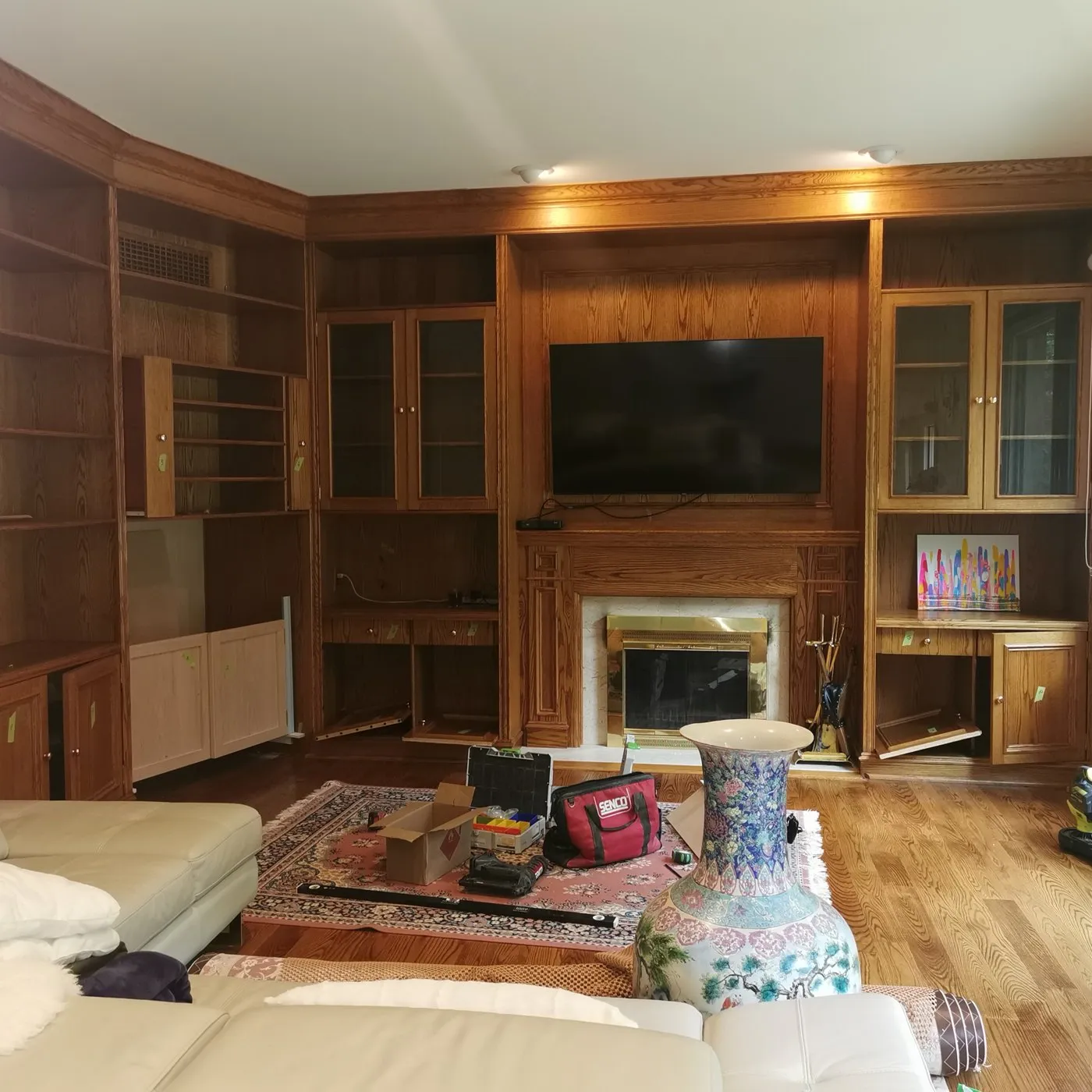 Before
 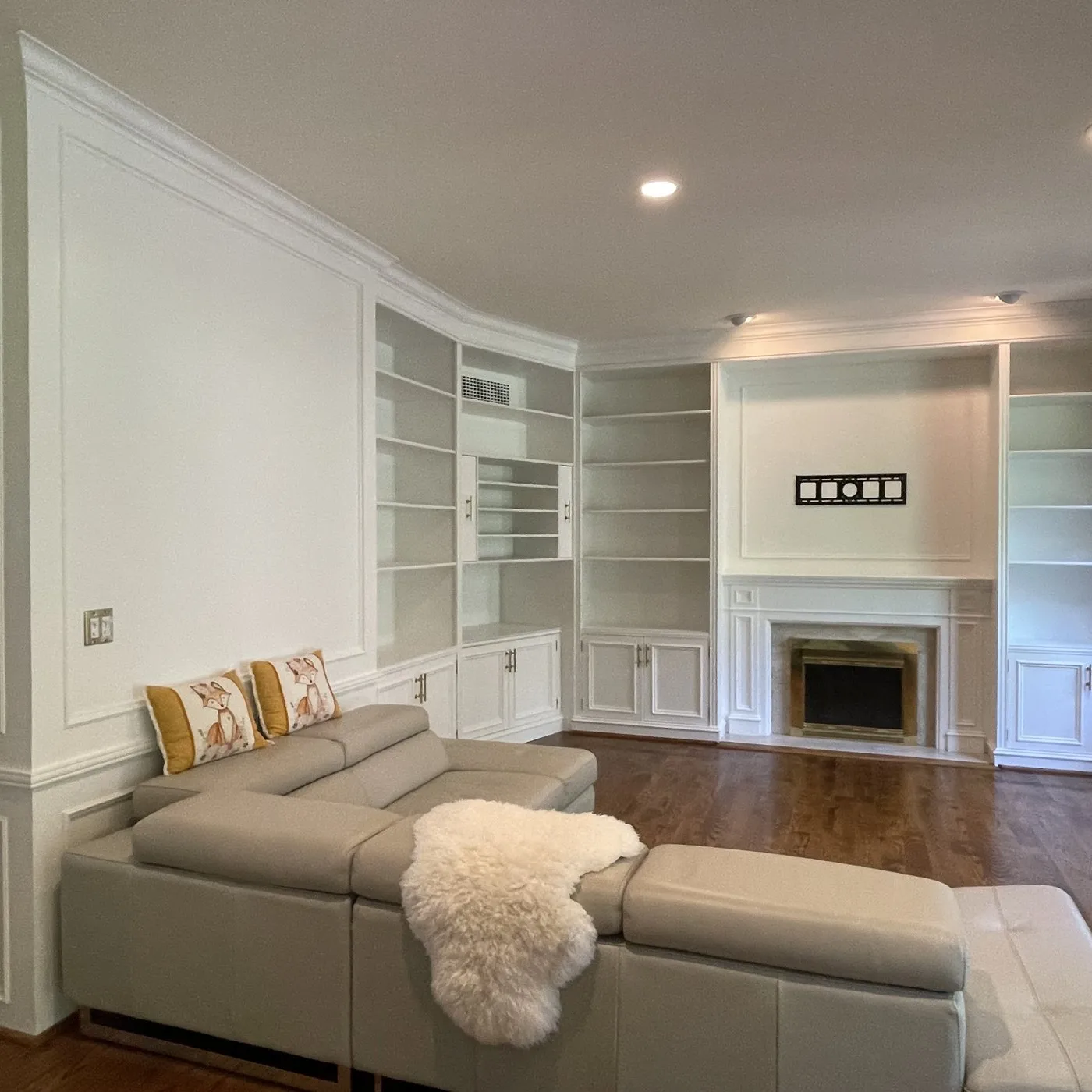 After
After Prep
Most of the work is preparation
100+
Kitchens completed
25 years
In the trade, and here since 2013
5.0
Rated on Google
What counts as wood painting
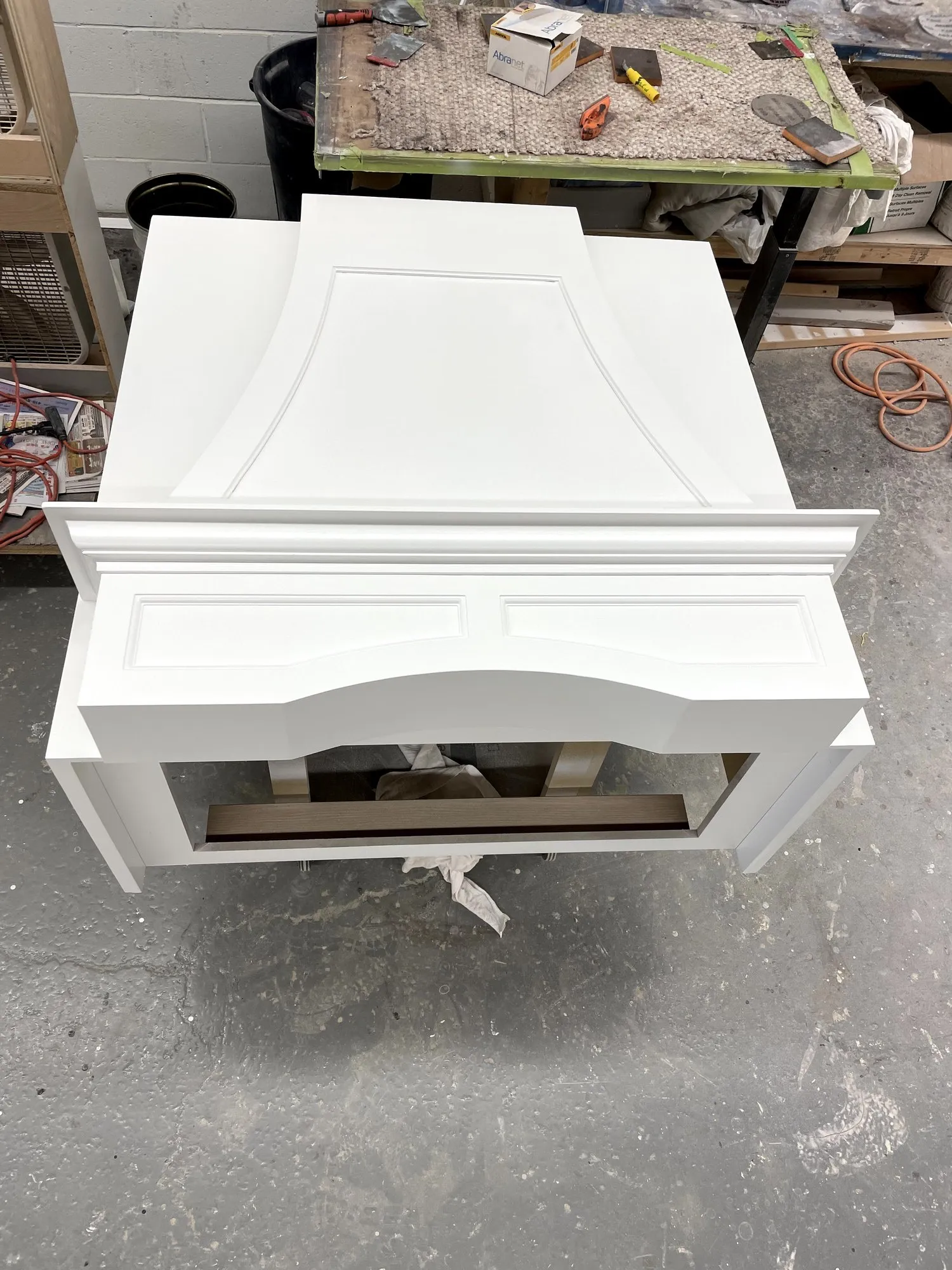
Trim, doors and millwork — the woodwork around a room rather than the cabinetry in it. Baseboards, window and door casings, crown moulding, panelled surrounds, fireplace mantels, built-in shelving, stair components and interior doors.
These surfaces get looked at from closer range than almost anything else in a house. A wall is usually seen from across a room. A door casing is seen from eighteen inches away every time somebody walks through it, and a mantel is at eye level from the sofa. Flaws that would vanish on a wall are obvious on trim, which is why it takes more preparation per square foot than any other painting work in a house.
It comes up most often alongside cabinet work. A kitchen gets sprayed, and the casings and baseboards beside it suddenly look yellowed and chipped by comparison, because they always were and the new finish is now providing the contrast.
Preparation, which is nearly all of it
In an older Oakville house, original trim has usually been painted several times. Each repaint adds film thickness, softens the crispness of the profile, and often leaves brush ridges from whoever did it last. Underneath that are decades of small dents, nail holes that were never filled properly, caulk lines that have split at the joints, and the occasional patch where something was levered off the wall.
The sequence is clean, sand, fill, sand again, spot-prime the fills, and caulk the joints that need it. Where old brushwork has left ridges, those get sanded flat rather than painted over, because a new coat follows the contour it is given rather than levelling it. Where paint has built up enough to lose the profile, it comes back further.
That is the unglamorous part and it is where the hours go. Skipping it produces a finish that looks acceptable on the day and disappointing in raking afternoon light, when every ridge and filled hole casts its own small shadow.
Sprayed or brushed, and why we do both
On cabinets we spray, always. On trim it depends on what the piece is and where it lives.
What comes off goes to the booth
Interior doors off their hinges, removable panels, shelves out of a built-in — all of those get the same 2K polyurethane and the same controlled conditions as cabinet doors, and the result is better than any brush can achieve on a flat surface.
Fixed trim is a different calculation
Spraying a baseboard in place means masking the floor, the wall above it and everything within reach of the overspray, and the finish still has to be cut in where the trim meets a wall that is not being sprayed. On a run of casing or a stair rail, a good brush and a product that levels as it dries gets you a finish that is honestly hard to tell from sprayed, without turning the room into a containment tent for two days.
So we do both, and which one a given piece gets is a judgement rather than a policy. Where the answer is not obvious we will tell you what each would involve and let you decide.
Products, and why trim differs from cabinets
The cabinet system is 2K polyurethane, catalysed and solvent-based, and it is sprayed because that is the only sensible way to apply it. It is not a brushable product.
So brushed trim uses something else, and what we reach for is a waterborne alkyd — usually Benjamin Moore Advance or Sherwin-Williams Emerald Urethane Trim Enamel. Both flow out well as they dry, which is what makes brush marks disappear rather than set; both cure to a genuinely hard film rather than staying rubbery; and both hold their colour instead of ambering the way old oil enamels did. On trim that is being brushed, they are the right tool, and we would rather name them than be vague about it.
Trim that goes to the booth gets the 2K, same as the doors. If your cabinets and your trim are both being done and both sprayed, they are finished in the same product in the same colour, and they will match exactly rather than approximately.
Colour, and doing it in the right order
Trim is still mostly white, and the whites people ask for by name have not changed much in a decade — White Dove, Chantilly Lace and Simply White come up more than anything else in Oakville kitchens and living rooms. What has changed is how many people want something other than white: warm off-whites, soft greiges, and increasingly a deliberate contrast where the millwork is darker than the wall rather than lighter.
Choosing it in the room
The right choice depends on the wall colour, the flooring and how much daylight the room actually gets, which is why we look at samples in the room rather than working from a fan deck at the shop. A greige that reads warm in a south-facing living room can go distinctly grey in a north-facing hall.
Woodwork before walls
If walls are being repainted too, finish the woodwork first. Cutting a wall colour up to a clean new trim edge is straightforward; cutting new trim paint against a freshly painted wall means either taping it or touching the wall in afterwards, and both are slower and look worse. It is the sort of thing that costs nothing to get right and is irritating to fix.
Trim is usually the second half of a bigger job
Very few people call about trim on its own. It comes up once the cabinets are decided, because a freshly sprayed kitchen makes the casings and baseboards beside it look tired in a way nobody had noticed the week before. Doing both together is why finishing the trim in the same colour as the cabinets works out cheaper and looks better than doing them a year apart — one set of samples, one masking effort, one colour decision. The pillar above this page sets out how the cabinet work itself runs.
Wood Painting Cost in Oakville
Trim, doors and millwork are priced on what has to be prepared rather than on what has to be coated. The painting itself is quick. Filling, caulking, sanding and masking are where the hours go, and they are what decides whether the result looks sprayed or looks touched up.
Three things move the number. How many separate pieces there are, because each one has to be masked and cut in. What is on them now, since a sound existing finish scuff-sands and a failing one has to come back much further. And how much of the room has to be protected — spraying trim in a finished room means containment, and containment is time.
It is far cheaper done alongside a cabinet job. The crew is already in the house, the sprayer is already set up and loaded with your colour, and the masking is largely up. Booking trim as a separate visit later means paying for all of that a second time, plus a colour match that is never quite as certain as spraying from the same batch.
Questions
Common questions about trim and millwork painting in Oakville
- Is trim sprayed or brushed?
- Whichever the surface calls for, and this is the one place we do not spray everything. Anything that unscrews — a door off its hinges, a removable panel — goes to the booth with the cabinet doors, because a sprayed finish on a flat surface is better than any brush can manage. Fixed trim is another matter. On casings, baseboards and a stair rail, a fine brush often lays down better than a sprayer masked into a corner, and it avoids draping half your house in plastic.
- What products do you use on trim?
- On brushed trim, waterborne alkyds — Benjamin Moore Advance and Sherwin-Williams Emerald Urethane Trim Enamel are the two we reach for most. They level out well as they dry, cure hard, and resist scuffing and yellowing. That is a different system from the 2K polyurethane we spray on cabinets, deliberately so, because 2K is not a brushable product. Sprayed trim gets the same 2K as the doors.
- Why does old trim need so much preparation?
- Because in an older Oakville house it has usually been painted several times already. Layers build up and soften detail, previous brushwork leaves ridges, and there are decades of small dents, nail holes and split caulk lines at the joints. All of that has to be filled, sanded and sealed before new paint goes on, or the finish amplifies it. On trim the preparation genuinely is most of the job.
- Can you match the trim to cabinets you have already sprayed?
- Yes, and it is much easier when both are done at once. If the cabinets were ours we have the colour and product on file and can match it exactly later. If someone else painted them, we match to the existing surface rather than to a code, because a colour on a chip and the same colour after a few years on a wall are not the same thing to look at.
- Do you paint exterior front doors?
- Yes, and they need their own approach. A front door takes sun, rain and temperature swing all year, and the substrate matters — solid wood, fibreglass and steel all move differently and want different preparation. We sand back, use a bonding primer and finish with at least two coats of an exterior enamel in gloss or semi-gloss.
- Is it worth doing the trim if the walls need painting too?
- We do the woodwork rather than the walls, so the honest answer is that you may want a decorator as well, and the order matters. Trim and millwork should be finished before walls are cut in around them, because cutting a wall colour to a crisp new trim edge is far easier than the reverse.
Getting the cabinets done and looking at the trim beside them?
Send photographs of the trim along with the kitchen and both get priced together in the same written quote, inside 24 hours. Doing them in one visit costs less than doing them in two.
Free in-home consultation · no obligation
Refaced. Repainted. Refinished.