
Kitchen Cabinet Refinishing in Old Oakville — Where the Wood Is Worth Keeping
The oldest kitchens we work on are here, and they are the ones where stripping back to the timber is most often the right answer rather than the expensive one.
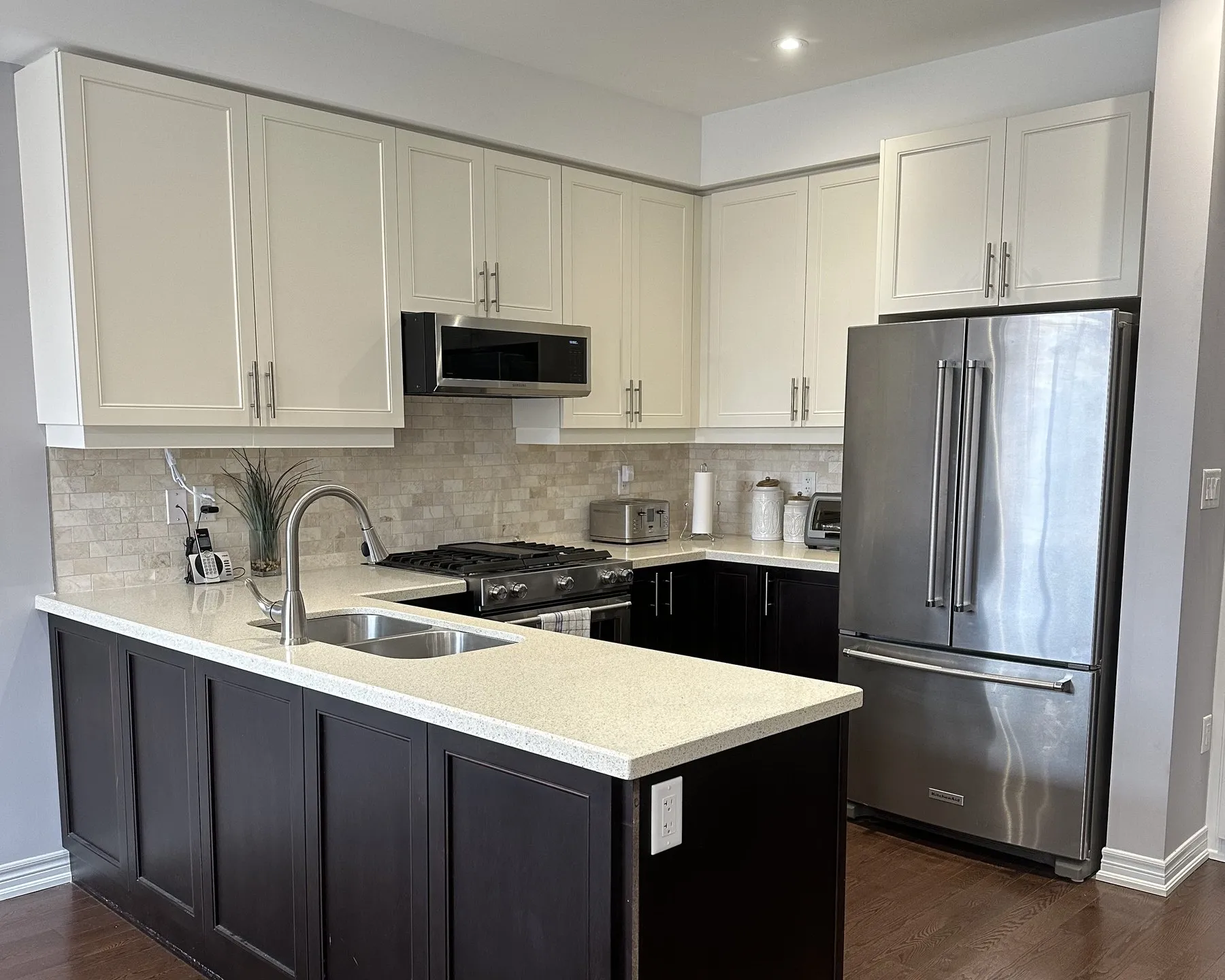 Before
 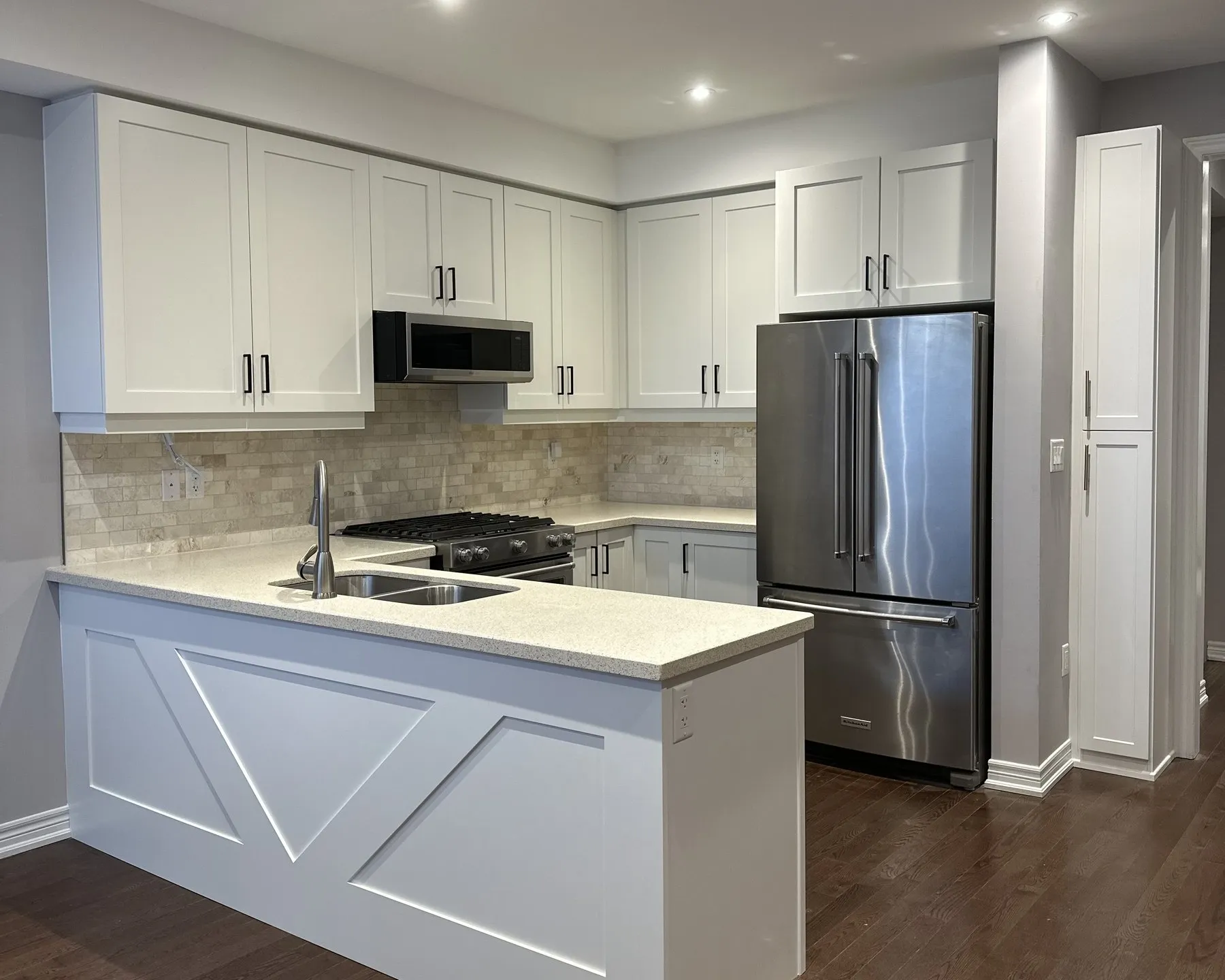 After
After 4.2 km
From our Oakville shop
100+
Kitchens completed
25 years
In the trade, and here since 2013
5.0
Rated on Google
Cabinet refinishing in Old Oakville, four kilometres east
Old Oakville sits about 4.2 kilometres east of our shop, down toward the lake. It is roughly ten minutes, and it is the part of town where what a kitchen is made of stops being predictable.
This is the neighbourhood the business effectively started in. The first kitchen we ever transformed, back in 2012, was a home here with solid maple cabinets in the orange-honey finish everybody had in the nineties. The owner was about to rip the lot out. She did not need to, and that job is the reason there is a company.
Why Old Oakville is where refinishing is actually on the table
Most kitchens can be painted. Far fewer can be refinished, and the difference is the substrate.
Refinishing means taking the old coating off completely, staining the bare wood to the tone you want and sealing it under clear 2K, so the grain still shows. It needs solid wood underneath. Veneer that has thinned or lifted cannot be sanded back without going through it, and MDF has no grain to reveal.
Old Oakville is where we most often find the real thing. That does not make refinishing automatic — it costs meaningfully more than painting the same kitchen, and plenty of people choose colour over grain once they have seen both prices. But it is the neighbourhood where the option is genuinely on the table rather than theoretical.
The Old Oakville kitchen in the photograph
That kitchen was refaced rather than refinished. The boxes were sound, so they stayed and were sprayed; the doors and drawer fronts were replaced with new ones made to the existing openings.
The detail worth noticing is what did not move. No walls, no plumbing, no layout. In a house of this age those are exactly the things that turn a kitchen project into a renovation, and avoiding them is most of the reason the job took a week rather than a season.
Houses that have been altered before
Century homes have usually been renovated more than once, and it shows in the geometry. Walls shift, floors slope, and openings that were square when they were built are not square now.
That is why every door and drawer front is measured against the opening it will actually hang on rather than ordered to a nominal size, and why the millwork gets scribed to the room instead of cut to a drawing. It is also why the original trim, which in these houses has often been painted over several times, takes more preparation than people expect.
None of it is a reason to avoid the work. It is a reason to have it measured properly.
What usually decides it in the end
For all the talk of substrate, the decision in these houses tends to come down to one question: whether you want to look at wood or at colour.
Refinishing is the only route that keeps the grain visible, and in a century home with original timber that is often what people want the moment they realise it is possible. It costs meaningfully more than painting the same kitchen, it takes longer — five to seven weeks against two and a half to three — and it is worth every bit of that to the people who choose it.
Painting is the answer far more often, and there is nothing second-best about it. A well-made door under a tired finish comes back looking like new cabinetry, and the money saved usually goes into the counters or the hardware instead.
We will tell you which one the timber can actually take. That is a question about what is under the finish, and it is why we look before promising anything.
Getting to Old Oakville from the shop
East along the service road and Speers, or the highway to Trafalgar and south — about ten minutes either way, longer through the village in summer.
There is nothing to visit at our end; the address is an office and the finishing happens in a booth. The distance matters for one practical reason only, which is that your doors travel it twice while the kitchen carries on working without them.
The same process, wherever the kitchen is
The neighbourhood changes what a kitchen is made of, not how the work runs. Boxes are checked first, doors are made or stripped or sprayed, and the house loses its kitchen for about a week. Seeing how the three routes compare on any Oakville kitchen side by side is the quickest way to tell which one your timber and your boxes are asking for, and that comparison lives on the page above this one.
Refinishing, specifically
Old Oakville is the neighbourhood where refinishing is genuinely on the table rather than theoretical, because it is where solid timber turns up. It is also the service people understand least well of the three. Reading what stripping back to bare timber actually takes sets out the chemical stripping, why the boxes have to be done in your kitchen rather than the booth, and why the whole thing costs meaningfully more than painting the same doors — which is the part worth knowing before you fall in love with the idea.
Questions
Common questions about kitchens in Old Oakville
- Our house is over a hundred years old. Are the cabinets even worth keeping?
- Often, yes — and it is worth finding out before anything is ordered. Older Oakville kitchens frequently have solid timber under a tired finish, which is the one substrate that can be stripped and stained rather than only painted. Photographs usually answer it.
- The walls in our kitchen are not straight. Is that a problem?
- It is normal here, and it is why we measure every opening rather than ordering to a standard size. Character homes in Old Oakville and Bronte often have walls that shifted through past renovations, so each door is sized to its own opening and the trim is scribed to what is actually there.
- Why does refinishing cost more than painting?
- The stripping. Painting prep is degreasing and sanding; refinishing takes the old coating off completely, in multiple applications, and then needs far more sanding before any stain goes on. Commonly half again as much as painting the same kitchen.
- Can you deal with the original trim as well?
- Yes, and in these houses it usually needs it. Original wood trim that has been painted over several times takes more preparation than the cabinets do, and it is far cheaper handled while the crew and the sprayer are already in the house.
Have an older Old Oakville kitchen?
Send wide photographs of each run of cabinet. We will tell you whether there is solid timber worth keeping, and the written quote follows inside 24 hours.
Free in-home consultation · no obligation
Refaced. Repainted. Refinished.