
Kitchen Cabinet Refacing in Hamilton — Where the Boxes Are Often Worth More
Hamilton holds the oldest cabinetry we are asked about, and old frequently means solid. That changes which of the three routes is right, not the price.
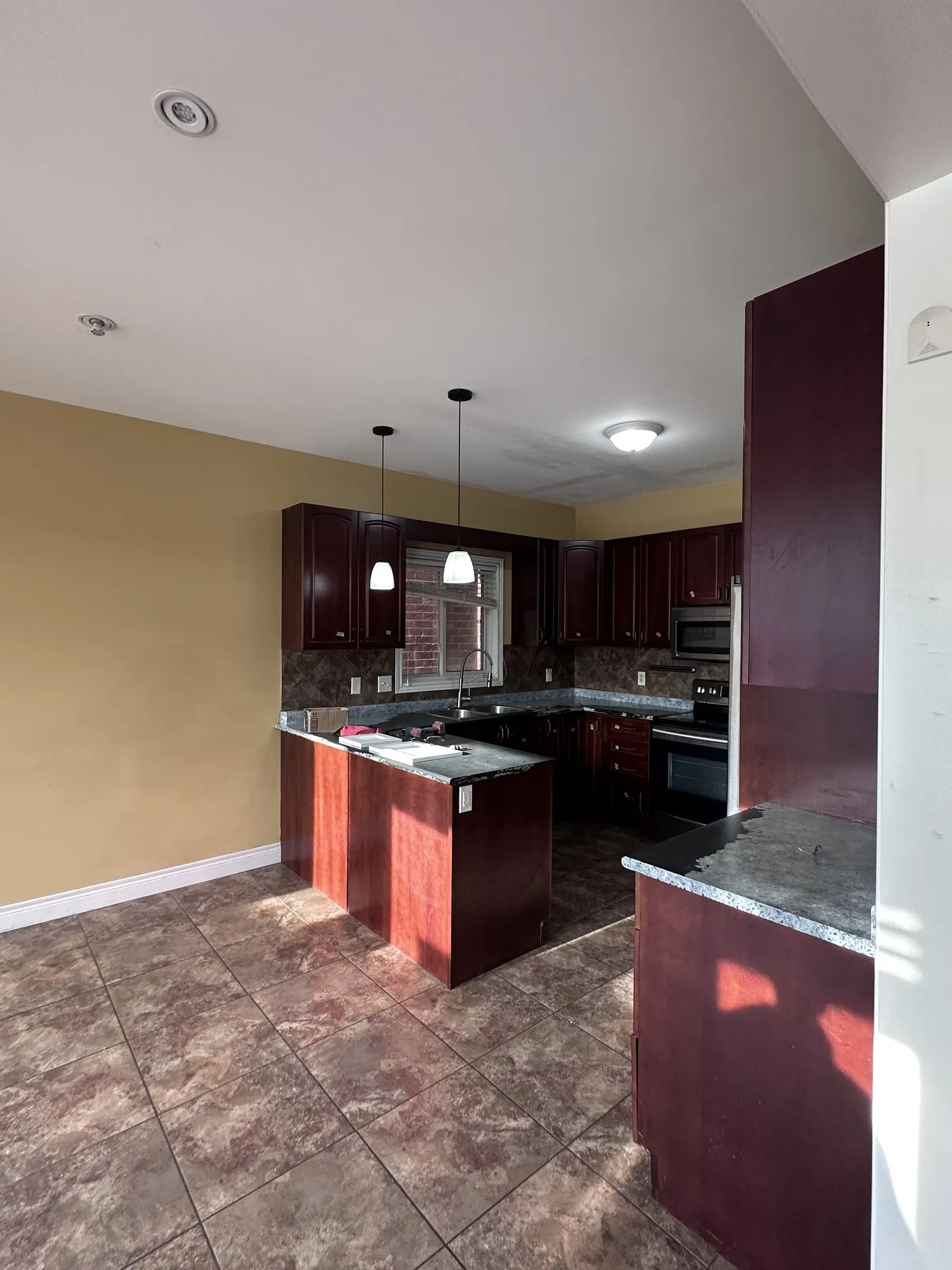 Before
 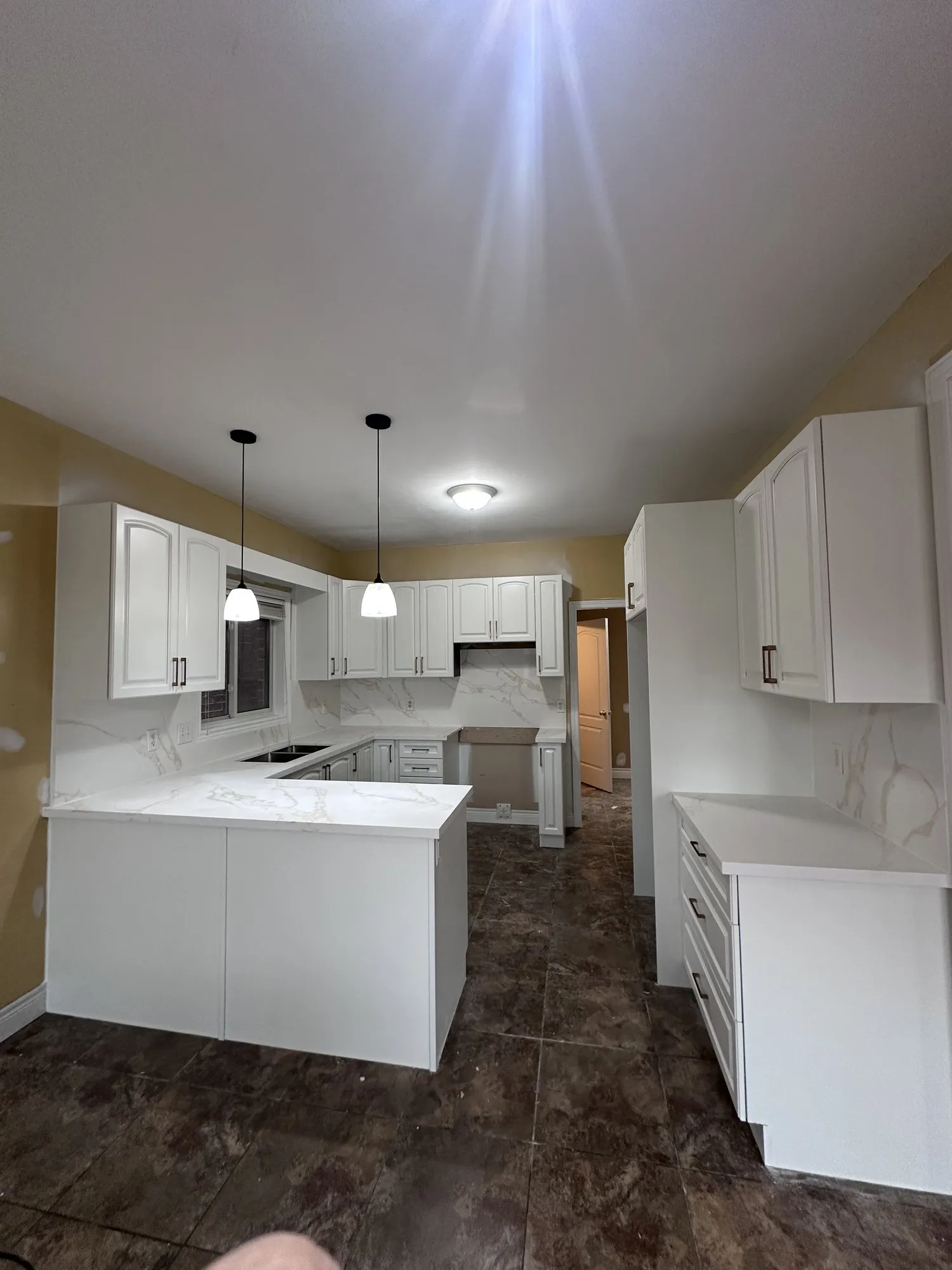 After
After Fixed price
From photographs, inside 24 hours
5 days
Without a kitchen, of four to five weeks
15 years
On waterproof MDF doors and fronts
5.0
Rated on Google
The far end of the list, said plainly
Hamilton is the one city on our service area that sits outside Halton, and it is the farthest point on it. Both of those are worth stating rather than leaving you to infer them from a map, because the usual practice in this trade is to imply that everywhere is equally close and quietly price the difference into something else.
It is a normal job. The crew books it as a normal job, the price is built the same way, and the run down is a familiar one rather than an expedition. What being the far end genuinely means is that we would rather settle the important question before anyone drives anywhere — which is why the quote is built from photographs and the visit that follows is about colour, not about the number.
The city is also five or six places at once, having been amalgamated at the turn of the century. Ancaster, Dundas, Stoney Creek and Flamborough all kept their own housing character, and a kitchen in one of them tells you very little about a kitchen in another.
Above the escarpment and below it
The escarpment does more to sort Hamilton's kitchens than any municipal boundary does. Below it, through Durand, Kirkendall, the North End and around Westdale, a great deal of the housing predates the war, and that is where the cabinetry gets genuinely interesting. Kitchens in those houses have often been changed more than once, so what you find behind the doors ranges from original built-in joinery to a 1980s replacement to something fitted last decade.
On the mountain and out through the amalgamated towns, the stock is largely postwar and later, and it behaves much like anywhere else of its age — frames that are perfectly sound under fronts that have simply had enough.
What we do not do is read any of this off a postcode. Boxes are judged on material and condition, first in photographs and then in person. The question is always whether the box sides will take a hinge screw again and whether the run is still square, and a well-built kitchen from sixty years ago answers that better than a badly-built one from ten.
Old houses, and openings that agree with nothing
The practical difference in older housing is not the cabinetry. It is the building around it. Floors have settled, walls are rarely plumb over a full run, and openings that were cut to fit a room in 1925 have moved since.
None of that is an obstacle, because nothing here is ordered off a shelf. Doors and drawer fronts are made to the openings you actually have, measured on site as they sit today rather than as they were meant to be. Where a run has moved, the fronts are made to the run.
The cabinet boxes are sprayed in catalysed 2K polyurethane on site, behind sealed containment, not wrapped in the self-adhesive veneer most refacing companies use — which lifts at its edges within a few years and cannot be repaired once it has begun. On older frames that matters twice over: veneer needs a flat, true surface to stick to, and a hundred-year-old face frame is rarely either. Spray does not care. Hinges are replaced rather than reused, and on old cabinetry that often means moving from a surface-mounted hinge to a concealed one, which is a change you see every time a door closes.
The finish cures rather than dries. Two years on, at the handle nearest the kettle, that is the whole difference between a surface that has marked and one that has not.
A job runs to the same shape wherever it is. Photographs, then a written price inside 24 hours that does not move. Day one the fronts come off to be booth-sprayed, and colour is chosen in your own kitchen against your own countertops and your own light. Then roughly four weeks in which nothing happens at your house and the kitchen works as it always has — sink, appliances and counters in use, open shelving where the fronts were. Then five days of actual disruption: containment up, boxes degreased and sanded and sprayed in place, fronts back and hung and adjusted individually. We ask you out of the house for two or three of those nights, because 2K is solvent-based and not something to sleep beside.
Then the kitchen is walked with you before anything is signed off, by which point the finish has cured rather than merely dried, and the cupboards can be loaded that evening.
Solid timber is the one case where refacing may not be the answer
New fronts on an old frame is the right answer far more often than not, and it is what most Hamilton kitchens want. It is not what all of them want. Where the doors themselves are solid timber with grain worth looking at, covering them is the one decision on this page that cannot be walked back later. Reading what a solid timber face frame is worth keeping for lays out how refacing, refinishing and painting each treat the same kitchen, so an original door gets judged before it is replaced rather than afterwards.
Questions
Common questions about cabinet refacing in Hamilton
- Hamilton is not in Halton. Is it still in your area?
- It is, and it is named on the Business Profile. It is the farthest point we list, which is worth saying plainly rather than leaving you to work out from a map. It is a normal job, booked as a normal job.
- Does the distance get built into the quote?
- No. An address does not appear anywhere in the arithmetic. The number is built from the door and drawer count and the days on site, and neither of those moves because a kitchen is further along the run. If a job were ever remote enough to need travel priced into it, you would hear that before the number and not after it.
- My cabinets are original to a 1920s house. Should they be refaced at all?
- Possibly not, and that is worth finding out before anything is ordered. Face frames and doors from that era are often solid timber, and solid timber can be stripped and refinished in a way that a modern faced door simply cannot. If what you have is worth keeping, covering it over is the one choice here you cannot reverse afterwards.
- The house is old and nothing is a standard size. Is that a problem?
- No, because nothing is ordered in a standard size. Doors and drawer fronts are made to the openings you actually have, measured on site, which is the same process everywhere and simply matters more in a house where no two openings agree. Runs that have moved with the building are measured as they sit now.
- How do you quote without seeing it?
- From wide photographs of every run of cabinet — not close-ups, which is the part people get wrong. The written price follows inside 24 to 48 hours and does not move. The visit after that is about colour and anything awkward, not about revisiting the number.
Wondering what your Hamilton kitchen would cost?
Send wide photographs of every run of cabinet and a written price comes back inside 24 hours, fixed. If what you have is solid timber worth refinishing instead, that is the first thing you will hear rather than the last.
Free in-home consultation · no obligation
Refaced. Repainted. Refinished.