
The Cabinet Refacing Process in Oakville, Day by Day
Four to five weeks end to end, and your kitchen is only out of action for five days of it. Knowing which five is the difference between planning around this job and being surprised by it.
Before anything is made
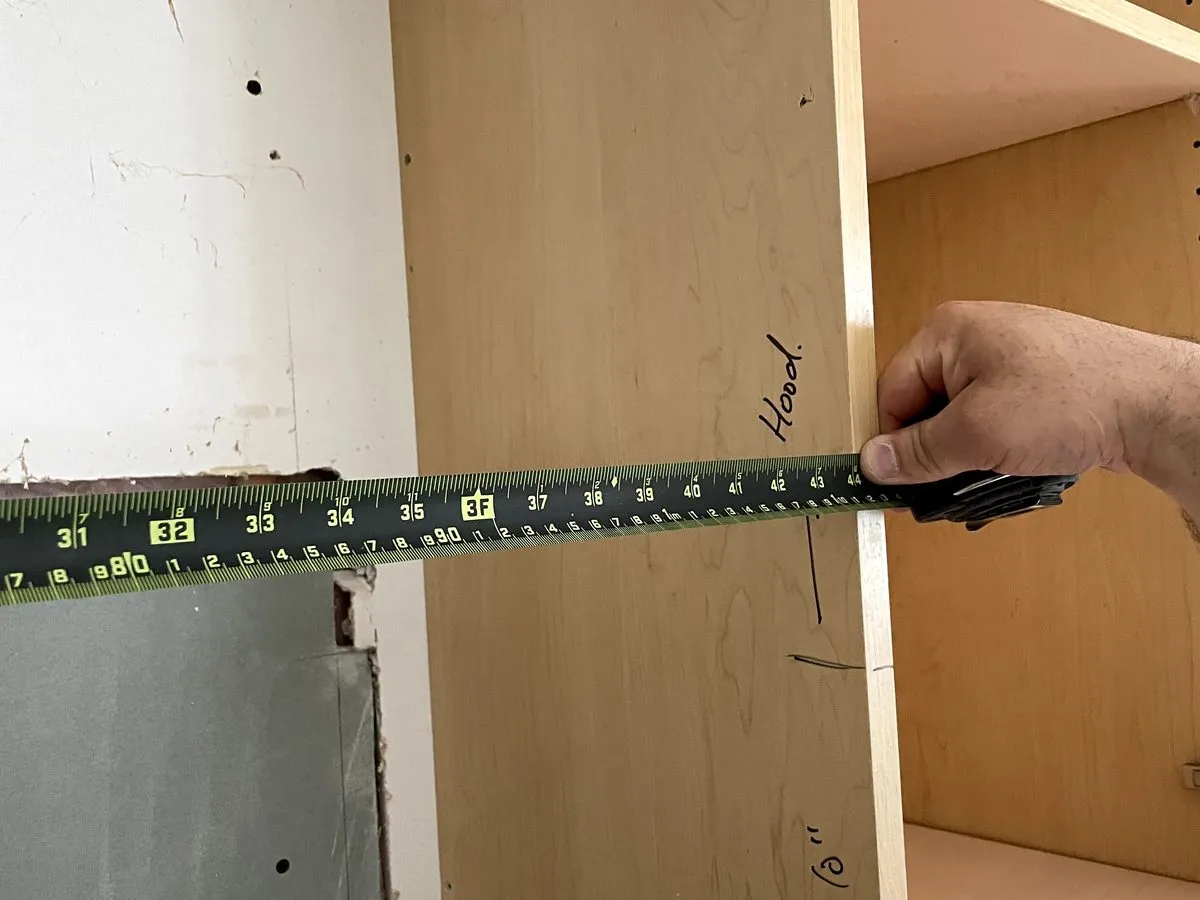
It starts with photographs rather than an appointment, and that is not a shortcut — it is how ninety-nine percent of our quotes are done.
Send wide shots of every run of cabinet. Wide is the instruction that matters: close-ups look helpful and hide the scope, and we need to see whole runs, the layout, and ideally the inside of a few cupboards so the boxes can be judged. A written quote comes back inside 24 hours, and it is not revised afterwards.
If you accept it, the next decision is the door style, the profile and the colour. That is the point at which we bring real samples to your kitchen — no charge, no deposit — because a colour chosen under shop lighting reads differently against your own floor at four in the afternoon.
Then every opening is measured individually. Not a sample of them, and not against a catalogue: houses move, frames go out of square, and doors are made to the opening they will actually hang on.
The four weeks nothing happens
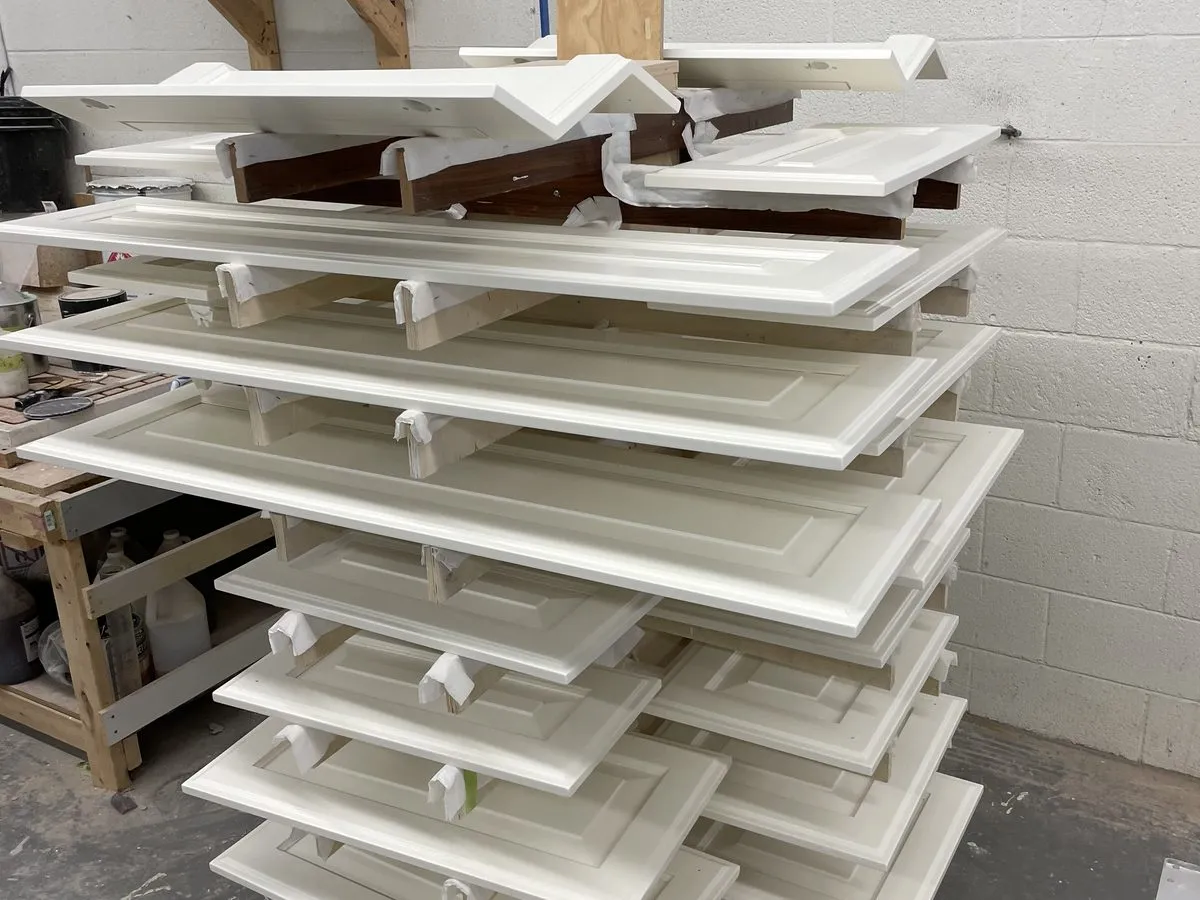
Your doors and drawer fronts are made to those measurements, and that takes about four weeks.
During those four weeks your kitchen is completely untouched. Every cupboard works, the sink works, the appliances work, nothing is masked and nobody is in the house. People find this the most surprising part of the process, because they have braced for a month of disruption that does not come.
This is also why refacing gets described as a five-day job by people who then feel misled. Five days is the time without a kitchen. Four to five weeks is the project.
Day one, and the containment
The crew arrives and the first thing that happens is not demolition, it is protection.
Zipper walls and sheeting go up between the kitchen and the rest of the house. Counters and appliances are masked. Filtration and ventilation are set up and run for the duration. Only then do the old doors and drawer fronts come off.
By the end of the first day the kitchen is sealed, stripped of its fronts, and ready to be prepared. You have an open-fronted kitchen at this point, and everything in it still works.
Days two and three, which are the real work
Preparation is where a finish is won, and it takes longer than spraying.
Preparation is where a finish is won or lost, and it takes longer than the spraying does.
Every frame and box is degreased with our own solvent degreaser — the one that lifts the wax and furniture polish that water-based TSP leaves behind — and then sanded. Twenty years of cooking residue comes off surfaces that looked clean.
Then tinted primer, sanded again, followed by two topcoats of 2K polyurethane with a proper cure between each. Some colours need a third; big jumps from dark to pale usually do.
We ask you to be out of the house for these days. The containment keeps solvent out of the rest of the building, but it does not make the kitchen somewhere to sit while catalysed finish is being sprayed, and the honest advice is to plan a short trip around it.
The last day
Doors on, hardware fitted, every gap adjusted until the closes are quiet.
New doors and drawer fronts go on. Hardware is fitted. Every door is adjusted so the gaps are even and the closes are quiet — the fiddly part, and the one that separates a good installation from an adequate one.
Then we walk through every cabinet with you before anything is signed off.
The finish is cured by then rather than merely dry. You can load the cupboards that evening, and the work carries five years on the finish and the workmanship, with fifteen on waterproof MDF doors and drawer fronts.
The service this describes
This page is the timeline. What it does not cover is whether refacing is the right job for your kitchen in the first place, which is a question about the boxes rather than the schedule. Reading what refacing replaces, and when it is the wrong job entirely first is the sensible order — there is no point planning five days around a kitchen whose boxes have failed and needs replacing instead.
What the week costs
A timeline is only useful next to a number. The five days above and the four weeks before them are what you plan around; what they come to is a separate question, driven by the door and drawer count rather than the size of the room. Reading what the whole job comes to once the dates are set closes the loop on this silo — schedule on one side, price on the other, both from the same quote.
Questions
Common questions
- How long does cabinet refacing take from start to finish?
- Four to five weeks, of which your doors are being made for about four. The kitchen itself is out of action for five days at the end, and nothing happens at your house during the manufacturing weeks.
- Can I use my kitchen while the work is going on?
- For the four weeks the doors are being made, completely — nothing has changed yet. During the five-day installation week you lose it, and we ask you to be out of the house for the two or three days of spraying because 2K polyurethane is solvent-based.
- Do you need to disconnect the plumbing or the appliances?
- No. The boxes never come out, so nothing behind them is touched. That is also why there is no wall repair afterwards, which is one of the larger hidden costs of full replacement.
- How much mess is there?
- Less than people expect, because containment goes up before anything else — zipper walls between the kitchen and the rest of the house, counters and appliances masked, and filtration running throughout. The dust that does exist is sanding dust during days two and three.
Ready to see the timeline for your kitchen?
Send wide photographs of each run of cabinet. The written quote comes back inside 24 hours with dates on it.
Free in-home consultation · no obligation
Refaced. Repainted. Refinished.