
Soft-Close Hinge Upgrades in Oakville — An Afternoon, and Nothing You See Changes
Doors that bang shut are a hardware problem, not a cabinetry problem. In most kitchens the fix is an afternoon and it does not involve replacing anything you can see.
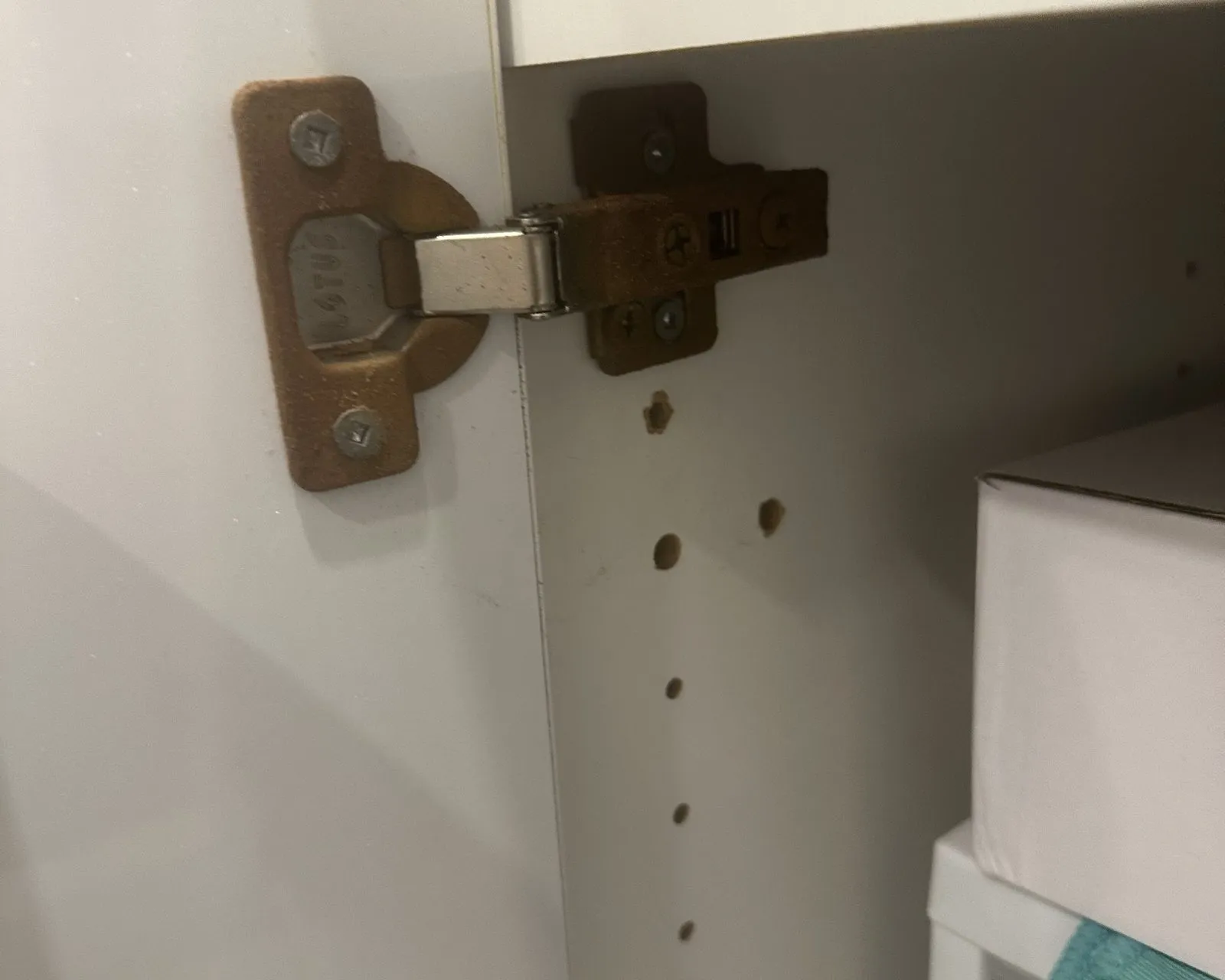 Before
 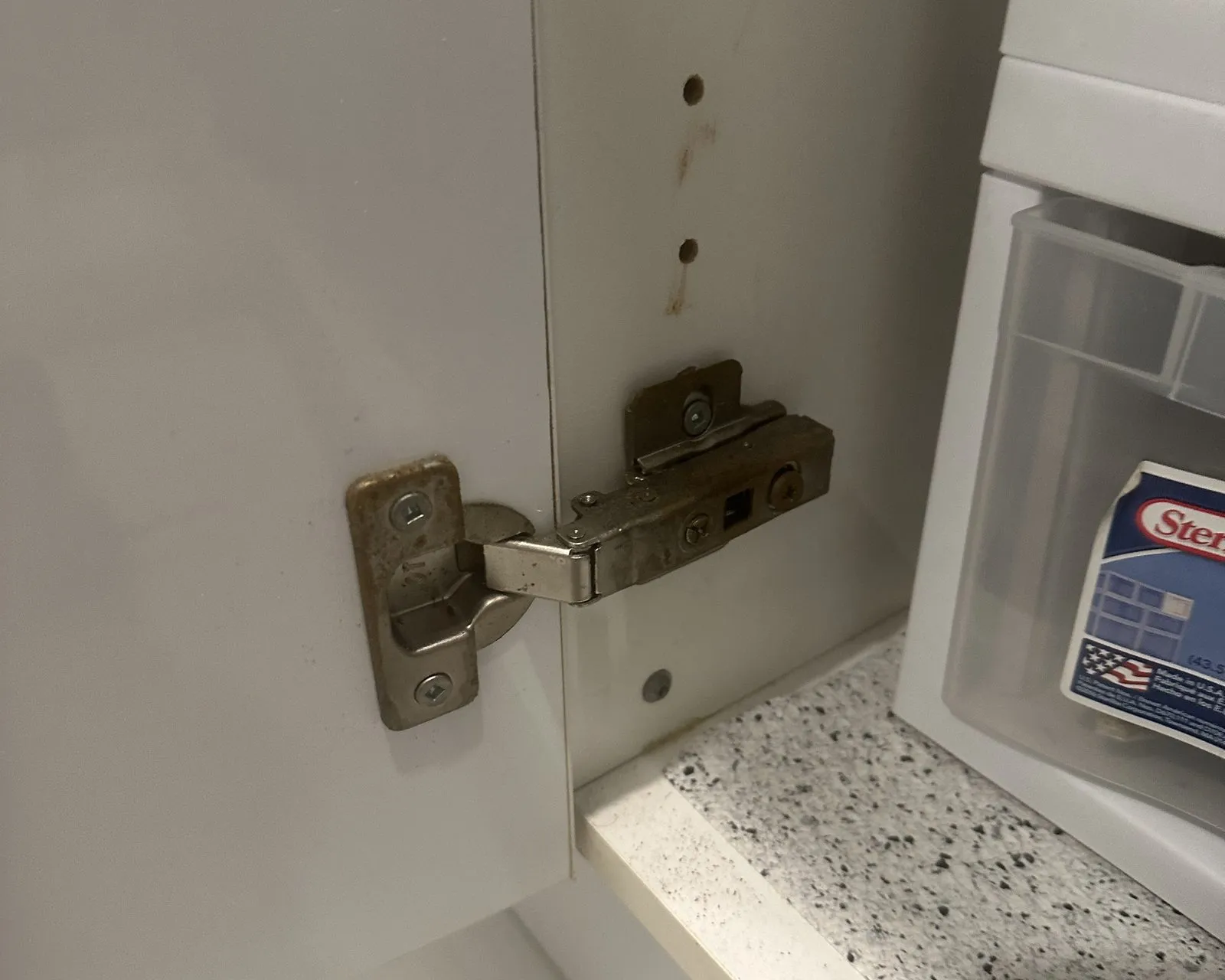 After
After An afternoon
Most kitchens, nothing visible replaced
100+
Kitchens completed
25 years
In the trade, and here since 2013
5.0
Rated on Google
What a soft-close hinge actually is
A concealed hinge with a damper built into it.
The mechanism is a small hydraulic cylinder inside the hinge arm. For most of the door's travel it does nothing at all. Over the last few inches it takes over, catches the door and pulls it closed at a fixed speed regardless of how hard it was pushed. Slam a soft-close door and it will still shut quietly.
That is the whole product. There is no adjustment to make, nothing to switch on, and nothing that requires you to close doors differently.
The reason it feels like more than a hardware change is that a kitchen makes a lot of noise nobody consciously registers. Twenty-odd doors banging through a day is background you stop hearing until it stops. People who have it fitted describe the kitchen as calmer, which sounds like marketing and is the most common thing anyone says about it.
There is a practical benefit as well. A door that never slams stops hammering its own box, and stops shaking whatever is stacked on the shelf behind it.
Whether yours can take them
This comes down to what kind of hinge is already in the door, and you can check it in one look.
How to tell which hinge you have
Open a cabinet and look at the hinge from inside. If it is a metal arm running to a round cup bored into the back of the door, that is a concealed European hinge, and it is what almost every kitchen built in the last thirty years uses. Those are a straight swap. The old hinge unclips, the new one goes into the same cup and onto the same mounting plate, and nothing has to be drilled or filled.
If instead the hinge is visible from outside the cabinet when the door is shut, or it is a simple leaf hinge screwed to the edge, that is an older arrangement and it will not take a soft-close hinge directly. Two routes then:
- A separate damper mounted inside the cabinet — it works, and it is visible when the door is open
- Boring the doors for concealed hinges — proper carpentry, and only worth doing when the doors themselves are worth keeping
Cup size and plate height vary between manufacturers, which is why we look before ordering rather than assuming. A photograph of an open door with the hinge visible is enough to tell.
What else gets measured
Two other things get counted at the same time. How the door sits relative to its opening decides which hinge fits, since a door that covers the frame entirely takes different hardware from one set into the opening or one sharing a frame with the door beside it. And tall or heavy doors need three hinges rather than two, which is often where an existing kitchen has been under-specified from new. A pantry door on two hinges will have dropped at the bottom corner, and adding the third is usually what actually fixes it rather than the soft-close.
Hinges and runners are different upgrades
The most common misunderstanding on this page, and it costs people money in both directions.
Doors close softly because of the hinge. Drawers close softly because of the runner underneath the drawer box. They are separate pieces of hardware, fitted to separate parts of the kitchen, and neither one does anything for the other.
So a kitchen where the doors bang and the drawers are fine needs hinges only. A kitchen where the drawers slam and the doors are already quiet needs runners, and that is drawer work rather than this. Plenty of kitchens want both, and both get quoted as their own line.
Retrofitting soft-close runners is also a bigger job than retrofitting hinges, because undermount runners need a drawer box built to suit them. Hinges go into a cup that already exists. Runners frequently mean new boxes.
Worth knowing before assuming the two upgrades are comparable in cost. They are not.
What hinges will and will not fix
Concealed hinges adjust in three directions, and that is genuinely useful.
A door sitting proud of its neighbour, dropped at one corner, or not quite parallel with the one beside it can usually be brought into line by adjusting the hinge during fitting. Doors drift over the years as houses move and screws work loose, and a kitchen where every door is set true again looks considerably better for reasons most people cannot name.
What hinges cannot do is fix the door or the box.
A door that has warped will close quietly and still sit twisted. A box that has gone out of square will still be out of square. A hinge cup that has been enlarged by repeated screwing and unscrewing may not hold a new hinge securely without repair. None of those is a reason to avoid the upgrade, but they are reasons the result might not be what somebody hoped, and it is better said first.
If your complaint is really about how the doors look rather than how they sound, hardware is not the answer and we will say so.
Doing it with something else
The economics of this job change completely depending on when it happens.
On its own it is a visit, a few hours, and a small bill. Perfectly reasonable and we do it.
As part of anything else, it is close to free in labour terms. If doors are being replaced, they arrive drilled for new hinges and there was never an old hinge going back on. If the kitchen is being painted, every door comes off on day one and the hinges are out anyway. In both cases the hardware cost is the only real addition.
That is why the answer to "should we do the hinges too" is almost always yes when something bigger is already happening, and why it is worth deciding before the doors come off rather than after they have gone back on.
The cheapest upgrade, and the one people put off
This is the least expensive thing on the list and it is the one most often bundled with something larger, because the doors are already off. Anyone weighing it on its own is really asking whether the kitchen needs more than hardware, and seeing how hinges sit against the bigger cabinetry jobs answers that faster than pricing them one at a time. The page above sets out the rest of what the carpentry side does.
Soft-Close Hinge Upgrade Cost in Oakville
This is the least expensive thing we do, and it is priced per hinge rather than per door — most doors carry two, tall pantry doors often three, so the count is taken from the hinges themselves rather than from the door count.
What moves the price is what is already fitted. Where the cabinets have modern concealed European hinges, the soft-close versions drop into the same cup and the same plate, and the work is an afternoon. Where they have older face-frame or exposed hinges, the cup has to be bored and the plate repositioned, which is carpentry rather than a swap, and it costs accordingly.
Doing it alongside other work costs less again, because the doors are already off and adjusted. If you are having doors made or sprayed, this rides along with that job.
If you already dislike how the doors look, put the money toward the doors instead and take the hinges with them. Paying twice for the same afternoon is the one outcome worth avoiding.
Questions
Common questions about soft-close hinge upgrades in Oakville
- Can soft-close be added to the doors I already have?
- In most kitchens, yes. If your doors run on concealed European hinges — the cup-shaped kind bored into the back of the door, which is nearly everything built in the last thirty years — then it is a straight swap. Old hinge out, soft-close hinge into the same cup and the same mounting plate. Nothing is drilled and nothing is visible afterwards.
- What if my hinges are not that type?
- Older kitchens sometimes have surface-mounted or exposed butt hinges, and those cannot take a soft-close mechanism directly. The options are a separate damper that fits inside the cabinet, or boring the doors for concealed hinges, which is only worth doing if the doors are good enough to justify it. We will tell you which you have from a photograph of the inside of an open door.
- Is this the same as soft-close drawers?
- No, and it is the most common mix-up. A door closes softly because of the hinge. A drawer closes softly because of the runner underneath it. Two different pieces of hardware, quoted separately. Plenty of kitchens want both, and plenty only need one.
- What hardware do you use?
- Blum. It is what we fit as standard and what the rest of the trade benchmarks against. The soft- close mechanism is integrated into the hinge rather than clipped on afterwards, which is why it keeps working rather than fading after a couple of years.
- Will it fix doors that do not sit straight?
- Partly, and this is worth understanding. Concealed hinges adjust in three directions, so a door that sits proud, low or out of parallel can usually be brought back into line during fitting. What hinges cannot fix is a door that has warped or a box that is out of square. If a door has twisted, new hardware makes it close quietly and still not sit flat.
- How long does it take?
- A kitchen of ordinary size is a few hours. If it is being done as part of new doors or a repaint it adds no time at all, because the doors are off anyway and the hinges have to come out either way.
- Is it worth doing on its own?
- If the doors are sound and the only thing bothering you is the noise, yes. It is the least expensive thing we do and the change in how a kitchen feels is out of proportion to the cost. If you already dislike how the doors look, put the money toward the doors instead and take the hinges with them.
Refaced. Repainted. Refinished.