
Kitchen Countertop Replacement in Toronto — Sequenced, Not Just Supplied
Stone is the one part of a kitchen we do not cut ourselves. What we do is hold the contract and the calendar, which is the part that goes wrong alone.
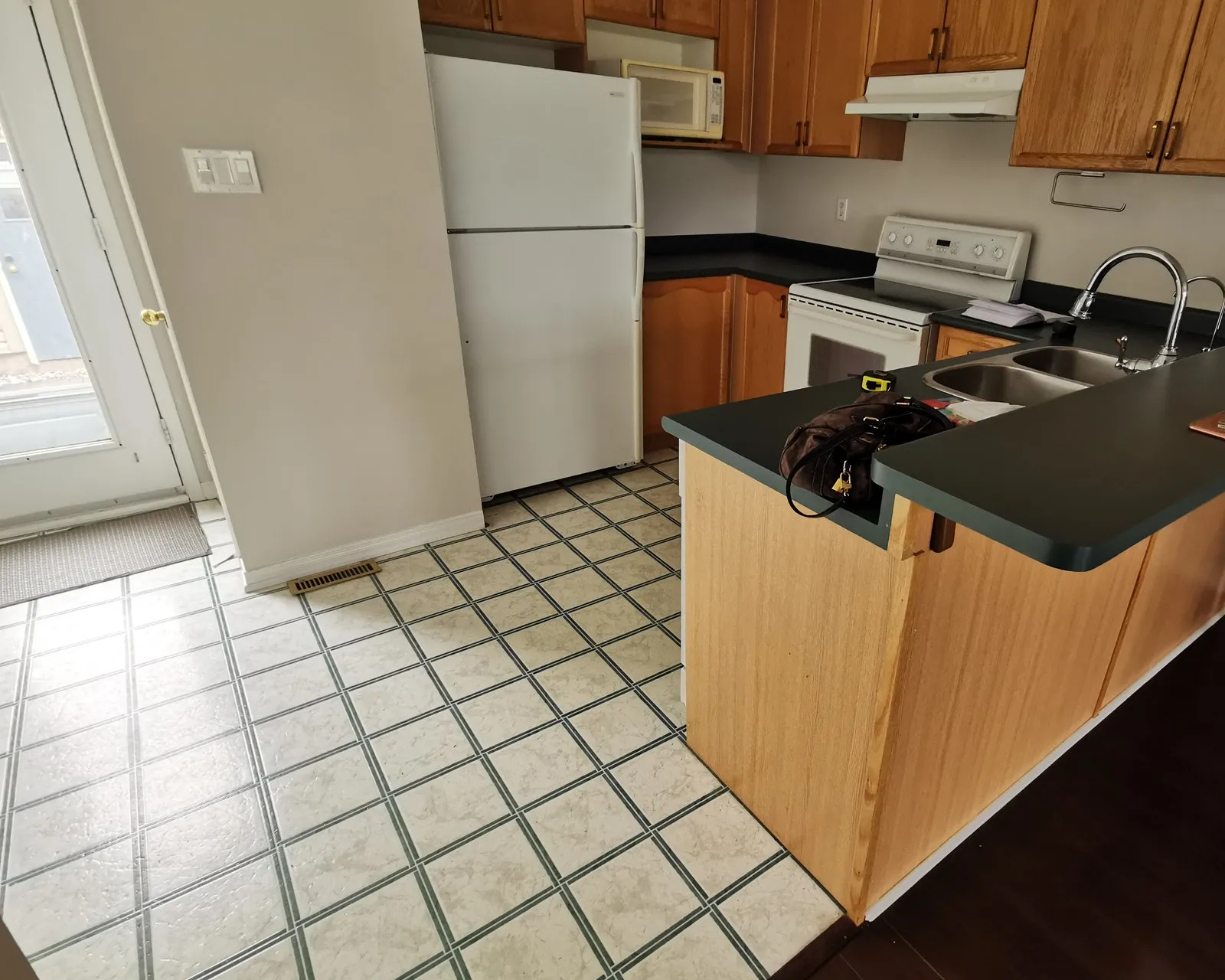 Before
 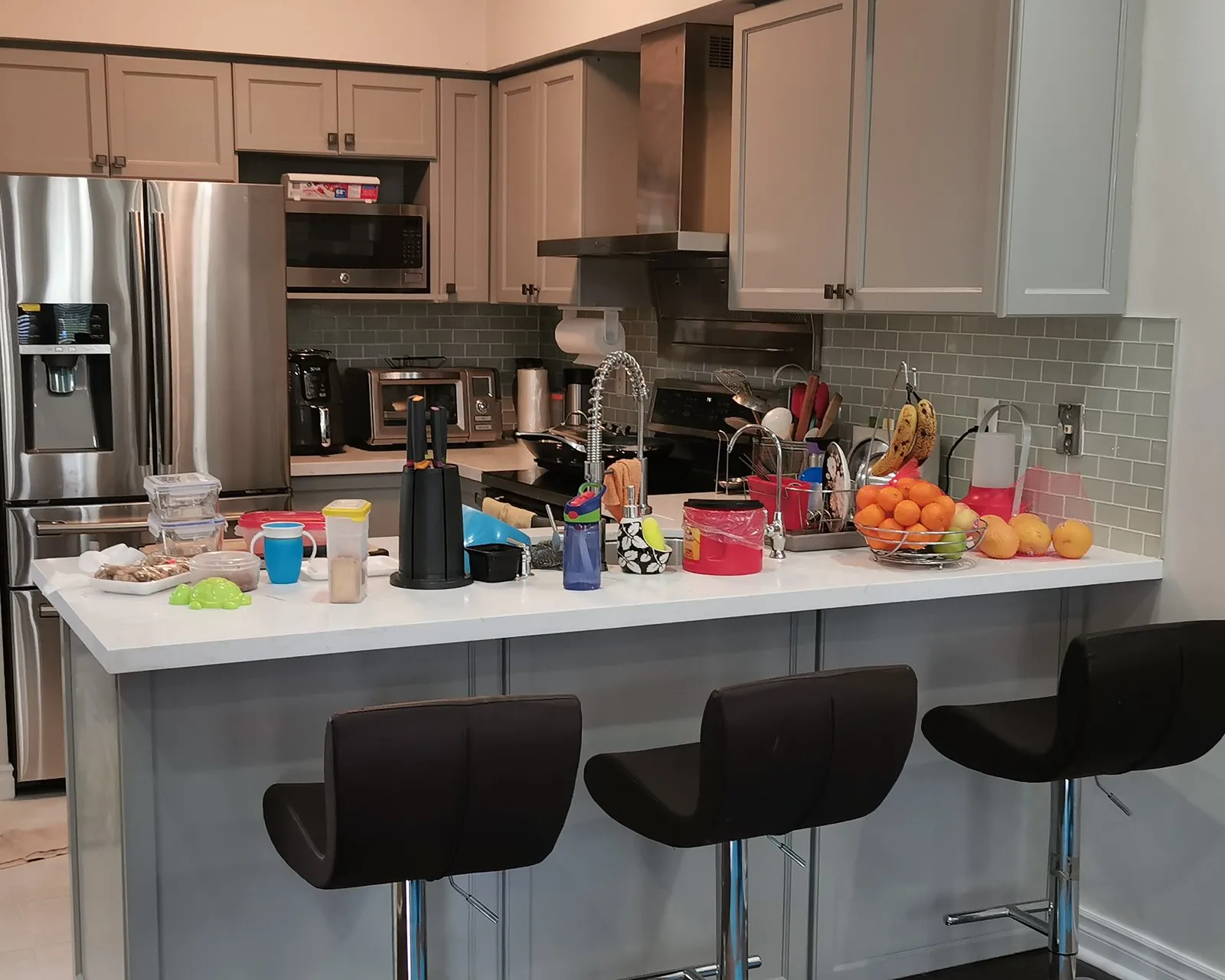 After
After 10 days
From template to install, typically
1 year
Fabricator's warranty on the stone
Named
The fabricator is in your quote
5.0
Rated on Google
What we do and what we contract
This is worth stating before anything else, because the trade is full of companies that blur it.
Kitchen Made New holds two trades: cabinetmaking and spray finishing. Stone is not one of them. We do not own a saw big enough, a waterjet, or a yard, and a company that tells you it does everything is subcontracting most of it and putting a margin on the handoff without telling you.
What we do on a countertop job is specify the material, take you through slabs, price it into your project, hold the contract, and — the part that actually matters — schedule the fabricator against our own cabinet work so your kitchen is out of action once instead of twice.
The fabricator is named in your quote. You can look them up, and you can see their warranty terms rather than being told there is one.
Why sequencing is most of the value
Book cabinets and counters separately and here is what happens.
The cabinet crew finishes and leaves. You call the stone shop, who come out to template, which they cannot do until the cabinets are in and level. Ten days later they install. Somewhere in between, your sink is out and your kitchen is unusable for a second time — and if the finished height, the overhang or the backsplash line does not sit right, each company explains why it is the other one's doing.
Run through one contract, the template happens on the day the old top comes off during our installation week. The stone lands while we are still on site to receive it. The backsplash goes on behind it. Sink, tap and dishwasher are reconnected once.
That is not a small saving in convenience and it is a real saving in risk, because one company is answerable for the line where the stone meets the cabinet, and it is us.
Quartz, and why it is what most of these kitchens get
The great majority of what goes into Toronto kitchens now is engineered quartz, and that is a sensible default rather than a fashion.
It is non-porous, which means it does not need sealing and does not stain from red wine or oil the way a granite that has gone a year without sealer does. It is consistent, so what you see on a sample is what arrives on a slab, which is not true of natural stone. And it is hard enough that ordinary kitchen use does not mark it.
Its two real limits are heat and sun. A pan straight off a burner can scorch the resin, so trivets are not optional, and prolonged direct sunlight can shift the colour of some lighter shades over years — worth knowing on a south-facing island in a house with big windows.
Granite and natural stone we will still specify where somebody wants them, and where the movement in a particular slab is the point. Laminate we will not recommend for a kitchen that is otherwise being refaced, because it will be the part that dates first.
What the old counter tells us about the cabinets
Taking a countertop off is the one moment in a kitchen project where everything underneath becomes visible, and it is worth a paragraph because it changes quotes.
Under a laminate top there is usually a particleboard substrate, and around the sink cutout that substrate has very often been wet for years. Swelling there is common, and it is one of the few conditions that genuinely compromises a box rather than just looking bad. If it is present we would rather find it at photograph stage, which is why we ask you to photograph inside the sink base whether or not you think there is a problem there.
The other thing the old top hides is whether the runs are level and square. Old Toronto houses settle, and a run that has moved needs shimming before stone goes on it, because quartz does not flex — an unsupported span cracks, usually at a cutout, usually months later.
Both of those are cheaper to find before a slab is cut than after.
Backsplash, edge profile and the decisions people leave too late
Three choices get made at template stage and they are worth thinking about before somebody is standing in your kitchen with a laser.
The edge profile changes the look more than people expect. A square eased edge reads modern and shows the full thickness. A pencil round is softer and forgiving on a house with children. Anything ornate — ogee, dupont — reads traditional and dates faster than the stone does.
The backsplash decision is whether the stone runs up the wall or stops at the counter and tile takes over. A stone splash is seamless and expensive; tile is cheaper, more interesting, and introduces a grout line behind the hob that will need cleaning. Neither is wrong and the choice affects the quote by a real amount.
The overhang matters at an island where people will sit. Anything past about twelve inches needs support underneath, and support that was not planned for arrives as a bracket somebody's knees hit.
We go through all three at the design visit, with the written quote already in your hand, so none of it is being decided under pressure.
Counters and cabinets are one project or two disruptions
A countertop can be replaced on its own and frequently is. But if the cabinets are also going to be refaced or repainted, doing them separately means two templates, two crews, two weeks of upheaval and a seam at the wall that nobody will own. Sequenced together it is one shutdown. Reading why the order of a kitchen project decides how long it hurts explains why we quote the two as one job whenever both are on the table.
Countertop Replacement Cost in Toronto
Stone is priced on four things: the slab you choose, the square footage, the cutouts, and the edge profile. The slab is the biggest lever by a distance — the same kitchen in an entry-level quartz and in a premium one can differ by more than the entire labour cost of fitting it.
Cutouts are individually priced: sink, hob, taps, and any pop-up outlet. The edge profile is priced per linear foot and a decorative profile is meaningfully more than a square one. Removal and disposal of the old top is its own line, and it is higher for a stone top than a laminate one for obvious reasons.
Your quote shows the fabricator's figure and ours separately rather than as one number. That is deliberate: you can see exactly what the stone costs and what the coordination costs, and you are free to decline the coordination and book the shop directly. Most people do not, once they have seen what the sequencing does to the timeline.
The written price comes back inside 24 to 48 hours from photographs, and the stone portion is confirmed against the actual slab before anything is cut. Cash, debit, credit and Visa.
Questions
Common questions about countertop replacement in Toronto
- Do you cut the stone yourselves?
- No, and nobody should claim to who is not running a slab yard. Templating, fabrication and installation are done by a stone shop, and the shop is named in your quote rather than described as "our fabricator". What we do is specify the slab, price it, hold the contract and put it in the right week.
- Why does the stone carry a different warranty?
- Because somebody else cut it. Our five years covers our finish and our workmanship. The countertop carries a one-year warranty from the fabricator, and the slab itself usually carries a manufacturer's warranty on top of that. We put this on the page rather than in the paperwork.
- Can I keep my existing counters and just do the cabinets?
- Often, yes, and it is a common way to stage the spend. Refacing does not require the counters to come off, because we are not touching the tops of the boxes. It is worth a look at the backsplash line first — where the old top has a coved or integrated splash, removing it later gets messier.
- How long is the gap without a counter?
- Template happens the day the old top comes off, and the new one lands about ten days later. During that gap the sink is out, so it is the genuinely awkward part of a kitchen project and the reason we schedule it inside the cabinet installation week rather than beside it.
- Where will the seams be?
- Agreed with you before fabrication rather than decided at the wall. A seam has to go somewhere on any run longer than a slab, and the choice is between hiding it at a sink cutout, at a corner, or in the least-looked-at stretch. Digital templating means you see the layout before anything is cut.
Replacing counters, cabinets, or working out the order?
Send wide photographs of every run including the counters and the backsplash. The written price covers stone and cabinet work as one project if both are in scope, so you can see what doing them together actually saves.
Free in-home consultation · no obligation
Refaced. Repainted. Refinished.