
Kitchen Cabinet Refacing in Etobicoke — Fronts Changed, Boxes Kept
Etobicoke runs from 1930s houses with original joinery to towers finished last year. The method does not change; what it meets does.
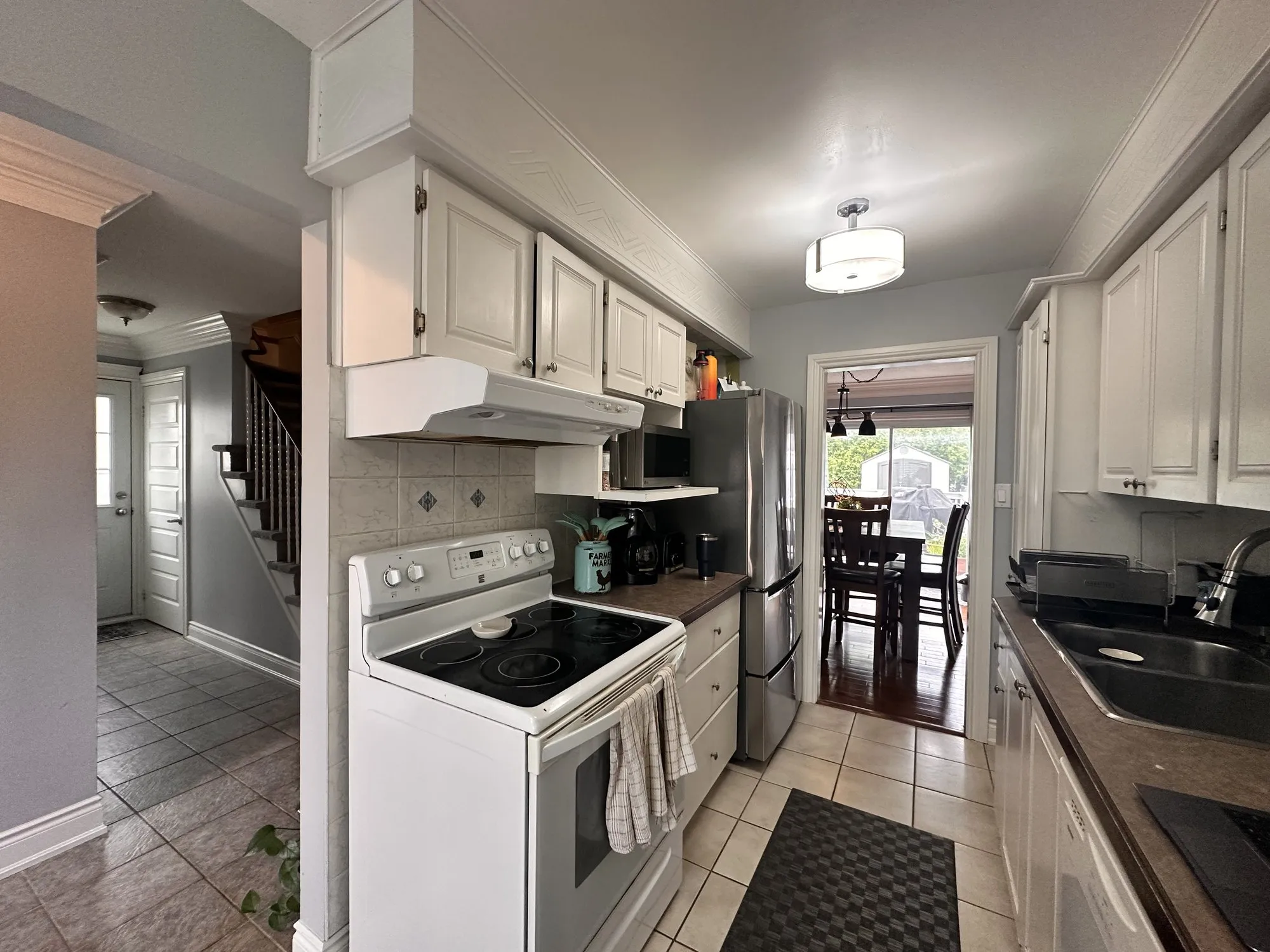 Before
 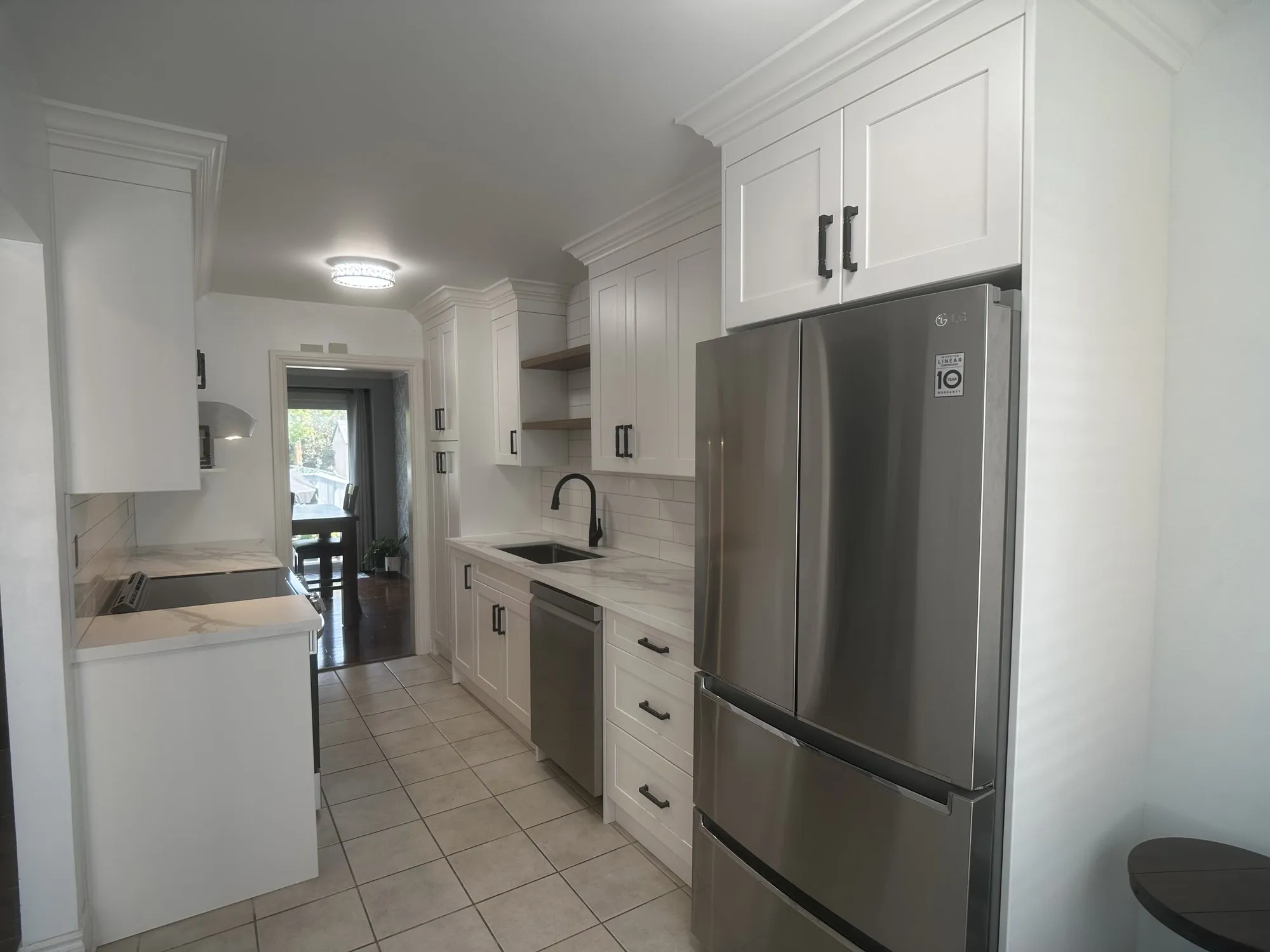 After
After Fixed price
From photographs, inside 24 hours
15 years
On waterproof MDF doors and fronts
20 minutes
From the shop, on most of these streets
5.0
Rated on Google
Three Etobicokes, three kinds of kitchen
The area covers about seventy years of building and the difference between its ends is stark.
The Kingsway, Humber Valley and the older parts of Islington were laid out between the wars and built with a level of joinery that has largely stopped being affordable. Houses there frequently have original trim, original doors and, in the kitchens that have not been gutted, solid frames worth keeping by a wide margin. The work we do most often here is not just refacing but matching — new cabinetry that has to sit beside original millwork without arguing with it.
Alderwood, Long Branch, New Toronto and Rexdale are postwar: bungalows and one-and-a-half-storey houses from the late forties through the sixties. Compact kitchens, solid frames, and a great deal of original oak still in place under yellowed lacquer. This is the stock where refacing does the most for the least, and where refinishing is worth asking about because the timber underneath is often real.
Then the waterfront towers at Humber Bay and the newer infill along the lakeshore. Thermofoil or laminate over particleboard, tight layouts, and a set of building rules that dictate the schedule.
Nothing about the finish changes between them. What changes is what we find when the doors come off, and that is worth predicting rather than discovering.
Matching new work to old joinery
This comes up more in Etobicoke than anywhere else we work, because of what the inter-war houses have in them.
A kitchen in a 1936 house is very often a modern room inserted into an old one. The trim around the doorway is original. The baseboard is original. There may be a built-in dresser or a plate rail that somebody had the sense not to remove. And a new kitchen dropped into that room in a profile borrowed from a magazine will look like exactly what it is.
The two things that make it sit right are profile and colour. A door profile that echoes the period — a recessed panel with a modest ogee rather than a flat slab — reads as though it belongs. And a colour matched physically against the existing trim, in that room's own light, rather than chosen from a chart under different lighting.
Where original millwork is missing or damaged, it can be reproduced from an offcut rather than replaced throughout, which is usually both cheaper and better.
None of this is compulsory. Plenty of people put a contemporary kitchen into an old house deliberately and it works. But it should be a decision rather than a default, and it is the conversation we would rather have at the design visit than afterwards.
The practical side of working here
The shop is on Barmac Drive, at the northern edge of Etobicoke near Steeles and Islington. Most of the area is inside twenty minutes of it, which makes this the closest part of our service area to where the doors are actually built.
That matters in one specific way: it makes a same-week return visit straightforward. If something needs adjusting after installation, or a colour needs a second look, or a door has to go back for any reason, it is not a logistics exercise.
For the houses, the practicalities are ordinary. Driveways are generally usable, which makes unloading simple. Older streets in the Kingsway have mature trees and narrow drives, so a van gets positioned rather than parked wherever.
For the towers, the constraints are the building's. Service lift bookings, restricted hours — usually nine to five on weekdays only — corridor protection, and certificates of insurance lodged with management before anything arrives. We deal with the management office directly, and it is the reason a condo kitchen is scheduled a week or two further out than a house.
The van leaves at seven either way.
The method travels; the house is what varies
Doors built to your openings, boxes sprayed rather than wrapped, catalysed 2K on both, and a price fixed from photographs before anybody visits. That is identical in Alderwood and in the Kingsway and everywhere between. What differs is what the house presents when the fronts come off. Reading how a kitchen gets kept rather than replaced sets out the work itself before any of the local detail.
Questions
Common questions about refacing a kitchen in Etobicoke
- Do you come out to Etobicoke regularly?
- Daily, effectively. The shop is on Barmac Drive at the top of Etobicoke, so most of these streets are twenty minutes away rather than a special trip. It is the closest part of our service area to where the doors are actually made.
- Is there a surcharge for being further out?
- No, and there is nothing to surcharge here anyway. Refacing is priced on the count of doors and drawers plus the days on site. The address does not enter the calculation at any point.
- My house is from the thirties and the kitchen has been redone twice. Which era matters?
- The most recent one, because that is what is actually on the wall. We are looking at the boxes rather than the house — their material, their squareness and whether they have been wet. A 1930s house with a 1998 kitchen is a 1998 kitchen as far as this work goes.
- Can you work in a Humber Bay condo?
- Yes, and the building shapes the schedule more than the kitchen does. Service lift booked, corridors protected, working hours observed, and certificates of insurance filed with management in advance. We do that paperwork rather than arriving and discovering it.
- What if my boxes turn out not to be worth keeping?
- Then you hear it and you have lost nothing but the time it took to photograph the kitchen. It happens — a swollen sink base, a run that has racked, chipboard that will not hold a screw. Refacing a kitchen that should be replaced wastes your money and our reputation.
Wondering what your Etobicoke kitchen would cost?
Send wide photographs of every run of cabinet and a written price comes back inside 24 hours, fixed and itemised. If the boxes are not worth keeping, that is the first thing you will hear.
Free in-home consultation · no obligation
Refaced. Repainted. Refinished.